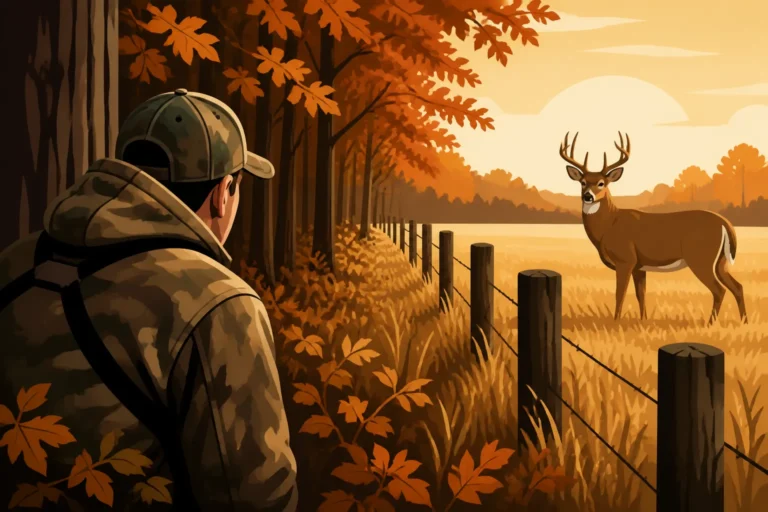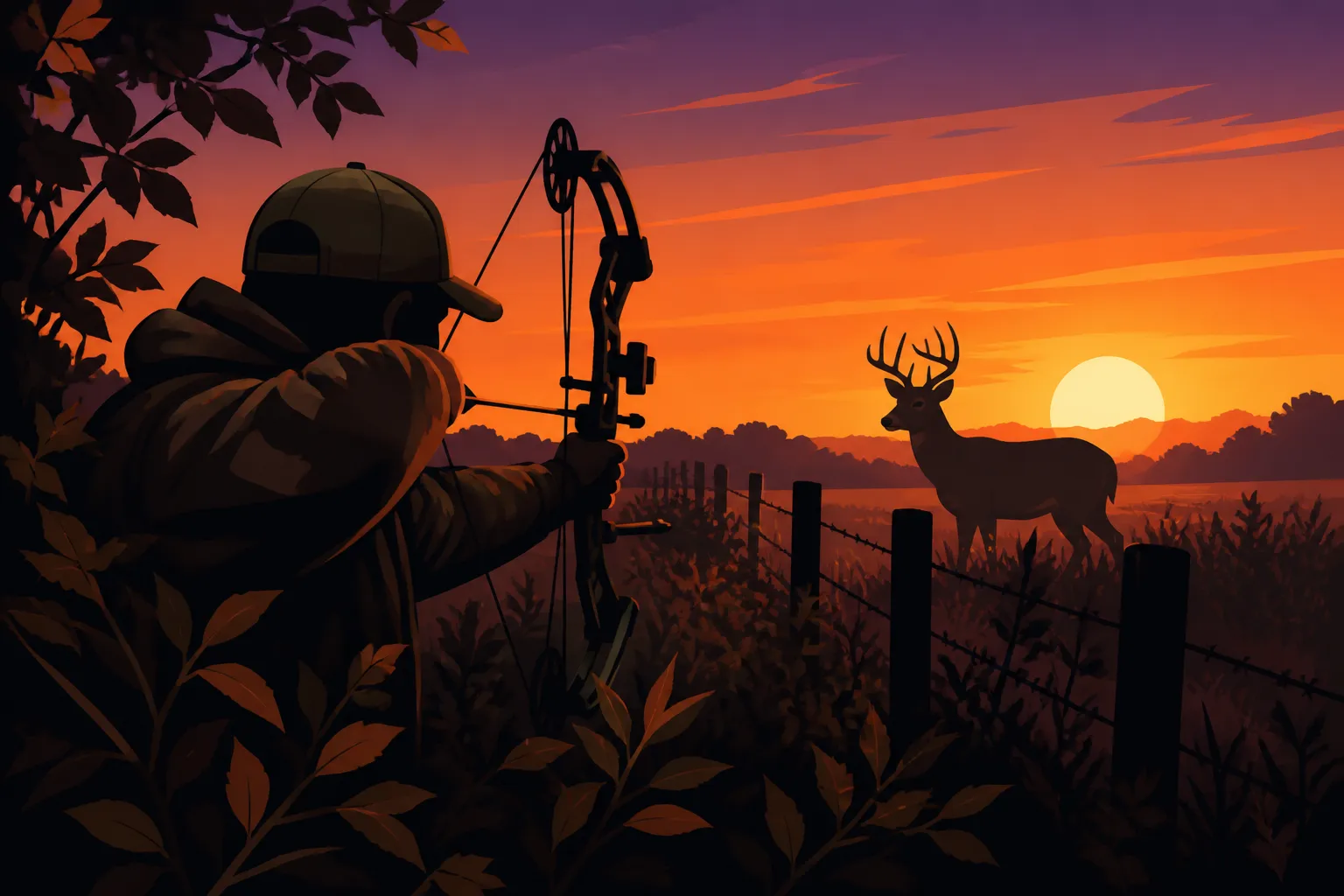
Hunting a Brushy Fence Row at Dusk
It’s happened to all of us: you spend hours pouring over maps, scouting big timber blocks, or picking out that perfect field corner, only to come up empty-handed. Meanwhile, deer seem to magically appear and disappear right under your nose, often using those seemingly insignificant, tangled lines of brush and trees that crisscross the Indiana landscape. That frustration of missing out on deer that are literally right there is real, but this guide is here to help you unlock the hidden potential of hunting a brushy fence row at dusk, turning those overlooked corridors into your next hotspot.
Why Brushy Fence Rows Are Evening Goldmines for Indiana Deer
Brushy fence rows might not look like much on a map, especially compared to vast woodlots or open fields. But for an Indiana whitetail, particularly as evening approaches, they are often perfect travel routes, security cover, and even subtle feeding areas all rolled into one. Overlooking them is a common mistake many hunters make, assuming deer want deep woods, when often they just want quick, safe passage.
The Underrated Value of Edge Habitat
Deer, by nature, are creatures of the edge. They thrive where different habitats meet, and a brushy fence row is the quintessential edge. Think about it: on one side, you often have an open crop field – corn, beans, or even winter wheat – offering prime feeding opportunities. On the other, it might be another field, a pasture, or a smaller woodlot. The fence row itself provides that critical layer of dense cover that makes deer feel safe moving between these areas.
During daylight hours, a mature buck might be bedded down deep in a secluded woodlot, but as the sun dips lower, his instinct tells him it's time to move towards food. He's not going to just walk out into the wide-open field until it's nearly dark, if he can help it. Instead, he’ll use that brushy fence row like a highway, a low-profile corridor where he can melt into the shadows, screened from prying eyes. This natural preference for cover during movement means that instead of just hoping a deer crosses your path in the wide open, you can almost predict where they’ll be traveling.
Natural Funnels in Agricultural Landscapes
In our predominantly agricultural state, brushy fence rows often act as natural funnels, directing deer movement with surprising precision. Imagine a large soybean field separating two woodlots a quarter-mile apart. Deer aren't going to just wander randomly across that open expanse in broad daylight. They will almost always choose the path of least resistance and greatest cover, which, more often than not, is the brushy fence row that connects those two blocks of timber or skirts the field edge. This is especially true in areas like Northern Indiana Farmland Deer where larger contiguous timber blocks are less common.
These linear features literally funnel deer through predictable pinch points. A break in the fence, a dip in the terrain, or where the brush thickens to form a tunnel-like canopy can become a major crossing point. Deer will often pause at these points, offering a brief window for a shot. The predictability that these funnels offer, particularly at dusk when deer become more active, is a massive advantage for a hunter. They effectively concentrate deer movement, making your stand location all the more powerful.
Scouting the Perfect Dusk Setup on an Indiana Fence Row
You can’t just blindly pick any fence row and expect success. Effective hunting hinges on detailed scouting, especially when you're focusing on a specific time of day like dusk. Understanding how deer are using a particular fence row involves reading the subtle signs they leave behind and considering the environmental factors that dictate their movement.
Reading the Sign: Rubs, Scrapes, and Trails
When you’re walking a fence row, you need to put on your detective hat. Look for established trails that run parallel to the fence, or more importantly, trails that cross it. Are these trails beaten down and well-worn? That indicates consistent, heavy use. Are there fresh tracks in the mud or soft earth, showing recent movement? Pay attention to the size of the tracks – bigger, deeper prints could mean a mature buck is using that route. A great tool like GoHunt's mapping features can show you potential terrain features and connect the dots between woodlots that might be worth walking.
Beyond just trails, keep an eye out for other indicators of deer activity. Rubs (where bucks scrape their antlers on small trees) along the fence line, especially fresh ones with exposed sapwood, tell you that a buck is actively traveling this path. Scrapes, patches of ground pawed clear by deer, often with an overhanging branch, are even better. These indicate a deer communication hub. If you find scrapes, particularly active ones, near a fence row, you’re looking at a prime location for an evening encounter, especially if you're targeting Hunting the Rut in Early November. Fresh droppings are another dead giveaway of recent activity. The fresher the droppings, the more recently deer have been using that exact spot.
Wind, Thermals, and Entry/Exit Strategies
Understanding wind and thermals is absolutely critical for hunting any linear feature like a fence row, perhaps even more so than in big timber. A fence row can create its own micro-thermals as the sun sets. Warm air trapped in a field during the day will rise, and as evening cools, that air will begin to settle and flow downhill, or along natural drainage. This can draw your scent directly into the path of incoming deer.
You want to set up so your scent cone is blowing away from where you expect deer to approach from. If deer are coming from a bedding area to a feeding field, and using the fence row as cover, your wind needs to blow into the field, or parallel to the fence row, not towards the bedding area. A useful technique for Hunting a Funnel Between Two Woodlots can be adapted here: figure out the general wind direction, and then find a spot on the fence line that puts you downwind of their most likely approach. Planning your entry and exit is just as important. You don't want to spook deer coming into the area or, worse, blow them out when you leave. Plan a circuitous route that keeps you out of their probable travel corridors, perhaps using a ditch or a field edge farthest from their approach. Considering quiet approaches like those for Entry Routes Through Standing Corn or utilizing cover that keeps you unseen until you're in your stand is paramount.
Strategic Stand Placement for Evening Success
Once you’ve identified a promising brushy fence row and understand the deer movement patterns, the next step is strategic stand placement. This is where you convert scouting knowledge into a prime hunting opportunity. Your choice of stand type and its precise location will make or break your hunt.
Treestands Versus Ground Blinds
The decision between a treestand and a ground blind along a fence row depends heavily on the available cover and the specific terrain.
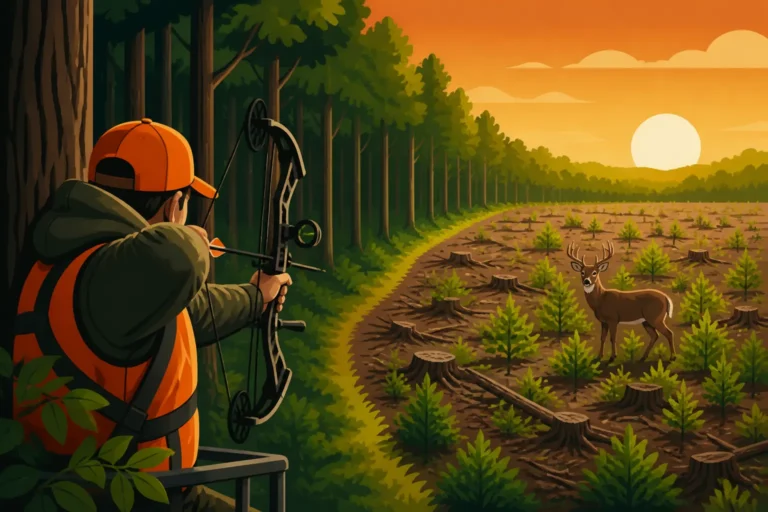
Treestand: If the fence row has mature trees offering good height and concealment, a treestand can be an excellent choice. Getting up in a tree provides several advantages:
- Wider Visibility: From an elevated position, you can see over much of the brush, giving you a better view of deer approaching from either side of the fence row, or traveling within it. This is especially useful for observing deer in an adjacent field as they stage before entering the timber.
- Scent Control: Being higher off the ground helps your scent dissipate over a larger area, reducing the chances of deer detecting you, though thermals can still carry scent downwards.
- Shot Angle: An elevated shot provides a downward angle, which can be advantageous for archery hunters, aiming for vitals from a different perspective.
However, finding a suitable tree in a fence row can be challenging. Many fence rows are dominated by smaller, thorny trees or multiflora rose, which don't support a safe treestand. If you do find a good tree, make sure it offers enough natural cover to break up your silhouette. Think about the principles of Hanging a Stand on a Southern Indiana Ridge, even if the topography is flat; the goal is still concealment and good shooting lanes.
Ground Blind: A ground blind is often a more versatile option for the typical brushy Indiana fence row.
- Concealment: You can tuck a ground blind right into the thickest part of the brush, breaking up its outline with natural vegetation. This is particularly effective if you follow the advice for Brushing In a Blind on a Field Edge, really making it disappear into its surroundings.
- Mobility: Ground blinds are generally easier to move and set up discreetly, allowing you to adapt quickly to changing conditions or deer patterns.
- Comfort & Stability: They offer more comfort, protection from the elements, and a stable shooting rest, which can be a game-changer during those long, cold late-season sits.
The main drawback of a ground blind is that you are at eye level with the deer, making scent and movement control even more critical. You also typically have a more limited field of view, so identifying the exact travel path and clearing precise shooting lanes are crucial.
Here’s a quick comparison to help decide:
| Feature | Treestand (in a fence row) | Ground Blind (in a fence row) |
|---|---|---|
| Visibility | Good over brush, wider field of view | Limited, at deer level |
| Concealment | Requires suitable tree, breaks silhouette | Easy to brush in, blends well |
| Scent Control | Elevated, helps dissipate | Critical, at deer level |
| Setup Time | Longer, can be noisy | Quicker, quieter if pre-set |
| Portability | Moderate (climber/hang-on) | High (pop-up blind) |
| Shot Angle | Downward, good for archery | Level, requires careful shot placement |
| Safety | Requires harness and lifeline | Generally safer, less risk of falling |
| Comfort | Less | More, protection from elements |
Maximizing Visibility and Shot Opportunities
Regardless of your stand choice, the goal is to maximize your visibility of approaching deer while remaining completely hidden. You want to identify specific pinch points or crossings within the fence row where deer are most likely to emerge or pause. This could be where the brush thins out, where a small ditch crosses the line, or simply a spot where an existing game trail is particularly well-defined. Think about concepts used for Setting Up on a Northern Indiana Field Edge where you're anticipating movement at a predictable spot.
Before the season, or during your midday scouting, discreetly trim any small branches or weeds that might impede a clean shot. Don't go overboard and create a gaping hole in the cover, but ensure you have a few clear shooting lanes at various distances, especially in the direction of anticipated deer movement. Remember, at dusk, light fades quickly, and you want every advantage you can get to make an ethical shot. Practice estimating distances to key landmarks (a specific tree, a fence post) from your stand so you can quickly gauge shot distance when a deer appears. Use an app like GoHunt to mark these locations and shooting lanes.
Dusk Tactics and Common Mistakes to Avoid
The evening hunt in a brushy fence row is a game of patience and precision. As the light dwindles, deer confidence grows, and their movement becomes bolder. This is your window, but it requires careful execution to capitalize on it.
Patience is Key as Light Fades
It's a common scenario: you’ve been sitting for hours, the woods are quiet, and you start to get antsy. You might feel the urge to check your phone, shift around too much, or even pack up early. Resist that urge! For an evening fence row hunt, the last 30 minutes of legal shooting light are often the most productive. This is when those mature bucks, having waited in their secure bedding areas, finally decide it’s safe enough to step out and head for their evening meal.
I can’t count how many times I've been ready to call it a night, only for a deer to materialize out of the fading light right on schedule. Deer often stage up in the thick cover of the fence row itself, or in an adjacent thicket, waiting for that absolute last moment of low light before committing to an open field. This is particularly true if there's any hunting pressure. Your patience will be tested, but the reward of seeing a buck emerge from the shadows in the dying light is absolutely worth the wait. Focus on being still, scanning the likely approach routes, and having your gear ready for a quick, silent draw or raise of your firearm.
Minimizing Disturbance and Maximizing Opportunity
Every little detail counts when you're targeting those last moments of daylight. First, ensure your entry into your stand is as quiet and undetected as possible. You want to be settled in well before deer typically start moving, ideally an hour or two before sunset. This means walking slowly, avoiding snapping branches, and staying out of direct sightlines. Scouting your approach and departure routes during midday, perhaps when Scouting Indiana Public Land Before Season, can make a huge difference.
Once you’re in your stand, movement is your enemy. Deer have an incredible ability to pick up on even the slightest motion, especially in low light. If you need to make an adjustment, do it slowly and deliberately, constantly scanning for approaching deer. While calling can be effective, use calls like those mentioned for Grunt Calls in Mature Indiana Timber sparingly and realistically. A soft grunt or a subtle bleat might entice a curious deer to investigate, but overdoing it can make them wary.
Finally, have a solid retrieval plan. If you make a shot at last light, you might be faced with tracking a deer in the dark. Always mark the shot location clearly, and if you’re unsure of the hit or the deer doesn’t go down quickly, it's often best to back out and return in the morning with a good tracking light and a clear head. Knowing how to efficiently perform Blood Trailing After Dark in Indiana can be invaluable, but prevention through a good shot placement at a clear target is always best. Don't rush a shot just because it's getting dark; if you don't have a clear, ethical shot, let the deer walk. There will always be another evening hunt on an Indiana brushy fence row.
Disclaimer
Hunting is an inherently dangerous activity. Always prioritize safety, understand and follow all Indiana hunting regulations, and ensure you have the proper licenses and permits before heading afield. This guide provides general information and recommendations; individual hunting conditions and outcomes can vary greatly.