Why Southern Indiana Grows Older Bucks
It’s a common frustration among hunters in Indiana: you put in the time, you scout hard, you sit through cold fronts and scorching early-season days, and what do you mostly see? Young bucks, yearlings, maybe a decent two-year-old. The truly big, old, heavy-antlered giants feel like mythical creatures. But if you’ve been paying attention to the harvest reports or just chatting with seasoned hunters, you’ll notice a trend: Southern Indiana consistently seems to produce more of those elusive, mature whitetails. This guide is all about peeling back the layers to understand precisely why the southern half of our state is a haven for older bucks.
The Untamed Landscape: Habitat That Favors Longevity
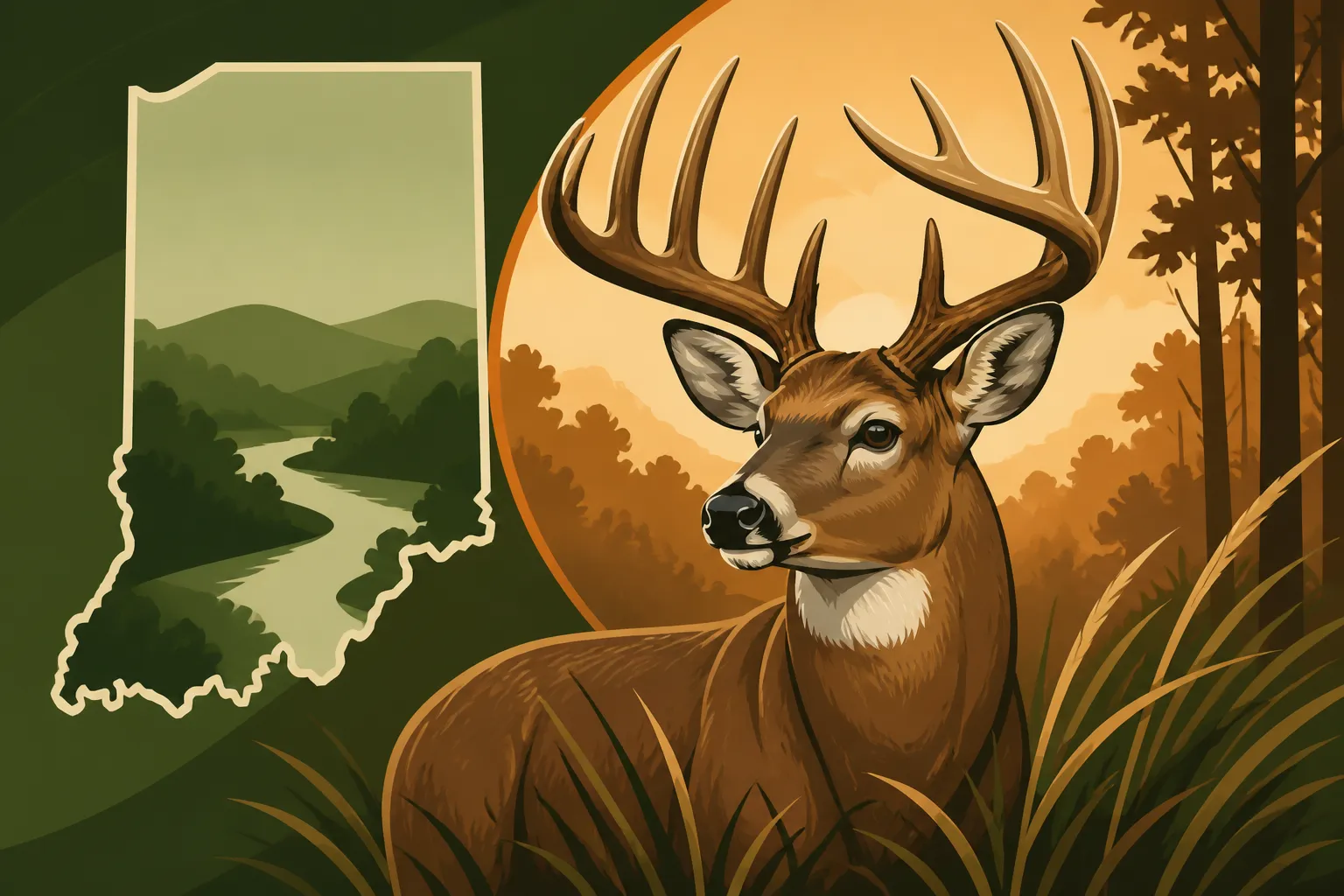
Southern Indiana is a world away from the flat, agricultural plains of the north. Here, the land rolls and tumbles, scarred by ancient glaciers and carved by countless waterways. This distinct geography isn't just pretty to look at; it's a critical factor in why our southern bucks have a better chance of reaching impressive old age.
Rugged Terrain and Abundant Cover
Forget easy walking and wide-open views. Southern Indiana is a land of steep, broken ridges, deep hollows, and dense, tangled timber. Places like the Hoosier National Forest, Yellowwood State Forest, and countless smaller woodlots on private land define this terrain. This kind of topography is a natural sanctuary for deer, particularly the wariest older bucks. They are masters of their environment, knowing every nook, every cranny, every thicket, and every hidden bench where they can disappear in an instant. The sheer amount of dense cover—from tenacious cedar thickets and invasive honeysuckle to multiflora rose and thick regeneration from timber cuts—provides impenetrable hiding spots. This allows them to escape human detection with remarkable ease. It's not just theory; when you're Reading a Ridge for Hoosier Forest Deer, you'll quickly understand how these intelligent animals utilize every contour and thicket to their advantage.
Consider a mature buck that has survived several hunting seasons. He isn't going to be skylined on an open field edge in daylight, nor will he be lingering in easily accessible timber. Instead, he’s tucked away in an almost impenetrable brush pile on a steep hillside, or bedded on a secluded bench overlooking a critical travel corridor, sensing danger long before it arrives. This difficult, often grueling terrain discourages many hunters from venturing too far off the beaten path, inadvertently giving these older deer a pass and allowing them to age gracefully. The inherent challenge of hunting these areas makes public lands, particularly those found in Brown County Public Hunting Ground and Monroe County Public Land Access, prime territory for finding these reclusive, older bucks.
Diverse and Consistent Food Sources
While Northern Indiana boasts an agricultural bounty, Southern Indiana offers a different, often more consistent, buffet for deer. Our vast hardwood forests are incredibly rich in mast crops, primarily acorns from various oak species, hickory nuts, and beech nuts. These natural food sources are absolutely critical for deer health, body development, and antler growth, especially through the lean winter months. Unlike a corn or soybean field that can be quickly harvested and leave deer exposed, mast crops are often available for an extended period, creating more predictable, yet hidden, patterns for deer movement. A year with a good mast crop means deer have ample nutrition without needing to expose themselves in open fields, significantly reducing their risk of encountering hunters. Conversely, hunters often find themselves facing unique challenges when Hunting After a Poor Acorn Year, where deer behavior shifts dramatically as they seek alternative sustenance.
Beyond the dependable mast, Southern Indiana's diverse understory provides a cornucopia of browse. From the thorny greenbriar to wild grapes, sumac, and tender young woody stems, deer have a steady supply of high-quality forage throughout the year. This consistent, varied nutrition, even during periods of drought or heavy snow, is vital for a buck to maintain his health, recover from the rigors of the rut, and continue to add to his frame year after year. The sheer variety ensures that even if one food source is scarce, others are available, providing a resilient food base for deer to thrive.
Ample Water Availability
Often overlooked, consistent water sources are just as crucial as food and cover for deer, especially for mature bucks with expansive home ranges. Southern Indiana is crisscrossed by countless creeks, streams, and natural springs, forming a complex network of hydration. These water sources don't just provide vital hydration; they also create natural travel corridors and funnels through the rugged, broken terrain. Deer will frequently follow creek bottoms and drainages, particularly during dry spells or in areas with less standing water. This close proximity to water allows bucks to stay hidden in the thick cover, moving stealthily from bedding areas to feeding zones and back without having to cross large, exposed open areas. If you've ever found yourself Recovering a Deer From a River Bottom, you quickly realize how indispensable these areas are to deer.
Furthermore, these natural waterways can act as barriers to human access, especially on public lands. Creeks and streams, particularly when swollen after heavy rains, can deter hunters from penetrating deeper into remote sections, further isolating pockets where older bucks can live out their lives with minimal disturbance. The constant, reliable presence of water ensures the habitat can support a healthy deer population year-round, which in turn contributes directly to the overall longevity and health of bucks in the region.
Hunter Savvy and Management Approaches
It might seem counterintuitive to talk about hunting pressure when discussing older bucks, but the type of hunting pressure and the conscious (or unconscious) management decisions in Southern Indiana play a significant role in why deer here can grow old.
Public Land Hunting Pressure and Hunter Density
While Southern Indiana has vast tracts of public land like the Hoosier National Forest, these areas are so rugged and sprawling that many hunters tend to stick to the more easily accessible areas. This means that if you're willing to put in the effort—to hike deep, climb steep ridges, and push into the nastiest, thickest cover—you're entering areas where deer see significantly less pressure. Older bucks are incredibly intelligent and learn quickly. They understand vehicle noise, human scent, and patterns of movement. On heavily hunted public land, these wary deer adapt by becoming almost entirely nocturnal or by retreating into the most remote, difficult-to-reach pockets of cover. This environmental pressure forces hunters to develop more advanced tactics, such as Still-Hunting Southern Indiana Ridges or focusing intently on Hunting a Ridge-Top Saddle for Rutting Bucks in secluded areas.
The sheer amount of space available, particularly in the Hoosier National Forest and other large state forests, means that even with a respectable number of hunters, there are still vast tracts where a buck can avoid detection for years. This is a stark contrast to smaller, fragmented woodlots found in more populated areas, where deer have fewer places to hide. Savvy hunters who use modern mapping tools like those from GoHunt to scout Scouting Indiana Public Land Before Season can effectively pinpoint these low-pressure zones, greatly increasing their odds of encountering an older deer. The challenge itself often helps preserve the older deer by weeding out less persistent hunters.
Private Land Practices and Quality Deer Management
Beyond the expansive public tracts, Southern Indiana also has significant private land holdings. Increasingly, many private landowners in the region are adopting principles of Quality Deer Management (QDM). This often involves voluntarily passing on younger bucks, focusing their harvest efforts on antlerless deer to balance the herd, and actively improving habitat. When neighboring properties, or even large cooperative areas, implement QDM, it creates a crucial buffer zone where bucks have a higher chance of reaching older age classes. This patient, forward-thinking approach by landowners allows bucks to express their full genetic potential, leading to larger body sizes and more impressive antlers as they age. It's a true commitment to seeing deer mature, which directly translates to a greater presence of older bucks in the herd.
While not every private parcel practices QDM, the trend is certainly strong, especially in areas with a deeply rooted hunting culture and a desire to see bigger deer. Combined with the natural barriers like wide rivers or challenging terrain, these managed private lands act as vital safe havens, contributing significantly to the overall presence of older bucks in the region. GoHunt can be a valuable tool for landowners looking to understand their property's potential and implement effective QDM strategies.
Indiana DNR Regulations and Harvest Goals
Indiana's deer seasons and bag limits are carefully designed to manage the overall herd across the state. While not explicitly focused solely on older bucks statewide, the structure of these regulations can indirectly benefit them, particularly in Southern Indiana's unique environment. For instance, the general antlered buck limit (one per hunter for most license types) means that once a hunter takes an antlered buck, they are typically done for the antlered season. This limits the overall harvest of antlered deer.
The long archery season, often extending into January, combined with firearms and muzzleloader seasons, provides ample opportunity for harvest. However, in the rugged, dense terrain of Southern Indiana, deer are inherently harder to locate and hunt successfully, even with these extended seasons. This natural difficulty works in favor of older, warier bucks, giving them a higher probability of surviving another season. Furthermore, in many areas not designated as a Hunting a Deer Reduction Zone, the emphasis remains on balanced herd management rather than aggressive antlerless harvest. The consistent tracking of harvest data by the Indiana DNR allows them to make informed decisions that ensure a healthy age structure across the state, which inherently includes a contingent of older bucks, especially in these less accessible southern hills.
The Building Blocks: Genetics, Nutrition, and Age Structure
Ultimately, for a buck to grow old and develop impressive antlers, it needs the right combination of genetic potential, consistent, high-quality nutrition, and simply enough time on the hoof. Southern Indiana provides a fertile ground for all three.
Healthy Herd Genetics and Balanced Buck-to-Doe Ratios
A truly healthy deer herd is the fundamental building block for growing older, larger bucks. Southern Indiana generally boasts a strong, wild deer genetic pool. While genetics aren't inherently "better" in one part of the state versus another, the environmental conditions for these genetics to express themselves fully are often superior in the south.
Crucially, a balanced buck-to-doe ratio means less stress on the does during the rut and, more importantly, increased competition among bucks. This leads to a more intense, natural rutting season, where older, dominant bucks are more likely to breed, passing on their genes. Conversely, when there are too many does, younger bucks don't have to compete as hard, and the overall stress on the herd from overpopulation can negatively impact antler development and overall health. Understanding When the Indiana Rut Peaks is critical for appreciating how these dynamics play out in the deer woods. This balance helps ensure that a greater proportion of bucks have the chance to age beyond their first few years. When younger bucks are allowed to survive their first few seasons due to less pressure from over-aggressive breeding by an overabundance of does, they can continue to develop.
Quality Forage and Mineral Uptake
Beyond the staple mast crops, the varied vegetation and diverse soil types prevalent in Southern Indiana contribute to a richer mineral content in the forage. Minerals like calcium, phosphorus, and various trace elements are absolutely essential for robust antler growth. While deer can sometimes get some minerals from natural mineral licks, the primary and most consistent source is through the plants they consume throughout their lives. The relatively undisturbed nature of many southern Indiana forests means the soil ecology is often more robust and nutrient-rich, leading to more nutrient-dense plants. This steady supply of high-quality forage throughout their lives allows bucks to divert more energy towards impressive antler development as they age, assuming their basic nutritional needs for survival and reproduction are met.
Good nutrition isn't just about growing big antlers; it's intrinsically linked to a buck's overall health, resilience, and ability to survive. Bucks with consistent, high-quality nutrition are better equipped to withstand the grueling demands of the rut, resist diseases, and endure harsh winters, all of which directly impact their ability to reach older age classes. GoHunt's detailed maps can even help identify areas with specific soil types or vegetation patterns that might indicate richer forage.
Sustained Age Structure and Potential
Ultimately, the simplest secret to growing older bucks is quite straightforward: you have to let them get old. The powerful combination of dense, protective cover, diverse and consistent food sources, challenging terrain that deters many hunters, and a degree of hunter restraint (whether intentional QDM or simply the difficulty of the hunt) means a higher percentage of bucks in Southern Indiana simply survive long enough to reach true maturity. A buck's antlers typically peak in size and mass between 4.5 and 7.5 years old. If an area consistently allows bucks to reach and surpass these age classes, it will naturally produce more "older bucks" for hunters to pursue. This phenomenon is a testament to both the incredibly favorable natural environment and the management decisions, both intentional and unintentional, that collectively foster longevity in the deer herd. Hunters hoping to find Where Hoosier National Forest Bucks Bed often grasp this principle deeply – that the most difficult spots are often home to the oldest, wariest deer.
This sustained age structure also creates a positive feedback loop within the hunting community: when hunters know there's a legitimate chance to harvest a truly mature, impressive deer, they might be more inclined to pass on a younger buck, further contributing to the long-term health and age class of the herd. It's a beautiful cycle of nature and responsible hunting coming together to produce something special.
| Factor | Southern Indiana | Northern Indiana | Impact on Older Bucks |
|---|---|---|---|
| Terrain | Steep ridges, deep hollows, rugged | Flat, rolling hills, open farmland | High: More sanctuary, escape routes from hunters |
| Primary Food | Hardwood mast (acorns, hickory), diverse browse | Agricultural crops (corn, soybeans), limited browse | Moderate: Consistent natural nutrition, less exposure |
| Cover Density | Very high: thick timber, cedar thickets, regeneration | Moderate: woodlots, fencerows, open fields | High: Excellent hiding spots, reduces hunter encounters |
| Water Sources | Numerous creeks, streams, natural springs | Fewer natural sources, ponds, drainage ditches | Moderate: Steady hydration, natural travel corridors |
| Hunter Pressure | Spread out due to ruggedness, deep woods less hunted | Concentrated in smaller woodlots, easier access | High: More sanctuary for wary bucks willing to go deep |
| QDM Practice | Growing, especially on larger private tracts | Present but often on smaller, more fragmented land | Moderate: Intentional "letting them grow" mentality |
Disclaimer
This article is for general informational purposes only and does not constitute professional advice. Laws, prices and regulations vary by location and change over time. Consult a qualified professional for guidance on your specific situation.