Nest Predation and Indiana Turkey Hatches
It's frustrating, isn't it, when you spend hours scouting only to realize that the turkey population seems lower than expected? Many of us hunters across Indiana have observed fewer poults with hens in recent years, and it leaves you wondering why. This often boils down to a silent, relentless challenge: nest predation. This guide will dive deep into understanding what causes these losses, identify the common culprits in our Hoosier woods, and explore practical strategies to help boost those crucial turkey hatches.
The Silent Threat to Indiana Turkey Nests
When you're out chasing longbeards in the spring or even just watching flocks through the fall, it's easy to focus on the adult birds. But the future of our wild turkey populations, and indeed, the future of exciting seasons like Spring Turkey Hunting in Indiana, hinges entirely on successful reproduction. Unfortunately, turkey nests are highly vulnerable, and a significant portion of potential poults never even get a chance to hatch. This isn't just a random occurrence; it's a predictable challenge that requires our attention.
Common Nest Predators in Indiana
Our Indiana landscape, from the dense southern hills to the fragmented northern farmlands, is home to a diverse array of wildlife, many of whom consider a turkey egg a gourmet meal. While nature has its balance, certain species have populations that can exert significant pressure on turkey nests, especially in areas with suitable cover for both predator and prey.
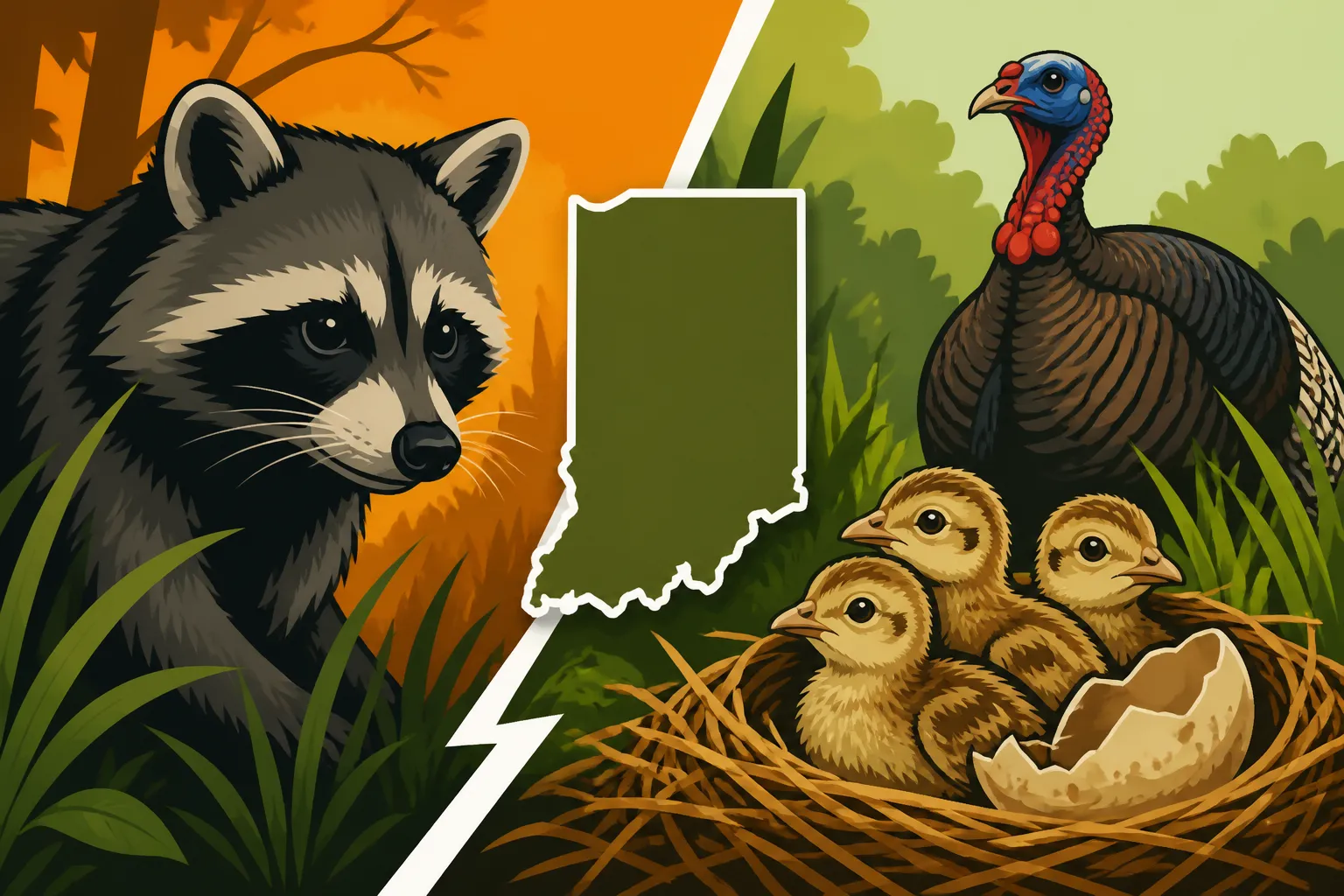
Raccoons are probably the most notorious egg thieves. Their nimble paws and keen sense of smell make them incredibly efficient at locating nests, even those well-hidden by a hen. You'll often find scattered shell fragments, sometimes even neatly piled, if a raccoon has visited a nest. Opossums, with their opportunistic nature, are also major contributors to nest loss. They're not as quick or tidy as raccoons, often leaving a more mangled scene. Skunks, too, are attracted to the protein-rich eggs and can quickly wipe out a clutch. These three are often considered the "unholy trinity" of nest predators due to their abundance and efficiency.
Beyond the smaller mammals, coyotes, foxes (both red and gray), and even bobcats will readily predate on turkey nests if given the opportunity. While often thought of as hunters of adult game, a convenient nest is an easy meal. Snakes, particularly larger species like black rat snakes or copperheads, can also consume entire clutches, though their sign might be less obvious than a mammalian predator. Avian predators like crows, ravens, and certain raptors might also take eggs, especially if a nest is exposed or the hen is temporarily off the nest. The key is understanding that it's often a combination of these predators working in various habitats that collectively keeps turkey hatch rates down.
Why Nest Predation Matters for Hunters
Every unhatched egg represents a lost opportunity for the flock to grow, and for hunters, a potentially quieter spring season years down the line. When we talk about Indiana Turkey Population Trends, nest predation is a huge factor. A low hatch rate, year after year, directly impacts the overall turkey density, which means fewer birds to pursue.
You might hear wildlife biologists discuss "poult-to-hen ratios," and this metric is a direct indicator of nesting success and poult survival. If the Poult-to-Hen Ratios and What They Mean are consistently low, it signals that something is hindering reproduction. High nest predation means fewer young birds entering the population, leading to an older age structure in the flock and potentially less robust gobbling activity as there are fewer younger, aggressive gobblers looking to breed. For us hunters, it translates to harder hunting, as there are simply fewer turkeys on the ground. It can also mean a reduction in potential harvest numbers over time, making it even more important to understand these dynamics.
Habitat's Role in Protecting Turkey Hatches
While predation is a natural part of the ecosystem, the quality and availability of suitable nesting and brood-rearing habitat can significantly influence how vulnerable turkey nests are. A hen needs cover to hide her nest, and even more crucial, she needs cover that provides security for her newly hatched poults. Poor habitat leaves nests exposed and poults with nowhere to hide from aerial and ground predators.
Creating Secure Nesting Cover
Turkeys prefer to nest in dense, brushy cover, often at the base of a tree, in thickets, or along brushy field edges. This cover helps camouflage the nest from opportunistic predators and provides the hen with a sense of security. If this type of habitat is lacking, hens are forced to nest in less ideal locations, making their nests easier targets. On properties you manage, consider creating or enhancing these areas. Leaving brush piles, allowing fencerows to grow thick, or planting native warm-season grasses can provide crucial nesting structure.
For example, a dense stand of young cedars, a thick briar patch, or even a section of undisturbed tall grass can be prime nesting real estate. It's about thinking like a turkey and providing places where a hen feels she can disappear. On public lands, this might mean scouting for those overlooked corners, abandoned logging roads, or clear-cuts that have regrown into thick, impenetrable tangles. Using tools like GoHunt or similar mapping applications can help you identify areas with good cover composition when you're doing your Scouting Indiana Public Land Before Season. Look for transitions between different habitat types – these often create edges that turkeys love for nesting.
Improving Brood-Rearing Habitat
Once the poults hatch, the fight for survival is far from over. Young poults are extremely vulnerable to predation, and they need immediate access to excellent brood-rearing habitat. This usually means areas with relatively open understories, allowing the poults to move easily, but with an overhead canopy that provides protection from aerial predators like hawks. Crucially, these areas also need an abundance of insects – the primary food source for growing poults.
Think about areas with scattered patches of clover, native grasses, or thinned timber that allows sunlight to reach the forest floor, promoting insect life. Avoiding heavy mowing during nesting and brood-rearing seasons (typically April through July in Indiana) is absolutely critical. Mowing can destroy nests and kill poults. For those managing land, strategically placed food plots that include clover or chicory can attract insects and provide a safe haven for growing poults. These areas, when managed correctly, become safe zones where poults can forage and grow, increasing their chances of surviving to adulthood and contributing to the Indiana Turkey Harvest Numbers.
Strategic Predator Management and Observation
While habitat is foundational, actively managing predator populations can also play a vital role in tipping the scales in favor of turkey poults. This isn't about eradicating every predator, which is impossible and undesirable, but rather reducing localized pressure during critical nesting periods.
Ethical Predator Control Methods
The most effective way to reduce nest predation is through targeted predator control, primarily trapping, during the late winter and early spring months, before hens begin laying. This focuses on species like raccoons, opossums, and skunks, which are often overpopulated in many areas due to abundant food sources and fewer natural large predators. For hunters interested in getting involved, learning about Trapping Indiana Furbearers can be a beneficial skill, both for recreation and for wildlife management.
Hunting coyotes and foxes, especially through calling techniques like Coyote Calling in Indiana Farm Country, can also help manage their numbers, though their impact on nests might be less direct than smaller furbearers. Always remember that any predator control must be conducted ethically, legally, and with a clear understanding of local regulations. Some individuals might opt to hire professional trappers if they have larger land holdings and want to see a significant impact. The goal is to create a temporary "buffer zone" around prime nesting areas, giving those vulnerable turkey eggs a better chance.
Reading the Signs of Nest Predation
Being able to identify what kind of predator has hit a nest can provide valuable insight into which species are causing the most trouble in your area. This information can then inform your management strategies.
A messy, pulled-apart nest with scattered eggshells, particularly if there are teeth marks, often points to a mammalian predator like a raccoon or opossum. Raccoons tend to be a bit neater, sometimes rolling eggs out of the nest before consuming them. Skunks often leave a very distinct, foul odor around the disturbed nest site. If you find shells with clean, small holes, or if the nest is completely empty with no shells, a snake might be the culprit. Birds of prey usually leave more disturbed feathers and might carry off parts of the egg.
Observing these details can help you tailor your predator management efforts. For example, if you consistently see signs of raccoon predation, focusing your trapping efforts on these clever critters in the immediate vicinity of known nesting cover would be a logical step. Using mapping tools like GoHunt, you can even mark areas where you find evidence of predation, helping you build a picture over time of predator hotspots. This data can be invaluable for understanding the specific challenges facing Wild Turkeys in Indiana in your particular hunting grounds.
| Predator Type | Typical Nest Disturbance Sign | Notes |
|---|---|---|
| Raccoon | Scattered shell fragments, sometimes neatly piled; teeth marks | Highly skilled at finding nests, often leaves distinct markings |
| Opossum | Messy, mangled nest; scattered, broken shells | Opportunistic and less discriminating, leaves a more chaotic scene |
| Skunk | Disturbed nest, strong musky odor, broken shells | Distinctive scent is a key identifier |
| Coyote/Fox | Nest pulled apart, larger teeth marks, possible tracks | May also target the hen; often more significant nest destruction |
| Snake | Nest often empty, eggs swallowed whole or with clean puncture | Can be difficult to detect; sometimes leaves no obvious sign |
| Avian (Crow/Raptor) | Eggs with small, clean holes; shell fragments scattered; sometimes feathers | Usually occurs if the nest is exposed or hen is off the nest |
Adjusting Your Hunting Strategy to Hatch Success
Understanding nest predation isn't just for land managers; it's vital information for hunters too. Knowing if your local area had a good or bad hatch can significantly influence your tactics for seasons like Hunting Indiana's Fall Turkey Windows or even your expectations for the following spring.
Interpreting Poult Numbers
When you're out in the summer or early fall, pay close attention to the number of poults you see accompanying hens. If you observe many hens with few or no poults, it's a strong indicator of low nesting success, often due to high predation or poor weather during the hatch. This is a critical piece of information when planning your hunts. Low poult numbers mean fewer young birds in the fall that are easily called in, and potentially fewer two-year-old gobblers in the spring.
If poult numbers are low, you might need to adjust your expectations and strategies. In the fall, large family groups might be less common, and you might encounter more solitary hens or small groups of jakes. In the spring, you might find fewer subordinate gobblers responding to calls, as the overall population density is lower. It forces you to become a more patient and observant hunter, truly trying to understand the birds' behavior rather than relying on sheer numbers. This understanding connects directly to the health of the Indiana Turkey Population Estimate as a whole.
Adapting Your Tactics
When nest predation has clearly impacted the local turkey population, you might need to shift your hunting focus. Instead of solely relying on calling, which might be less effective on wary, older birds, consider more scouting-intensive methods. This could involve trying different calling strategies, perhaps being more subtle, or focusing on finding birds visually before attempting to call them in.
For example, during the fall archery season, if poult numbers are low, you might spend more time trying to locate small, scattered flocks rather than breaking up large groups. In the spring, if gobbling activity seems subdued due to fewer young birds, you might focus on roost hunting or using subtle hen yelps to draw in a dominant gobbler that's not actively seeking competition. This adaptability is what separates consistently successful hunters from those who struggle during challenging years. Resources from How Turkeys Were Restored to Indiana also highlight the importance of understanding turkey biology and habitat to ensure their continued presence in our state.
The battle against nest predation for Indiana's wild turkeys is an ongoing one, but by understanding the problem, managing habitat, and strategically controlling predators, we can all contribute to healthier turkey populations and more enjoyable hunts in the years to come.
Disclaimer
This article is for general informational purposes only and does not constitute professional advice. Laws, prices and regulations vary by location and change over time. Consult a qualified professional for guidance on your specific situation.