Indiana Turkey Population Estimate
There’s nothing quite like the sound of a gobbler hammering at first light, shaking the dew off the trees. But as any seasoned hunter in the Hoosier State knows, some years feel louder than others. It's easy to wonder, "How are our wild turkeys really doing?" You might see plenty of birds one season and then struggle to find a trace the next, leaving you scratching your head about the overall health of Indiana’s turkey population. This guide is here to pull back the curtain on how we understand our turkey numbers and what that means for your next hunt.
Understanding Indiana's Wild Turkey Population Estimates: The Science Behind the Numbers
It's natural to be curious about how many wild turkeys roam our woods and fields, especially when you're planning your next hunt. We all want to know if the population is booming or if it’s experiencing a dip. But getting a precise "count" of every single turkey across Indiana is, well, pretty much impossible. Instead, wildlife biologists rely on a combination of scientific surveys and data collection methods to create what we call an "estimate." Think of it less like a precise census and more like an educated guess, built on solid information. These estimates are crucial for understanding the health of our turkey flocks and making informed decisions about hunting seasons and habitat management.
How the DNR Monitors Our Feathered Friends
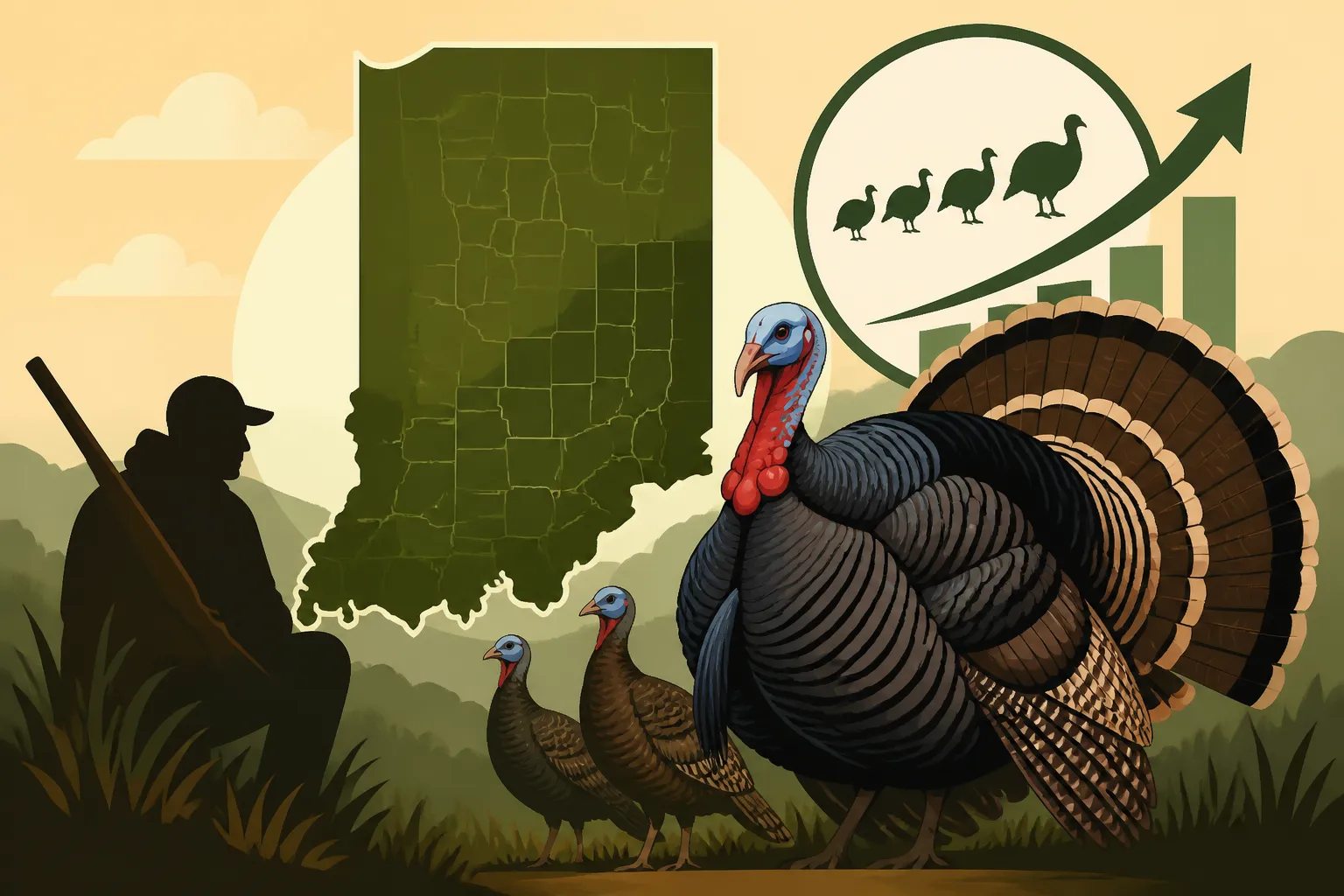
Our state wildlife agencies don't just guess; they employ a variety of systematic approaches to gauge turkey populations. One of the most important tools in their arsenal is the annual brood survey. This isn't just a simple headcount. Volunteers and agency staff spend their summers observing hens with their broods, noting the number of poults (young turkeys) they see with each hen. A healthy poult-to-hen ratio is a strong indicator of successful nesting and brood survival, which directly translates to a robust population heading into the fall and following spring. It gives us a peek into the reproductive success of the flock that year.
Beyond brood surveys, there are also various gobbling count surveys that help gauge the activity and density of gobblers in specific areas, especially during the breeding season. These involve listening stations where observers record the number of gobblers heard over a set period. While not a direct count of individual birds, these trends in gobbling activity can reflect male turkey abundance and their willingness to vocalize, which is influenced by population density. Furthermore, hunter harvest reports provide invaluable data. Every time a hunter checks in a turkey, that information—where it was harvested, when, and its sex—contributes to a larger picture, helping biologists understand harvest pressure, success rates, and the distribution of birds across the state. These individual data points, when aggregated, paint a clearer picture of the overall Indiana Turkey Population Trends.
The "Why" Behind the Numbers: Beyond Just a Headcount
So, why go through all this trouble to estimate turkey populations? It's not just to satisfy our curiosity or to give us bragging rights about how many birds we think are out there. These population estimates serve as the bedrock for effective wildlife management. When biologists understand whether the turkey population is stable, increasing, or decreasing, they can make critical decisions about future hunting seasons. This includes setting appropriate bag limits, determining season lengths, and even considering specific regulations for certain areas if needed. For instance, if poult survival rates are consistently low in a particular region, managers might consider adjusting future hunting pressure to allow the population to rebound.
Moreover, these numbers are vital for habitat management. If turkey populations are struggling, it often points to issues with habitat quality or quantity. Are there enough suitable nesting sites? Is there adequate cover from predators? Are food sources readily available throughout the year? The data helps identify these needs, guiding efforts like prescribed burns to improve forest understories, planting specific food plots, or protecting critical roosting and breeding areas. It’s all interconnected. A healthy turkey population signifies a healthy ecosystem, and these estimates help ensure that our wild turkeys will be thriving for future generations of Hoosier hunters. Tools like GoHunt often incorporate publicly available data that can help hunters visualize these habitat aspects and potential turkey hotspots on the ground.
What Impacts Indiana's Turkey Numbers? Trends and Challenges
Wild turkeys are remarkably resilient birds, and their numbers have seen incredible recovery stories across Indiana, thanks to dedicated restoration efforts. However, like all wildlife, they face ongoing challenges that can significantly impact their populations. It’s a dynamic balance, influenced by everything from the quality of our woodlands to the whims of Mother Nature. Understanding these factors helps us appreciate the complexity of wildlife management and why population estimates can fluctuate year to year.
Habitat is King: Food, Cover, and Nesting Success
When it comes to Wild Turkeys in Indiana, nothing is more important than habitat. Turkeys need a diverse landscape to thrive: mature woodlands for roosting, open understories for foraging, dense cover for nesting, and bugging areas for poults. In Indiana, much of our turkey habitat is intertwined with our mixed hardwood forests and agricultural lands. Healthy forests with a good mix of age classes provide acorns and other hard mast, which are critical food sources, especially in the leaner winter months. Think of a big oak flat or a hickory grove — prime turkey country.
However, changes in land use, such as urban development, timber harvesting practices that reduce diverse undergrowth, or the conversion of diverse farmlands into monoculture crops, can all fragment and diminish suitable turkey habitat. When habitats become isolated, it restricts turkey movement and can lead to smaller, less resilient local flocks. Nesting success, in particular, hinges on good cover. Hens need thick, protective vegetation to hide their nests from predators. A lack of this critical nesting cover can lead to increased Nest Predation and Indiana Turkey Hatches, directly reducing the number of poults that make it to maturity and thus impacting the overall Indiana Turkey Population Trends.
Weather Woes and Predator Pressure
You might not think about it much when you're shivering in a late-season deer stand, but the weather during spring and early summer plays a massive role in turkey survival. Cold, wet springs, especially when poults are hatching and in their most vulnerable stages, can be devastating. Young poults are highly susceptible to hypothermia and diseases in damp conditions. A prolonged period of rain and cold after the hatch can lead to high poult mortality, even if nests were initially successful. This is where Poult-to-Hen Ratios and What They Mean become so critical – they really highlight the success or failure of a breeding season.
Predator pressure is another constant factor. Coyotes, raccoons, opossums, skunks, and even free-ranging domestic animals can decimate turkey nests and target young poults. While predators are a natural part of the ecosystem, an imbalance – perhaps due to habitat changes that favor certain predator species – can put extra strain on turkey populations. Hunters and land managers often consider predator control as part of a broader strategy to boost turkey numbers, especially in areas where populations are struggling. It's a complex dance where nature constantly adjusts, and turkey populations react to these environmental pressures.
Disease and Other Factors
While less frequently a widespread issue than habitat or weather, diseases can occasionally impact local turkey populations. Avian pox and blackhead disease are examples of illnesses that can affect wild turkeys. Generally, these diseases become more problematic when turkey densities are very high, allowing for easier transmission, or when birds are stressed by other environmental factors like drought or severe winters. It’s another reason why wildlife managers keep an eye on population health and distribution.
Beyond disease, other factors like hunting pressure (though carefully managed through season structures and bag limits, which you can read about in Indiana Spring Turkey Season Rules), vehicle collisions, and even poaching can contribute to turkey mortality. While these individual factors might seem small, their cumulative effect can be significant, especially in localized areas. It's a constant balancing act for the Indiana Department of Natural Resources (DNR) to manage all these variables to ensure healthy, sustainable turkey populations across the state.
Interpreting the Data: How Population Estimates Guide Your Hunt
So, you’ve seen the numbers, maybe even looked at some maps on GoHunt showing habitat changes, and you've got a general idea of how the Indiana Turkey Harvest Numbers are looking. But how does this translate to your actual experience when you're out there in the woods, trying to call in a gobbler? It’s important to remember that statewide or regional population estimates are broad strokes. While they provide an essential overview, your individual hunting success will often come down to more localized factors and how well you interpret the signs in your specific hunting area.
Relating Broad Estimates to Local Hunting Success
The biggest challenge with statewide estimates is that they don't tell you if your favorite woodlot or public land tract is teeming with turkeys or if it's having a down year. You might hear about a robust Indiana Turkey Population Estimate overall, but the birds in your specific county could be facing local challenges. Perhaps a specific severe thunderstorm during nesting season wiped out most of the poults in your area, or local predator numbers are unusually high. This means that while it's good to be aware of the big picture, you can't rely solely on those broad numbers to predict your success.
Conversely, even in years when the statewide estimate suggests a slight dip, you might find phenomenal hunting in a particular drainage or on a private parcel with excellent habitat management. Turkeys are masters of adapting to local conditions, and their populations can fluctuate quite a bit even within a few miles. This is why local scouting and paying attention to the specific conditions in your hunting grounds are paramount, regardless of what the general numbers might say about Best Indiana Counties for Turkeys.
Leveraging Information for Better Scouting
Despite the localized nature of turkey hunting, the available population information is still incredibly valuable for smart scouting. When you see reports indicating good poult survival in certain regions, it might be a hint to focus your scouting efforts there, as those areas will likely have more young, excitable birds in the coming seasons. Conversely, if an area had a tough hatch, you might need to adjust your expectations and focus on finding older, more established gobblers who are harder to fool.
Tools like GoHunt, with their detailed mapping layers for public land boundaries, timber types, and even topographical features, can be invaluable in combining state-level data with on-the-ground intelligence. You can use these platforms to pinpoint potential prime habitats identified by DNR reports, then zoom in to scout specific roosting areas (like those covered in Where Indiana Gobblers Roost), water sources, or areas with good bugging potential. The DNR also offers county-level harvest data, which can give you a more granular look at turkey activity closer to your preferred hunting spots, allowing you to fine-tune your pre-season scouting.
Adapting Your Tactics to Population Trends
Once you have a sense of the population trends – both statewide and, more importantly, in your specific hunting area – you can adapt your hunting tactics accordingly. If the Indiana Turkey Population Estimate indicates a strong year with many young birds, you might find that less aggressive calling, or even just subtle clucks and purrs, will bring in a curious two-year-old gobbler more readily. These younger birds can be less wary and more prone to responding to various calls.
However, if numbers are down, or if you're hunting highly pressured public land, you might need to employ more patient, nuanced strategies. This could mean more extensive scouting to find undisturbed birds, more subtle calling, or focusing on late-morning hunts when other hunters have left the woods. Consider strategies like Run-and-Gun Turkey Tactics on Public Land if birds are scarce and scattered, or really focusing on perfecting your setups near travel corridors or known feeding areas if birds are fewer and further between. Understanding the general health of the flock allows you to choose from your arsenal of calls and techniques, from soft yelps to aggressive cuts (which you can learn more about in Turkey Calls Worth Carrying in Indiana), to give yourself the best chance of success.
Regional Differences in Indiana's Turkey Densities
Indiana, with its diverse landscapes, offers a variety of turkey habitats, and it's no surprise that turkey populations aren't uniformly distributed across the state. From the rugged hills of the south to the flat farmlands of the north, each region presents its own unique set of challenges and opportunities for wild turkeys to thrive. Understanding these regional distinctions can significantly influence your hunting plans and expectations, helping you focus your efforts where the birds are most likely to be.
Southern Hills vs. Northern Farmland: A Tale of Two Turkeys
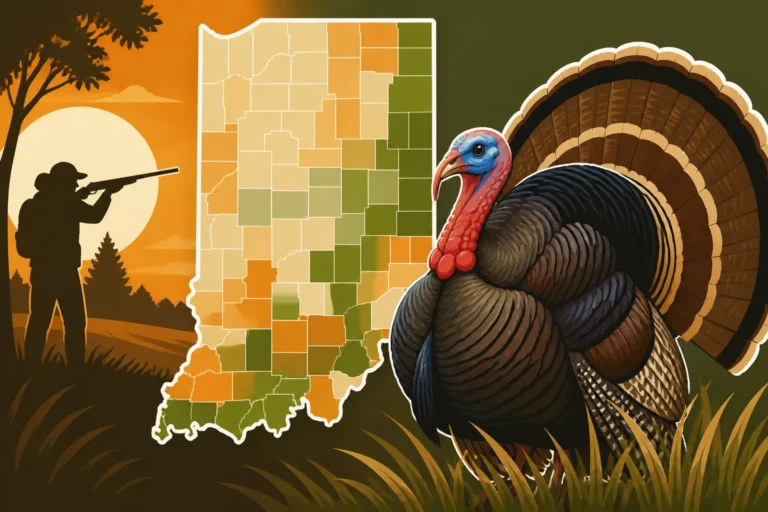
The most pronounced difference in turkey density in Indiana is often seen when comparing the southern, hillier regions to the northern, more agricultural areas. Southern Indiana, particularly the unglaciated portions of the state, boasts extensive blocks of hardwood forest, deep hollows, and diverse topography. Areas like the Hoosier National Forest, Yellowwood State Forest, and Morgan-Monroe State Forest provide prime turkey habitat, complete with abundant mast crops, natural water sources, and excellent cover. Consequently, these southern counties often exhibit higher turkey densities and better overall population health, making them perennial favorites for spring gobbler hunters. The sheer amount of unbroken timber provides excellent roosting habitat and less fragmented breeding grounds.
In contrast, northern Indiana is characterized by flatter terrain, extensive agricultural fields, and more fragmented woodlots. While turkeys can and do thrive in these areas, their populations tend to be more concentrated in pockets of suitable habitat, such as along river bottoms (like those you might find near the Wabash River, which you can read about in Hunting the Wabash River Bottoms), fencerows, and smaller timber blocks. Turkey Tactics for Farmland Field Edges become critical here, as birds often utilize these edges for feeding and travel between roosting cover and open fields. Turkeys in these areas learn to adapt to human presence and rely heavily on the cover provided by standing crops or dense riparian zones. The overall turkey Indiana Turkey Population Estimate takes both these distinct regions into account, but your personal experience will vary greatly depending on where you choose to hunt.
Urban Sprawl and Fragmented Habitats
Unfortunately, across both northern and southern Indiana, urban sprawl and ongoing development pose a persistent threat to turkey populations. As cities and towns expand, and as more land is converted for residential or commercial use, valuable turkey habitat is lost or becomes increasingly fragmented. This fragmentation can isolate turkey flocks, making it harder for them to move between different habitat types, find mates, or disperse to new areas. When a large block of woods is broken up by roads and subdivisions, it creates barriers that can limit genetic diversity and increase mortality rates due to vehicle collisions.
Even within seemingly natural areas, human activity can increase pressure on wildlife. More people recreating in the woods can push turkeys into smaller, more secluded pockets, making them warier and harder to hunt. This is particularly true around metropolitan areas, where finding unpressured birds can be a significant challenge. Wildlife managers continually work to mitigate these impacts through land acquisition, habitat restoration projects, and by encouraging sustainable land-use practices. For hunters, this often means adapting to finding and hunting smaller, more isolated pockets of birds, or seeking permission on private lands that offer more consistent, undisturbed habitat. Understanding these pressures helps us appreciate why conservation efforts, combined with careful hunting, are so vital for the long-term health of our White-Tailed Deer Across Indiana and turkey populations alike.
Turkey Population Factors and Their Impact on Hunters
Here's a quick look at some key factors that influence Indiana's wild turkey population and what that might mean for your hunting strategy:
| Factor | Impact on Turkey Population | Hunter Implication |
|---|---|---|
| Favorable Spring Weather | High poult survival | More juvenile birds, potentially more active and less wary gobblers in future seasons. |
| Harsh Spring Weather | Low poult survival | Fewer young birds; hunters may need to focus on older, more elusive gobblers. |
| Abundant Hard Mast (Acorns) | Good food source, healthy birds | Turkeys may be less reliant on agricultural fields; focus on timber scouting. |
| High Predator Numbers | Increased nest/poult loss | Populations may be more spread out, and birds might be warier. |
| Habitat Fragmentation | Reduced range, isolated flocks | Focus on larger, contiguous timber blocks and secure private land access. |
| Disease Outbreaks (Local) | Localized population dips | Research specific areas for current health reports; consider changing hunting spots. |
| Increased Hunting Pressure | Birds become warier | Employ stealthier tactics; hunt during off-peak times or in harder-to-reach areas. |
Disclaimer
This article is for general informational purposes only and does not constitute professional advice. Laws, prices and regulations vary by location and change over time. Consult a qualified professional for guidance on your specific situation.