Indiana Wild Turkey Subspecies
Many of us, when we start dreaming about turkey season, get caught up in the allure of the "Grand Slam" – chasing different subspecies across the continent. But if you’re hunting here in the Hoosier State, you might be wondering, "What kind of wild turkey am I actually chasing?" It's a common question, and understanding the specific subspecies native to Indiana is key to both appreciate their history and sharpen your hunting strategy. This guide will dive deep into the specific wild turkey subspecies you'll encounter in Indiana, explain why only one reigns supreme here, and how that knowledge can make you a more effective and successful turkey hunter.
The Eastern Wild Turkey: Indiana's Native Bird
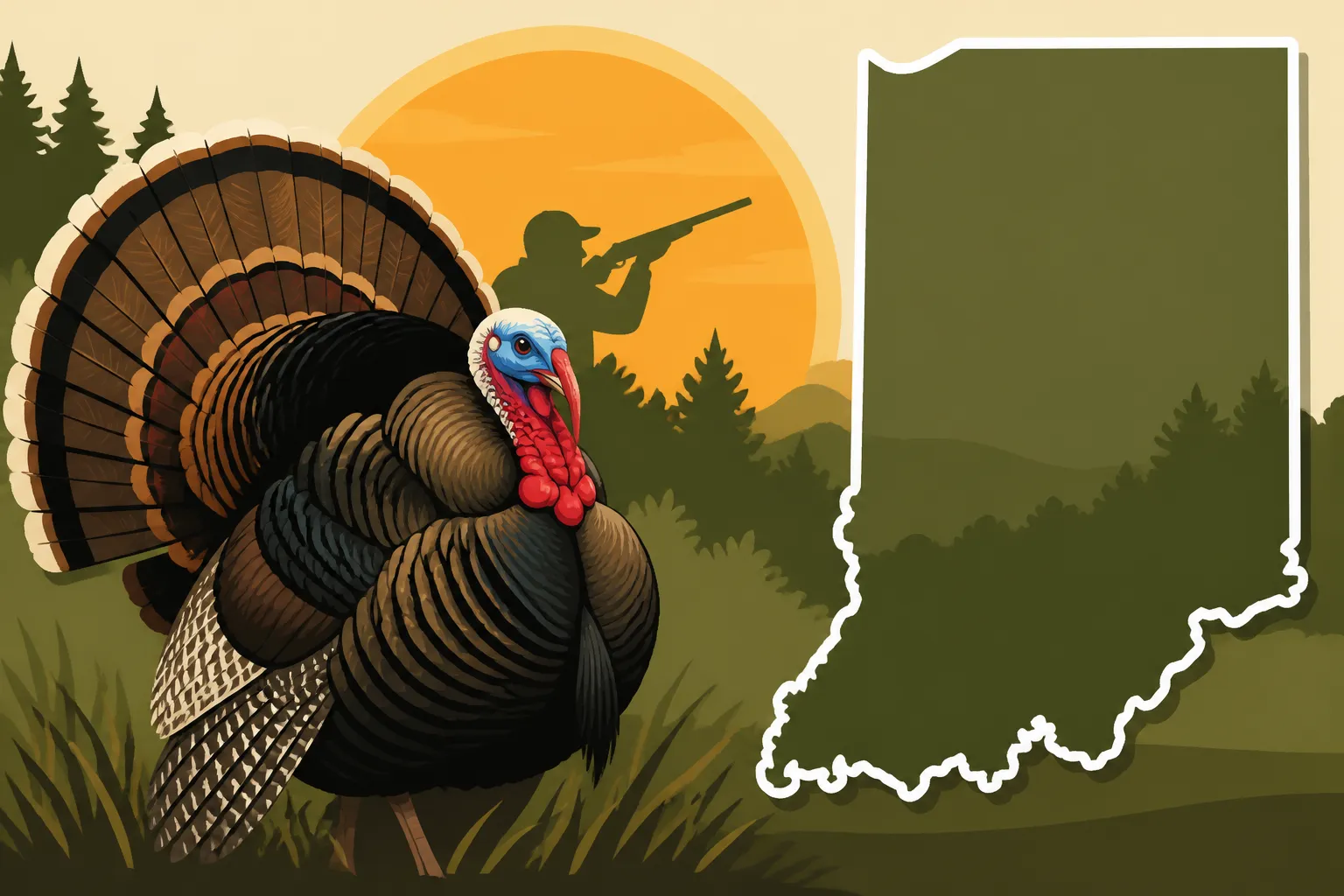
When you hear that unmistakable gobble echoing through the timber here in Indiana, you’re listening to an Eastern wild turkey. This isn't just one of many options; it's the wild turkey of our state. The Eastern subspecies is truly Indiana's native bird, a testament to incredible conservation efforts that brought them back from near extirpation. For generations, these magnificent birds have roamed our woodlands, and every spring, they offer an unparalleled challenge to hunters. Understanding their characteristics and habits is fundamental to successfully pursuing them.
Distinguishing Characteristics of Easterns
Eastern wild turkeys are truly a sight to behold, and they have distinct features that set them apart. Physically, they are robust birds, often sporting a rich, iridescent plumage that shimmers bronze, copper, and green in the sunlight. Their tail feathers are tipped with a chestnut or dark buff band, which can be a useful identifier. The primary wing feathers have stark white and black barring. Their heads are usually blue, red, and white, with the intensity of the colors changing with emotion and during the spring breeding season. The gobbler's caruncles (fleshy growths on the head and neck) become particularly pronounced and vivid when he's fired up and strutting for hens.
Beyond their looks, Easterns have a unique set of vocalizations. The classic gobble is, of course, their most famous call, but they also produce a wide array of yelps, clucks, purrs, and putts. Learning to interpret these calls, especially the subtle ones, is a huge part of being a successful turkey hunter. For instance, a soft purr might indicate contentment, while a sharp putt is a warning sign. Their behavior is also distinct; they are known for being wary and intelligent, often relying on keen eyesight and hearing to detect danger. They're not easily fooled, making every successful hunt a true accomplishment.
Habitat and Range in Indiana
Eastern wild turkeys are primarily forest dwellers, and Indiana offers them a fantastic array of suitable habitats. You'll find them thriving in our extensive deciduous woodlands, particularly areas with a mix of mature hardwood stands, open understories, and dense brushy cover. Think rolling hills of oak and hickory in Southern Indiana, or the mature river bottom timber found along the Wabash and White Rivers. These areas provide everything they need: roost trees for safety at night, acorns and other mast crops for food, and thickets for nesting and escape cover.
While they are primarily woodland birds, Easterns also readily utilize agricultural edges, especially where fields of corn, soybeans, or wheat meet a patch of woods. They'll often feed in these fields, especially in the fall and winter, but they almost always retreat to the safety of the timber to roost and breed. Their adaptability to various forest types, from the rugged terrain of the Hoosier National Forest to smaller woodlots tucked away in northern Indiana farmland, is a key reason for their successful comeback. When you're Scouting Indiana Public Land Before Season or even on private tracts, look for a mosaic of mature timber, undergrowth, and water sources to find where these birds like to hang out.
Restoration Success Story
It’s hard to imagine, but there was a time when wild turkeys were almost completely gone from Indiana. By the early 1900s, habitat destruction and unregulated hunting had pushed them to the brink, with only a handful of birds clinging to existence in the most remote corners of the state. It's a somber thought, realizing how close we came to losing them entirely. However, thanks to dedicated conservation efforts led by the Indiana DNR and supported by hunter-funded initiatives, a remarkable comeback story unfolded.
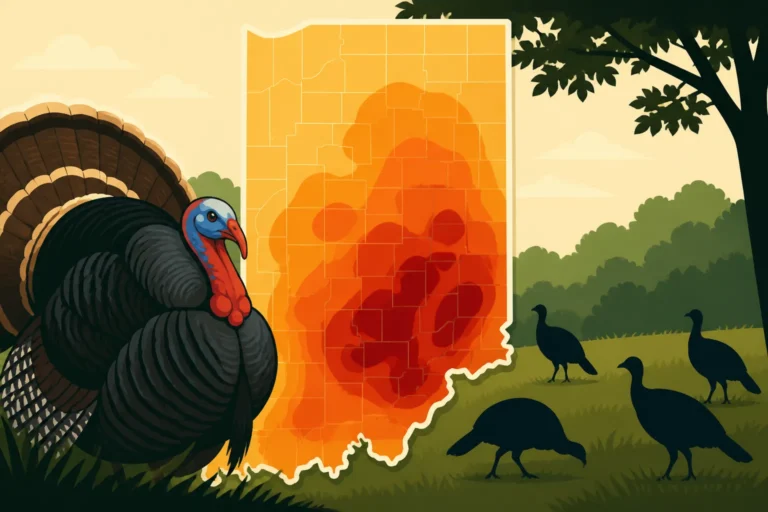
The restoration began in earnest in the 1950s and 60s, primarily through trap-and-transfer programs. Instead of trying to raise turkeys in captivity, which proved largely unsuccessful, wildlife biologists focused on trapping healthy, wild Eastern turkeys from thriving populations in other states (like Missouri) and relocating them to suitable habitats across Indiana. These wild-trapped birds, already possessing the instincts to survive, quickly established new flocks. This approach proved incredibly successful, and over the decades, wild turkey populations exploded. Today, you can find vibrant populations of Wild Turkeys in Indiana in every county, a true testament to what dedicated conservation and smart wildlife management can achieve. It's a legacy we, as hunters, are proud to be a part of.
Why You Won't Find Other Subspecies Here (Legally, Anyway)
While the dream of a "Grand Slam" is compelling for many turkey hunters, it's important to understand the biological and legal realities of turkey subspecies in Indiana. The vast majority of Indiana's wild turkey population consists solely of the Eastern subspecies. There's a good reason for this, and it impacts how you should approach your hunting strategy within the state.
The Grand Slam Dream vs. Indiana Reality
The concept of a "Grand Slam" usually involves harvesting four different subspecies of wild turkey: the Eastern, Merriam's, Rio Grande, and Osceola. Each of these birds occupies distinct geographical regions across North America and possesses subtle differences in plumage, vocalizations, and behavior that make them unique challenges. For example, the Merriam's, with its white-tipped tail feathers and preference for mountainous pine forests, is a stark contrast to the dark-tipped, hardwood-loving Eastern. The Osceola, found only in Florida, is a smaller, darker bird, while the Rio Grande roams the scrublands of the Southwest.
Here in Indiana, however, you're squarely in Eastern wild turkey territory. Our diverse landscapes, from dense southern Indiana timber to mixed agricultural and woodlot regions up north, provide ideal habitat for Easterns. The state's successful restoration program focused exclusively on reintroducing and expanding the Eastern subspecies, recognizing it as the historically native and best-adapted bird for our environment. So, while you might dream of chasing a Merriam's through the Rockies, in Indiana, your focus will be entirely on the wily Eastern. This simplifies things in a way, allowing you to truly master the local bird.
What About Stocking Efforts?
Sometimes, hunters wonder if other subspecies have ever been stocked in Indiana, or if there's a possibility of encountering them. Historically, before the successful trap-and-transfer programs of Easterns, there were some attempts to introduce non-native turkeys to Indiana, including some European strains or even turkeys from other parts of the U.S. that weren't the native Eastern subspecies. These early attempts were largely unsuccessful. The birds either didn't adapt well to the local climate and predators, or they interbred with the few remaining native Easterns, diluting the genetic purity without establishing robust, self-sustaining populations.
Modern wildlife management practices strongly prioritize the genetic integrity of native species. Introducing non-native subspecies could lead to genetic dilution, spread diseases that local birds aren't immune to, or even outcompete the native population for resources. For these reasons, the Indiana DNR does not stock other wild turkey subspecies. The focus remains on maintaining healthy, thriving populations of the native Eastern wild turkey. So, while you might hear stories or see an unusually colored bird, rest assured that any wild turkey legally harvested in Indiana is almost certainly a pure Eastern. This emphasis on native genetics is crucial for the long-term health of our Indiana Turkey Population Trends.
Genetics and Local Adaptations
Even though Indiana is home exclusively to the Eastern wild turkey, that doesn't mean every turkey in the state is a carbon copy of the next. Within any widespread species, local populations develop subtle genetic variations and behavioral adaptations based on their specific environment. Understanding these nuances can give you an edge, allowing you to tailor your hunting approach to the specific birds you're pursuing in your neck of the woods.
Regional Differences Within Indiana's Eastern Population
Think about it: the deep, rugged hills of Brown County are a far cry from the flat, agricultural landscapes of Benton County. It stands to reason that turkeys living in these vastly different environments might behave a little differently. While they're all Easterns, the local pressures and available resources can shape their habits. For instance, turkeys in heavily timbered, low-pressure areas of southern Indiana might be a bit more responsive to calling, or hold tighter in cover. They may travel longer distances up and down ridges for food and water.
Conversely, turkeys living near extensive farmlands in northern or central Indiana, where woodlots are smaller and human activity is higher, might be warier. They could be quicker to run at the sight of a predator or human, and might spend more time feeding in open fields, requiring different scouting and setup tactics. Their vocalizations might be less frequent in response to hunting pressure. These aren't different subspecies, but rather localized behavioral patterns that develop over generations as birds adapt to their immediate surroundings. It’s why what works for Roost Hunting Indiana Gobblers in the Hoosier National Forest might need to be tweaked when you're Turkey Tactics for Farmland Field Edges.
Understanding Your Local Flock
The best way to become a successful turkey hunter isn't just about mastering calling techniques; it's about becoming a student of your local flock. This means more than just knowing there are Easterns in the area. It involves paying close attention to their patterns, their preferred food sources, their travel corridors, and how they react to different situations. Are they roosting consistently in the same block of timber? Are they flying down into a specific field every morning? When do they seem most vocal, and when do they clam up?
Tools like the mapping features on platforms like GoHunt can be invaluable for this kind of detective work. You can mark roost sites, observe travel routes, and pinpoint potential strutting zones or feeding areas. By scouting before the season, or even paying attention to sign during deer season, you can build a comprehensive understanding of the birds you'll be targeting. Don't assume all Easterns behave identically; observe, learn, and adapt to the specific birds in your hunting zone. This localized knowledge often separates consistently successful hunters from those who struggle.
Impact on Hunting Strategy
Knowing that you're hunting Eastern wild turkeys in Indiana has a direct and significant impact on the strategies you'll employ in the field. This isn't just academic knowledge; it's practical information that informs your calling, your setup choices, and your overall approach to the hunt. You're dealing with a bird that has specific tendencies, and by understanding them, you can increase your odds of success.
Tailoring Your Approach to Easterns
Easterns are known for their intelligence, keen senses, and sometimes frustrating reluctance to "play the game" by the rules. They are less prone to breaking strut to come charging in than some other subspecies might be. They often prefer to come to a hen call only so far, expecting the hen to close the last distance. This means your setup is absolutely critical. You can't just set up anywhere and expect a gobbler to commit. You need to identify natural funnels, pinch points, and open areas where a gobbler feels safe approaching, or where he can strut effectively.
For calling, Easterns respond well to a variety of yelps, clucks, and purrs, but subtlety often reigns supreme, especially on pressured birds. Over-calling can easily educate a wary gobbler. Learning to read their mood through their responses – or lack thereof – is crucial. A soft cluck and purr might be all it takes to convince a hesitant bird to come those last few yards, especially if you're set up where he feels he has the advantage. Decoy placement, as discussed in Decoy Placement for Pressured Indiana Birds, also becomes a key factor, often placed where a gobbler can see them from a distance but still has to come to your location to investigate.
The Eastern Challenge
Hunting Eastern wild turkeys in Indiana is, for many, the ultimate turkey hunting challenge. They are incredibly wary, intelligent, and possess an uncanny ability to pinpoint a hunter's location. There's a reason why bringing an Indiana gobbler to the gun is such a celebrated achievement. You’ll experience plenty of "hung up" birds that gobble their heads off just out of range, or come in silent and bust you before you even know they're there. These experiences, while frustrating, are also what make the eventual success so incredibly rewarding.
It's a game of chess, patience, and adapting to the bird's every move. You need to be prepared for Run-and-Gun Turkey Tactics on Public Land if the birds aren't cooperating, or to sit motionless for extended periods if you know a gobbler is slowly making his way in. The spring season, particularly during Hunting the Indiana Spring Turkey Opener, can be a rollercoaster of excitement and quiet lulls. But every time you outsmart an Eastern gobbler, every time that thunderous gobble rattles your chest just before he steps into view, you'll know you've accomplished something special. It truly embodies the spirit of hunting in the Hoosier State.
| Subspecies | Primary Range | Tail Feather Tip Color | General Plumage | Typical Habitat | Found in Indiana? |
|---|---|---|---|---|---|
| Eastern | Eastern US | Dark Buff/Chestnut | Iridescent Bronze, Copper, Green | Deciduous Forests, Mixed Woodlands | YES |
| Rio Grande | Central/Western US | Tan/Light Buff | Copper/Green Sheen, Reddish | Arid Brushlands, Riparian Zones | NO |
| Merriam's | Western US/Mountains | White | Purple/Bronze Sheen, Blue | Coniferous Forests, Ponderosa Pine | NO |
| Osceola | Florida Peninsula | Dark Brown/Black | Dark Iridescent Green, Black | Palmetto Flats, Pine Forests | NO |
Disclaimer
This article is for general informational purposes only and does not constitute professional advice. Laws, prices and regulations vary by location and change over time. Consult a qualified professional for guidance on your specific situation.