Muzzleloader Deer Hunting in Indiana
The crisp air of December settles over Indiana, often bringing with it a unique set of challenges and rewards for deer hunters. While many seasons have come and gone, the muzzleloader season stands apart, offering a chance to extend your time in the woods and connect with a more traditional hunting experience. Yet, it's not without its quirks – from battling the elements to mastering black powder ballistics, it can feel like a completely different ballgame. This comprehensive guide will walk you through everything you need to know to confidently pursue whitetails with a muzzleloader across the Hoosier State.
Understanding Indiana's Muzzleloader Season
There's something incredibly special about carrying a muzzleloader afield. It slows you down, forces you to be more deliberate, and connects you to a hunting heritage that predates modern firearms. In Indiana, the muzzleloader season typically follows the main firearms season, often extending into the colder, late-December stretch. This timing presents both opportunities and obstacles, demanding a different approach than the bustling early fall.
The Allure of Late-Season Black Powder
For many of us, the muzzleloader season isn't just a fallback; it's a cherished annual event. Imagine walking through a snow-dusted woodlot, the silence broken only by the crunch of your boots. The deer are often more concentrated around dwindling food sources, and the pressure from other hunters might have tapered off a bit. This is when the true grit of a hunter is tested. You've likely already spent countless hours in a treestand during archery season, endured the chaos of the firearms opener, and now you get another shot. It’s a chance to savor those last few days in the deer woods before the long off-season truly sets in, and with fewer hunters out, you might even find some quiet pockets of public land that were slammed earlier in the year. The historical aspect, too, is a draw; loading a firearm from the muzzle feels like stepping back in time, adding a layer of authenticity to the pursuit.
Key Dates and Regulations
Indiana's muzzleloader season typically kicks off in early December and runs for a couple of weeks, though specific dates can shift slightly each year. It’s crucial to check the current Indiana DNR hunting regulations booklet or their website to confirm exact dates, as they are announced annually. The beauty of this season is that it offers a dedicated window after the main firearms season has concluded, allowing hunters to target deer with traditional or inline muzzleloaders. It's a prime opportunity for those who might not have filled their tags earlier or for anyone simply looking for more time afield. Make sure you understand the specific rules regarding legal equipment; while most modern inline muzzleloaders are permitted, there are often restrictions on things like scopes, ignition types, and propellant choices. Always double-check the fine print on Indiana Muzzleloader Season Dates to ensure you're compliant. Don't forget that you'll still need your appropriate licenses and tags, which you can purchase via the Go Outdoors Indiana portal or at licensed retailers. Understanding the overall Indiana Deer Season Structure Explained can also help you plan your entire hunting year.
Muzzleloader-Specific Zones and Opportunities
While the muzzleloader season is generally statewide, there are always nuances to consider regarding specific zones and their impact on your hunting strategy. Indiana has various deer reduction zones, urban archery zones, and even some public lands with unique restrictions. It's important to know if your chosen hunting ground has any special rules. For instance, some areas might have antlerless-only opportunities during specific portions of the muzzleloader season, offering a great chance to fill additional tags. Hunting a deer reduction zone with a muzzleloader can be particularly effective, as these areas often have higher deer densities and increased antlerless bag limits designed to manage populations. Always consult the DNR's interactive maps or a tool like GoHunt to scout and understand the specific regulations for the county or property you intend to hunt. These tools are invaluable for identifying property boundaries, public land access, and any local restrictions that might apply.
Choosing the Right Muzzleloader for Hoosier Whitetails
Stepping into the world of muzzleloaders can feel a bit overwhelming with all the options out there. From traditional flintlocks to space-age inlines, each has its pros and cons. For hunting Indiana whitetails, reliability, accuracy, and ease of use in cold, potentially wet conditions are paramount.
Inlines vs. Traditional Styles
When we talk about muzzleloaders for deer hunting in Indiana, we're primarily discussing two main categories: traditional sidelocks (like flintlocks or percussion cap rifles) and modern inlines. Traditional muzzleloaders, with their exposed hammers and ignition systems, offer an undeniable connection to history. They require more finesse, slower reloading, and are more susceptible to weather, making them a true test of skill. While deeply satisfying, they might not be the most practical choice for a novice hunter or someone prioritizing speed and weather resistance in a cold Indiana December.
On the other hand, inline muzzleloaders are the workhorses of the modern black powder world. These rifles feature an enclosed breech plug and an inline ignition system where the primer is directly behind the powder charge. This design significantly improves reliability in damp conditions, increases velocity, and makes cleaning easier. Brands like CVA, Traditions, and Thompson/Center are popular choices among Indiana hunters for their accuracy and robust construction. For most hunters looking to harvest a deer efficiently and reliably during the late season, an inline muzzleloader like the CVA Accura V2 or a Traditions Pursuit XT will be the go-to option. They bridge the gap between traditional hunting and modern firearm performance, making them ideal for the varying conditions you'll encounter during Muzzleloader Deer Hunting in Indiana.
Caliber Considerations for Indiana Deer
For muzzleloaders, there are two primary calibers that dominate the deer hunting landscape: .50 caliber and .45 caliber. Both are perfectly capable of humanely taking down an Indiana whitetail, but each has its own following and specific characteristics.
-
.50 Caliber: This is arguably the most popular and versatile choice. A .50 caliber projectile carries significant energy and creates a large wound channel, offering excellent terminal performance on deer. It's a forgiving caliber, and component availability (bullets, sabots, patches) is usually excellent. Most new inline muzzleloaders are chambered in .50 caliber, and it's what many hunters instinctively reach for. If you're new to muzzleloading, starting with a .50 caliber is a safe and effective bet.
-
.45 Caliber: While slightly smaller, a .45 caliber muzzleloader, especially when paired with modern sabot bullets, can be incredibly accurate and equally effective on deer. These often offer flatter trajectories at longer ranges, which can be an advantage if you're hunting more open fields or clear-cuts where longer shots might present themselves. However, the difference in trajectory for typical Indiana hunting distances (usually under 150 yards) is often negligible. Some hunters prefer the lighter recoil of a .45, but the energy delivered is still more than sufficient for deer.
Ultimately, both calibers are excellent choices. The key is to select one you're comfortable shooting accurately and to pair it with a suitable projectile. Reliability and ethical shot placement far outweigh any minor differences in caliber.
Features That Matter in the Field
When selecting a muzzleloader for the demanding late season in Indiana, certain features can significantly impact your success and enjoyment. You're not just looking for a gun; you're looking for a reliable tool that performs under pressure.
-
Ignition System: Most modern inlines use 209 shotgun primers, which are known for their hot, consistent ignition. This is critical in cold or damp weather where a weak spark could lead to a frustrating misfire. Look for systems that fully enclose the primer to protect it from the elements.
-
Barrel and Sights: A quality stainless steel barrel is a huge asset, especially if you're dealing with Indiana's notorious humidity and potential snow. It resists rust far better than blued steel. Fiber optic open sights are excellent for quick target acquisition in low light, common during late-season hunts. Many hunters, however, opt for a scope. For a muzzleloader, a fixed 4x or a low-power variable (1-4x, 2-7x) is usually ideal, providing ample magnification for typical shot distances without excessive weight or bulk.
-
Ease of Cleaning: Muzzleloaders, by their nature, get dirty. Black powder and its substitutes leave a lot of residue. A rifle with a removable breech plug that’s easy to access and clean will save you a lot of headache. Quick-release breech plugs are a godsend after a day in the field, making routine maintenance far less of a chore. Companies like CVA and Thompson/Center have put a lot of thought into designs that prioritize easy cleaning, which is a huge bonus when you're bundled up and tired after a cold hunt.
Ammunition and Components: Building a Reliable Load
Unlike a centerfire rifle where you buy a box of cartridges, muzzleloading involves assembling your "ammunition" piece by piece. This gives you incredible control over your load, but also means you need to understand each component and how it contributes to performance. For a reliable shot on an Indiana whitetail, every element matters.
Powder Types and Their Performance
The propellant is the heart of your muzzleloader load. Gone are the days when true black powder was the only option. Today, modern substitutes offer cleaner burning and easier cleanup, making them much more practical for deer hunting.
- Black Powder Substitutes (e.g., Pyrodex, Triple Seven, Hodgdon BH209): These are by far the most popular choice for Indiana deer hunters. They burn cleaner, are less corrosive, and are generally easier to ignite than true black powder.
- Pyrodex: A classic substitute, available in granular (loose) or pellet form. It's a good all-around performer, but still leaves a fair amount of residue that needs to be cleaned promptly.
- Triple Seven: Another popular option, often cited as burning even cleaner and producing higher velocities than Pyrodex. It's also available in granular or pellet form. Be aware that Triple Seven can produce higher pressures, so always follow manufacturer guidelines for maximum loads.
- Hodgdon BH209: This is a favorite among many serious inline muzzleloader hunters. It’s designed specifically for 209 primer ignition and is incredibly clean-burning, often allowing for multiple shots without swabbing the bore. Its major advantage is that it’s essentially non-corrosive, meaning you don't have to frantically clean your rifle the moment you get back from the woods – though proper cleaning is always recommended. It requires a hot 209 primer for reliable ignition. The downside is it's only available in granular form and is typically more expensive.
When selecting powder, consider the weather. Pellets are convenient, especially in cold, gloved hands, but loose powder often offers slightly better consistency and accuracy if you take the time to measure it precisely. Make sure to choose a powder that's compatible with your muzzleloader and its ignition system, as recommended by the manufacturer.
Projectile Choices for Knockdown Power
The projectile you choose is critical for ethical kills. You need a bullet that will expand reliably, retain weight, and penetrate deeply enough to reach vital organs. There's a lot of debate on Sabot Versus Conical for Deer, but both can be effective.
-
Sabot-Encased Bullets: These are the most common choice for modern inline muzzleloaders. A plastic sabot holds a smaller-diameter projectile (like a .45 caliber bullet in a .50 caliber sabot) tightly in the bore. When fired, the sabot separates, sending the bullet downrange. This allows you to use highly aerodynamic, jacketed bullets similar to those used in centerfire rifles, offering superior accuracy and ballistic performance. Popular options include Hornady SST, Barnes Expander MZ, and Thompson/Center Shockwave. These bullets are designed for controlled expansion and deep penetration, making them excellent for deer.
-
Conical Bullets (e.g., PowerBelt, Maxi-Ball): These are solid lead or copper bullets that are the full bore diameter of the muzzleloader (e.g., .50 caliber for a .50 caliber rifle). They typically don't use a sabot and are designed to engage the rifling directly. Conical bullets offer incredible energy transfer due to their mass and large frontal area upon impact, creating a devastating wound channel. PowerBelt bullets, with their small polymer tip and gas check base, are particularly popular for their ease of loading and accuracy in many rifles. They tend to be heavier than sabot-encased bullets, leading to slightly more trajectory drop at longer ranges but excellent knockdown power up close.
When making your selection, consider how easily the bullet loads down the bore – it should be snug, but not require excessive force. Test different brands and weights to see what shoots best out of your particular rifle.
Primers and Ignition Reliability
The primer is the spark that ignites your powder charge. For modern inline muzzleloaders, 209 shotgun primers are the standard. However, not all 209 primers are created equal.
- Standard 209 Primers: These will work in most inline muzzleloaders, but some powders (especially BH209) require a hotter spark for consistent ignition, particularly in cold weather.
- Magnum or "Hot" 209 Primers: Brands like CCI Magnum 209 or Winchester W209 primers offer a stronger, hotter flash, which can be crucial for reliable ignition with some powders and in frigid temperatures. This extra "oomph" helps ensure a complete burn of the powder charge, leading to consistent velocities and preventing hangfires or misfires.
A reliable ignition system is non-negotiable for muzzleloading success, especially during Indiana's often damp and chilly late season. It's frustrating to hear a "click" instead of a "boom" when a trophy buck is standing broadside. Always ensure your primers are fresh and stored in a dry environment. Consider carrying a small, waterproof container of extra primers in your pack – just in case.
Mastering Muzzleloader Accuracy and Range
Accuracy is paramount with any hunting firearm, but perhaps even more so with a muzzleloader. With a single shot, you need to make it count. The process of sighting in and practicing with a muzzleloader is a deliberate one, but ultimately builds immense confidence.
Sighting In Your Muzzleloader Properly
Sighting in a muzzleloader isn't a quick affair like with a centerfire. Each shot requires a full reload, so patience is key. Your goal is to find a consistent load combination (powder type/charge, bullet, primer) that groups well, and then adjust your sights or scope to hit your desired point of aim.
- Start Close, Work Back: Begin at 25 yards to ensure you're on paper. Make adjustments to get within a few inches of the bullseye.
- Move to Hunting Distance: For most Indiana muzzleloader hunting, a 100-yard zero is a great starting point, as it provides a relatively flat trajectory out to about 150 yards with many modern loads. If you primarily hunt dense timber, you might consider a 75-yard zero.
- Consistency is Key: Use a solid rest (sandbags, lead sled) and employ the same loading technique for every shot. This means consistently seating the bullet with the same amount of pressure and measuring powder accurately.
- Clean Between Shots (Sometimes): With traditional black powder, you must swab the bore between shots. With modern substitutes like Pyrodex or Triple Seven, you might need to swab every 2-3 shots to maintain accuracy. With BH209, you can often shoot many more times without swabbing, which speeds up the sighting-in process considerably. Pay attention to how your groups change with a fouled barrel and adjust your cleaning regimen accordingly.
- Practice in Hunting Conditions: If you hunt with a scope, make sure it’s properly mounted and torqued. If using open sights, ensure they are bright and clear. Consider sighting in with your hunting clothes on, especially if you use a heavy winter coat, as it can affect your cheek weld and shooting form.
Remember, the goal isn't just to hit the bullseye, but to consistently group your shots tightly, proving your chosen load is accurate and reliable for your rifle.
Practice, Practice, Practice for Confidence
Hitting the range once to sight in isn't enough. Muzzleloader shooting is a perishable skill, and confidence under pressure comes from repetition. This isn't just about shooting; it's about the entire process.
- Reloading Drill: Practice your reloading sequence until it's second nature. In the field, with cold fingers and an excited heart, you won't want to fumble with components. Work on smoothly uncapping the breech, pouring powder (or dropping pellets), seating the bullet, and capping the primer.
- Varying Positions: Don't just shoot from a bench. Practice from kneeling, sitting, and even standing positions, simulating real-world hunting scenarios. Using a shooting stick or bipod from a ground blind, or bracing against a tree from a treestand, are invaluable skills.
- Cold Weather Practice: If possible, shoot on a cold day. This will show you how your rifle and components perform in typical late-season Indiana conditions. It also helps you get used to manipulating the rifle while wearing gloves.
- Mental Preparation: Visualize successful shots. Understand your rifle's limitations and your own. This mental preparation, combined with solid physical practice, will dramatically increase your confidence when that moment of truth arrives. The more comfortable you are with the entire process, the less likely you are to make a mistake when a deer steps out.
Ethical Shot Distances in Indiana Terrain
One of the biggest mistakes muzzleloader hunters make is pushing their effective range too far. Unlike modern centerfire rifles, muzzleloaders have a much more parabolic trajectory, meaning the bullet drops significantly more at longer distances.
- Know Your Limits: Most experienced muzzleloader hunters limit their shots to 125-150 yards. While some highly accurate rifles with specific loads might stretch that a bit, exceeding 150 yards drastically increases the chance of a missed shot or, worse, a wounded animal. For dense timber or brushy river bottoms, your ethical limit might be much closer, perhaps 75-100 yards.
- Rangefinder is Your Friend: A good rangefinder is an indispensable tool for muzzleloader hunting. It eliminates guesswork and allows you to make precise adjustments or confirm whether a shot is within your ethical range.
- Understand Trajectory: Spend time at the range shooting at 50, 75, 100, and 125 yards to truly understand your bullet's drop. Create a small dope card or memorize your holdovers for these distances. For example, if you're zeroed at 100 yards, your bullet might be a couple of inches high at 50 yards and drop 6-8 inches at 150 yards, depending on your load. This knowledge is crucial for making accurate shots. Indiana's varied terrain, from the rolling hills of the Hoosier National Forest to flat farmlands, demands a keen awareness of your rifle's capabilities. Remember, the goal is a clean, humane kill, and that starts with knowing your personal and equipment limitations.
Tactics for Muzzleloader Season Success in Indiana
The muzzleloader season often falls during the late season, a period when deer patterns have shifted dramatically from the rut. Success now hinges on understanding winter survival strategies and adapting your approach to colder temperatures and dwindling food sources.
Capitalizing on Late-Season Food Sources
As winter tightens its grip on Indiana, natural food sources become scarce. This is perhaps the most critical factor in locating deer during muzzleloader season. Deer are primarily focused on finding calories to survive the cold, and they will gravitate towards the most accessible and nutritious options.
- Standing Agricultural Fields: If a farmer has left standing corn or soybeans, these become absolute magnets for deer. The corn provides high-energy carbohydrates, and the beans offer protein. Deer will bed in these fields or in adjacent cover and only move short distances to feed, often right at dawn and dusk. Setting up a ground blind along a Setting Up on a Northern Indiana Field Edge entry point or a travel corridor leading into these fields can be deadly.
- Browse and Mast: Don't overlook remaining mast crops, especially if there was a good acorn year. Deer will still be scavenging for any acorns left on the ground, particularly white oak acorns which are less tannic. Areas with good natural browse, such as young timber regeneration, honeysuckle, or greenbrier, will also attract deer looking for sustenance.
- Food Plots: If you're hunting private land, well-maintained food plots planted with late-season forages like brassicas, winter wheat, or clover will be prime locations. These plots are designed to be palatable and nutritious when other foods are gone, making them irresistible to hungry deer.
- Thermal Cover: As deer concentrate on food, they also need secure thermal cover to protect them from the elements and conserve energy. Thick cedar thickets, dense pine plantations, or heavy brush in creek bottoms provide excellent bedding sites near food. Focus on hunting the transition areas between this cover and food.
Understanding what Late-Season Food Sources for Indiana Whitetails are available in your specific hunting area is paramount. Scouting before the season, or even during the early muzzleloader days, will reveal fresh sign around these crucial feeding areas.
Locating Bucks on Public Land
Hunting public land during muzzleloader season can be both challenging and rewarding. Pressure from earlier seasons might have pushed deer into thicker, harder-to-reach areas, but the sheer size of places like the Hoosier National Forest offers plenty of room to roam and find unpressured pockets.
- Embrace the Walk: Don't be afraid to put in the miles. Most hunters won't venture too far from easily accessible roads. Focus on areas that are a mile or more in, especially those with steep terrain or creek crossings. Deer, particularly mature bucks, will seek refuge in these out-of-the-way locations. Using mapping apps like OnX or GoHunt can help you identify these remote spots and plan your routes.
- Focus on Topography: In southern Indiana, look for ridge-top saddles, benches, and thick creek bottoms that offer both food and security. Deer will often travel saddles and benches to conserve energy. Creek bottoms provide thermal cover and a natural travel corridor, especially if they are difficult for humans to navigate. For tips on Reading a Ridge for Hoosier Forest Deer, look for subtle changes in elevation that funnel deer movement.
- Observe Other Hunter Activity: While you want to avoid crowds, sometimes other hunters inadvertently push deer into specific areas. Pay attention to where you see other vehicles parked or hear shots. This can give you clues about deer movement patterns, helping you position yourself on escape routes or adjacent cover.
- Patience is a Virtue: Public land deer are often more nocturnal and wary. Plan for all-day sits, especially if temperatures are brutally cold, as deer might move to feed in the middle of the day during extreme weather. Be prepared for a long haul and dress for Cold-Weather Sitting Strategy in Indiana.
Adapting to Cold Weather and Snow
Indiana's muzzleloader season can bring brutal cold, rain, sleet, or snow. These conditions dramatically impact both deer behavior and your hunting strategy. While challenging, they also present unique advantages.
- Snow Reveals Everything: A fresh snowfall is a muzzleloader hunter's dream. It quiets the woods, and more importantly, it makes deer sign incredibly obvious. Fresh tracks, browsing, and even rub lines that were invisible before suddenly pop out. This is the time to go still-hunting or tracking. If you find fresh tracks in the snow leading from bedding to feeding, you're in business. Learning to identify and follow fresh sign is a skill that pays off immensely, especially when Tracking a Deer in Fresh Indiana Snow.
- Thermals and Wind: In cold weather, thermals become even more predictable. Cold air sinks, meaning early morning thermals will generally flow downhill, while rising evening thermals will carry scent uphill. Play the wind meticulously, especially when hunting around bedding or feeding areas. A steady wind can also help cover your movement noise.
- Dress in Layers: This cannot be overstated. Freezing temperatures can quickly end a hunt. Focus on a good wicking base layer, insulating mid-layers (wool or fleece are excellent), and a waterproof/windproof outer shell. Bring hand warmers, a thermos of hot coffee or soup, and a comfortable, insulated seat pad for long sits. Staying warm means staying focused.
- Muzzleloader Care in the Cold: Cold metal can also make your gun harder to handle. Keep your muzzleloader as dry as possible. A clean bore is even more important in cold, wet conditions for consistent ignition. Consider a muzzleloader scope cover or a "bore umbrella" to prevent moisture from entering the barrel. Remember, Keeping Powder Dry in Wet Snow is critical for preventing misfires.
Essential Gear Beyond the Muzzleloader
While your muzzleloader is obviously the star of the show, having the right supporting gear is what makes the difference between a miserable, short hunt and a successful, comfortable one during Indiana's late season.
Layering for the Indiana Winter Woods
Late-season hunting in Indiana means dealing with highly variable, often freezing, temperatures, coupled with potential precipitation. Effective layering is not just about comfort; it's about safety.
- Base Layer: This is your foundation. Choose a material that wicks moisture away from your skin. Merino wool or synthetic blends are excellent. Avoid cotton, which absorbs sweat and then freezes, making you dangerously cold. A good base layer keeps you dry, which in turn keeps you warm.
- Mid-Layers: These provide the bulk of your insulation. Fleece, down, or more merino wool layers work well. The key is to add or subtract these as your activity level or the temperature changes. If you're walking a lot, you might wear fewer mid-layers than if you're sitting stationary for hours. Having multiple thinner layers is better than one thick one, as it allows for more precise temperature regulation.
- Outer Layer: This needs to be windproof and waterproof. A good GORE-TEX or similar membrane jacket and pants will shed rain and snow while blocking biting winds. Choose quiet fabrics that won't rustle loudly when you move, especially if you're still-hunting or drawing a muzzleloader up. Don't forget high-quality, insulated blaze orange, as required by Indiana law during firearms and muzzleloader seasons.
- Extremities: Your head, hands, and feet lose heat quickly. A warm beanie or balaclava, insulated gloves or mittens (with fingerless options for shooting), and heavy, moisture-wicking wool socks paired with insulated, waterproof boots are non-negotiable. Nothing ends a hunt faster than frozen toes or fingers. Brands like Sitka, KUIU, First Lite, and even budget-friendly options like DSG Outerwear for women, offer excellent layering systems designed for cold weather hunting.
Optics for Low Light and Identification
Good optics are invaluable, especially during the low-light periods typical of late-season deer movement. They help you identify game, assess shot opportunities, and stay safe.
- Binoculars: A good pair of 8x or 10x binoculars is essential. They allow you to scan fields, identify deer in dense cover, and determine if a buck has legal antlers without unnecessary movement. In the dim light of dawn and dusk, quality glass with good light-gathering capabilities can give you precious extra minutes of viewing time. Look for trusted brands like Vortex, Leupold, or Maven.
- Rangefinder: As mentioned before, a rangefinder is crucial for muzzleloader hunting. It takes the guesswork out of estimating distances, ensuring you know if a shot is within your ethical range. Many models now offer angle compensation, which is helpful when shooting from elevated positions or up/down steep inclines, like those found in parts of Southern Indiana.
- Rifle Scope (Optional but Recommended): While traditional muzzleloaders might use open sights, most modern inline muzzleloaders are drilled and tapped for scopes. A low-power variable scope (e.g., 2-7x or 3-9x) provides a clear sight picture and allows for precise aiming. Choose a scope with good light transmission for those critical dawn and dusk hours. An illuminated reticle can also be a huge advantage in low light or against a dark background. Make sure your scope is sighted in for Indiana timber ranges.
Field Care and Recovery Tools
Harvesting a deer is only half the battle; proper field care and efficient recovery are just as important, especially in cold weather.
- Field Dressing Kit: A sharp, reliable knife (and a spare), latex gloves, and a small game bag or sturdy trash bag for organs are essential. Cold weather can slow down the spoilage process, but quick field dressing is still crucial for venison quality.
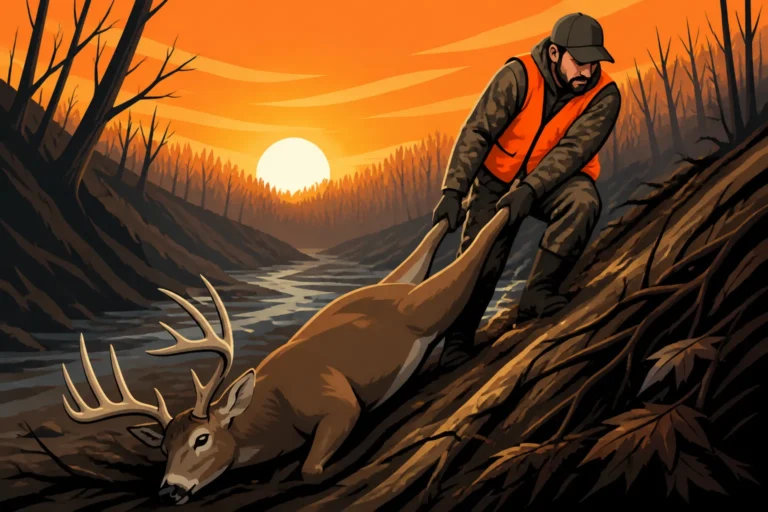
- Drag System: Whether it's a deer sled, a game cart, or a simple drag rope, have a plan for getting your deer out of the woods. A deer sled is particularly useful in snow or muddy conditions, making recovery much easier than simply dragging by hand. For those tough retrieves from Recovering a Deer From a River Bottom, having a good system can save your back and sanity.
- Headlamp/Flashlight: You might be walking in before dawn or walking out after dark. A powerful headlamp with a red light option (to preserve night vision) is a must-have. Bring spare batteries!
- GPS/Phone with Mapping App: Getting lost is a real concern, especially in vast public lands or unfamiliar private tracts. A reliable GPS unit or a phone with a pre-downloaded mapping app (like GoHunt or OnX) is essential for navigation, marking your stand, and finding your way back to your vehicle. Remember that cell service can be spotty in remote areas, so always have an offline map available.
Overcoming Common Muzzleloader Challenges
Muzzleloaders, by their nature, present unique challenges that modern centerfire rifles largely eliminate. Embracing and understanding these quirks is part of the experience, and knowing how to overcome them can save your hunt.
Preventing Misfires and Hangfires
Nothing is more disheartening than a "click" when you expect a "boom," especially with a deer in your sights. Misfires and hangfires (a delayed ignition) are often preventable with proper technique and maintenance.
- Clean Breech Plug: A dirty breech plug, especially the flash channel, can prevent the primer's spark from reaching the powder. Clean your breech plug thoroughly after every range session and ensure it's free of fouling before heading into the woods. Some hunters even carry a spare, clean breech plug.
- Hot Primers: As discussed, using a magnum or "hot" 209 primer can significantly improve ignition reliability, particularly with certain powders like BH209 or in cold temperatures. Ensure your primers are fresh and stored in a dry, airtight container.
- Proper Loading: Consistent, firm seating of the bullet against the powder charge is vital. Any air gap between the bullet and powder can lead to a dangerous situation (a bulged barrel) or, more commonly, a misfire or hangfire due to inconsistent ignition. Use a marked ramrod to ensure the bullet is seated in the same spot every time.
- Dry Powder: Even modern substitutes can be affected by moisture. Ensure your powder is fresh and stored properly. If using loose powder, use a powder measure or speed loader that keeps the powder dry until just before loading.
- Vent Liner Maintenance: For traditional percussion rifles, ensure the vent liner (nipple) is clear and free of fouling. A small pick can be used to clear it before loading.
By being meticulous with your loading process and maintenance, you can dramatically reduce the chances of a frustrating misfire.
Keeping Powder Dry in Wet Conditions
Indiana weather can turn on a dime, and nothing ruins a muzzleloader hunt faster than wet powder. Protection from moisture is non-negotiable.
- Waterproof Speed Loaders: If you use loose powder, invest in waterproof speed loaders that hold a pre-measured charge and projectile. These keep your components dry until the moment of loading.
- Breech Plug Covers/Bore Umbrellas: Small plastic or rubber caps that fit over the end of your muzzle or around the breech plug can prevent rain or snow from entering the barrel or ignition system. These are inexpensive and incredibly effective.
- Primer Protection: Ensure your inline muzzleloader's primer pocket is well-sealed from the elements. Some designs are better than others. A small piece of electrical tape over the primer can also offer extra protection in truly foul weather, but remove it carefully before shooting.
- Gun Covers/Sleeves: When carrying your muzzleloader in heavy rain or snow, a soft gun sleeve or even simply wrapping it in a plastic bag can provide crucial protection. Don't let your barrel or action sit exposed to the elements for extended periods.
As emphasized in Keeping Powder Dry in Wet Snow, diligence in moisture protection will save you from a ruined hunt.
Cleaning and Maintenance in the Off-Season
Muzzleloaders require more diligent cleaning than most other firearms, especially if you're using black powder or its substitutes. The corrosive nature of the fouling means prompt and thorough cleaning is essential to prevent rust and maintain accuracy.
- Prompt Cleaning: Ideally, clean your muzzleloader as soon as possible after shooting. The longer the corrosive fouling sits in the barrel, the more damage it can do. If you can't clean immediately, at least run a patch soaked with a muzzleloader-specific solvent down the bore.
- Muzzleloader-Specific Solvents: Use solvents designed for black powder or its substitutes (e.g., Hoppe's No. 9 Plus Black Powder, T/C No. 13 Bore Cleaner). These are formulated to break down the unique fouling left behind. Do not use regular smokeless powder solvents, as they are not effective on black powder residue.
- Breech Plug Removal: Remove and clean the breech plug thoroughly. Use a small wire brush or pick to ensure the flash channel is completely clear. Lightly grease the threads of the breech plug with anti-seize compound before reinstallation to prevent it from seizing up.
- Thorough Bore Cleaning: Use a bore brush specific to your caliber, followed by numerous patches soaked in solvent, until they come out clean. Finish with a dry patch, then a patch lightly oiled with a rust preventative.
- Off-Season Storage: Once clean, apply a thin coat of rust-preventative oil to all metal surfaces, inside and out. Store your muzzleloader in a dry, cool environment, ideally in a breathable gun sock rather than a hard case, which can trap moisture.
A well-maintained muzzleloader is a reliable muzzleloader, ready for many more late seasons in the Indiana woods.
Post-Harvest: Care and Reporting
Congratulations! You've navigated the challenges of muzzleloader hunting in Indiana and successfully harvested a deer. Now, the final steps of field care, legal reporting, and venison processing are crucial to honor your harvest and comply with state regulations.
Field Dressing and Transporting Your Deer
Proper field dressing and transport are essential for ensuring the quality of your venison, especially if you're hunting during the milder parts of the early muzzleloader season when temperatures might still be above freezing, though late December is typically cold enough to slow bacterial growth.
- Prompt Field Dressing: As soon as you recover your deer, begin field dressing. This involves removing the internal organs to allow the carcass to cool rapidly. Make a careful incision from the breastbone to the pelvis, working around the anus. Be precise to avoid puncturing the stomach or intestines.
- Cooling the Carcass: In cold Indiana weather, simply hanging the deer in a shaded, well-ventilated area can be sufficient for cooling. If temperatures are above 40 degrees Fahrenheit, you might need to pack the body cavity with ice or transport the deer quickly to a processor or walk-in cooler.
- Transporting the Deer: Before moving your deer, make sure you've attached your deer tag as required by Indiana law. This tag must remain with the carcass until processing. When transporting, try to keep the deer as clean as possible. Avoid dragging it through excessive mud if you can help it. If transporting in the back of a vehicle, lay it on a tarp or in a truck bed liner to contain any blood. The goal is to get it to its final destination (home or processor) cleanly and efficiently. For longer distances, especially in warmer weather, consider quartering the animal and placing the meat in coolers with ice.
Legal Reporting Requirements for Indiana Deer
Indiana has clear and mandatory reporting requirements for all harvested deer. This process is simple but critical for the DNR to manage deer populations effectively.
- Immediate Reporting: You must register your deer within 48 hours of harvest. The easiest and most common way to do this is through the Indiana DNR's online check-in system or the Go Outdoors Indiana mobile app.
- Information Needed: You'll need information such as your license number, the date and county of harvest, the weapon used (muzzleloader in this case), and whether the deer was antlered or antlerless. The system will then provide you with a confirmation number, which you should keep.
- Tagging and Confirmation: After reporting, the confirmation number becomes part of your physical tag or can be noted on your printed license. This confirmation number must stay with the processed meat or hide until it's consumed, transferred, or disposed of.
- CWD Zone Specifics: If you harvest a deer within Indiana's Chronic Wasting Disease (CWD) positive area (currently a few counties in the northeast), there may be additional mandatory testing requirements or carcass movement restrictions. Always check the latest DNR regulations for details on Indiana's Chronic Wasting Disease Positive Area to ensure compliance and help protect the deer herd. Learning how to Registering an Indiana Deer Online is a straightforward process that every Hoosier hunter needs to know.
Processing and Preserving Your Hard-Earned Venison
After all the effort you put into your muzzleloader hunt, the final reward is delicious venison. Proper processing and preservation ensure you can enjoy it year-round.
- Home Processing vs. Professional Processor: Many hunters enjoy the satisfaction and cost savings of processing their own deer. If you go this route, ensure you have sharp knives, a clean workspace, and understand the basic cuts. There are numerous online tutorials and guides to walk you through it. Alternatively, many excellent wild game processors across Indiana will skin, butcher, and package your deer for a fee. This is a great option if you lack the time, space, or expertise.
- Aging the Meat: If temperatures are consistently cold (35-40°F), you can consider aging your deer for a few days to a week. This enzymatic process tenderizes the meat and can improve flavor. Hang the deer in a cool, dark, well-ventilated space, protected from pests.
- Packaging and Freezing: Once butchered, package your venison tightly in freezer paper, vacuum-seal bags, or heavy-duty freezer bags. Remove as much air as possible to prevent freezer burn. Label each package with the cut and date. Properly packaged venison can last in a freezer for 12-18 months.
- Beyond the Freezer: Consider making venison jerky, sausage, or canning some stew meat for a change of pace. These methods offer different ways to enjoy your harvest and extend its shelf life. Your muzzleloader hunt provides not just an experience, but a freezer full of lean, organic protein for your family.
Disclaimer
The information provided in this guide is for general informational purposes only and does not constitute legal advice. Hunting regulations and seasons can change, and it is the responsibility of every hunter to consult the most current Indiana Department of Natural Resources (DNR) rules and regulations before participating in any hunting activity. Always prioritize safety, ethical hunting practices, and respect for wildlife and landowners.