Treestand Setups in Hoosier National Forest
Hunting in the vast expanse of the Hoosier National Forest can feel like a daunting task, especially when you're trying to pinpoint the perfect spot for a treestand. The sheer scale, rugged terrain, and the seemingly endless canopy of trees make it tough to know where to even start. This guide aims to cut through that confusion, offering practical, in-depth advice on how to scout, select, and safely set up your treestand to increase your chances of success in Indiana's beautiful, yet challenging, public lands.
Understanding Hoosier National Forest Terrain for Treestands
The Hoosier National Forest, stretching across southern Indiana, is a beast of a different color compared to the flat farmlands up north. It’s a place of rolling hills, deep ravines, and thick timber, which presents both unique challenges and incredible opportunities for the treestand hunter. You can’t just throw a stand up anywhere and expect results; you need to understand the lay of the land, literally.
The Challenges of Steep Ridges and Deep Hollers
Anyone who has spent time humping a treestand into the Hoosier knows the grind. The steep ridges and deep "hollers" (local lingo for hollows or ravines) can be exhausting, and what looks like a minor contour on a map can be a near-vertical climb in person. This rugged topography directly impacts deer movement and, consequently, your treestand strategy. Deer often prefer to travel along contours, using benches or subtle breaks in the terrain to conserve energy. They’ll also use the bottoms of these deep hollers, especially if a creek or heavy cover provides a secluded travel corridor.
The biggest frustration here is often finding a tree that works with the terrain. You might find a perfect signpost rubbing on a ridge, only to realize the only nearby trees are too small, too limby, or on a slope so severe that hanging a stand is a dangerous proposition. This is where patience, and sometimes a willingness to move an extra 100 yards, really pays off. Often, the ideal tree isn't right on the sign, but positioned to intercept deer approaching it, taking the difficult terrain into account for your shot angle and safety. Understanding how Reading a Ridge for Hoosier Forest Deer can give you a significant advantage in these situations is crucial.
Identifying Key Habitat Features and Transition Zones
The Hoosier is a mosaic of different habitat types, and understanding them is paramount for successful treestand placement. You’ll find vast stands of mature hardwoods, often dominated by oaks and hickories, which are critical food sources during the fall. Interspersed within these are pine plantations, thick cedar thickets, and areas of dense regrowth from past timber harvests or natural disturbances. Deer will utilize these different features for food, cover, and bedding, and your job is to find the transition points.
Focusing your scouting efforts on the edges where these habitat types meet can be incredibly productive. Think about where a dense pine thicket, perfect for bedding, butts up against a mature oak flat, where deer might feed. Or consider the edge of a recent clear-cut, now dense with saplings and briars, offering fantastic cover adjacent to a more open travel corridor. These transition zones are natural highways for deer moving between their daily routines. Don't underestimate the importance of water sources, too. Small creeks, seeps, or even temporary puddles in low spots can be magnets for deer, especially during dry spells, creating another prime transition to target.
Navigating Timber Stands and Understory Density
The density of the timber and the understory in the Hoosier National Forest varies wildly. Some areas feature open, park-like mature timber with minimal undergrowth, allowing for long sight lines but less concealment. Other sections can be incredibly thick, choked with greenbriar, multiflora rose, and dense saplings that make walking, let alone seeing, a challenge. This density dictates deer travel patterns and how exposed they feel.
In open timber, deer might feel more vulnerable and stick to subtle terrain features or faint trails. Here, your stand placement needs to maximize your concealment, perhaps using a tree with a thick canopy or some surrounding evergreens. Conversely, in extremely thick cover, deer often create distinct "tunnels" through the vegetation. Finding these natural funnels and placing a stand strategically within them can be a game-changer, as deer are almost forced to use them. The frustration here is often finding a shooting lane in such dense cover. You might need to do some minimal, legal trimming (check current DNR regulations for public land) or opt for a fixed-position stand that allows for precise limb removal before the season. Remember, you're not just looking for a tree, but a spot that offers good shooting lanes while maintaining concealment.
Scouting Strategies for Treestand Placement in Hoosier NF
Effective scouting is the bedrock of successful treestand hunting, especially in a vast, complex area like the Hoosier National Forest. You can’t just show up on opening day and expect to find the perfect spot. It requires a blend of digital reconnaissance and diligent boots-on-the-ground effort. This commitment to pre-season work will significantly reduce your in-season frustrations and increase your odds.
Pre-Season Digital Scouting with Mapping Tools
Before you ever set foot in the woods, the best place to start your scouting is from your couch. Modern mapping applications are incredible tools for dissecting the Hoosier National Forest. A platform like GoHunt, or other similar mapping tools, allows you to pour over satellite imagery, topo maps, and even public land boundaries from the comfort of your home. Look for patterns:
- Ridge Lines and Saddles: These are natural travel corridors. Deer will often cross between drainages or over ridges at the lowest point, known as a saddle. These are high-traffic areas.
- Drainage Systems and Creek Bottoms: Follow these on the map. They often funnel deer movement, especially where two drainages converge.
- Habitat Changes: Identify where hardwoods transition to pines, where old clear-cuts are now dense with new growth, or where agricultural fields (if adjacent to public land) meet the timber.
- Remote Areas: Use the topo lines to find the steepest, nastiest terrain that most hunters will avoid. Often, mature bucks will seek refuge in these hard-to-reach places.
Don't just look for spots; look for routes. Plan your access and exit routes digitally, making sure they are as quiet and low-impact as possible. This helps you visualize your hunt long before you get there. Using an app with specific public land layers, like the ones available on GoHunt, can save you from trespassing accidentally and help you quickly identify legal hunting boundaries within the massive forest.
Boots-on-the-Ground Reconnaissance and Reading Sign
Digital scouting gets you in the ballpark, but nothing beats actual boots on the ground. This is where you verify what you saw on the map and discover the subtle nuances that satellite imagery can’t reveal. Plan multiple scouting trips, especially in the late winter and early spring when the leaves are off the trees, and deer sign is easiest to spot.
- Find Trails: Not just faint paths, but well-worn deer trails, especially those leading to and from bedding areas or major food sources. Look for where multiple trails converge.
- Locate Rubs and Scrapes: Fresh rubs are a clear sign that a buck is active in the area. Look for rub lines, which can indicate a buck's travel route. Scrapes, especially large community scrapes, show consistent deer activity. Pay attention to their orientation relative to prevailing winds.
- Identify Bedding Areas: This is often the hardest part. Look for dense cover on south-facing slopes (for warmth) or thick pockets within ravines where deer can hide and feel secure. Tracks and droppings within these areas are strong indicators. Where Hoosier National Forest Bucks Bed often comes down to finding these subtle, secure spots away from pressure.
- Observe Food Sources: During late summer and early fall, identify mast crop production. Are the oak trees dropping acorns? Are there persimmon trees? Deer will gravitate to the best food sources, and knowing which ones are producing can help you predict movement.
When scouting, walk slowly, quietly, and use your binoculars. Don't be afraid to sit and observe for a while, letting the woods tell you its story. Note potential stand trees that offer good cover, clear shooting lanes, and an advantageous wind.
Understanding Deer Movement Patterns and Funnels
Deer movement in the Hoosier National Forest is heavily influenced by terrain, food availability, and hunting pressure. The key to successful treestand placement is to intercept deer as they move naturally through the landscape. Think about the "why" behind their movement.
- Feeding to Bedding: Deer spend a significant portion of their day either feeding or bedding. Your goal is often to catch them moving between these two points, especially at dawn and dusk.
- Terrain Funnels: These are natural choke points where deer are forced into a smaller area. This could be a narrow saddle between two ridge points, a pinch point between a steep bluff and a creek, or a thick strip of cover connecting two larger woodlots. These are prime locations for a stand, as they concentrate deer movement.
- Man-Made Funnels: Don't overlook old logging roads, utility line clearings, or fence rows. While man-made, deer quickly adapt and use these as easy travel routes, especially if they offer some cover.
- Hunting Pressure: Deer in the Hoosier, like all public land deer, are very sensitive to pressure. They will adjust their patterns to avoid hunters. This often means moving during darkness, using thicker cover, or sticking to the hardest-to-reach areas. Your treestand strategy should account for this, often by targeting travel routes to these sanctuaries. This is why Hunting Pressure on Indiana Public Land is a critical factor in your setup.
By understanding these patterns, you can place your treestand not just where deer are, but where they will be. It's about thinking like a deer and anticipating their next move.
Choosing the Right Treestand and Setup Style
The choice of treestand is a deeply personal one, influenced by hunting style, physical ability, and the specific characteristics of the Hoosier National Forest. What works for one hunter in one spot might be completely impractical for another. Understanding the pros and cons of each type will help you make an informed decision for your Indiana adventures.
Climbing Stands for Mobility and Versatility
Climbing stands are the workhorses for many public land hunters, particularly those who prioritize mobility. In the Hoosier, where you might need to move your stand frequently based on changing food sources, deer patterns, or hunting pressure, a reliable climber can be invaluable. Brands like Summit or Lone Wolf offer lightweight, packable options that are perfect for navigating the forest.
The biggest advantage of a climber is its "set it and forget it" nature, meaning you pack it in and out each hunt. This leaves no trace, reduces the risk of theft, and allows you to adapt to new sign almost immediately. However, climbers are not without their limitations. They require a relatively straight, limb-free tree for safe operation, which can be a challenge to find in the gnarlier sections of the Hoosier National Forest. Moreover, the process of climbing can be noisy if you're not practiced, potentially alerting nearby deer. Despite these drawbacks, for hunters who scout aggressively and adapt on the fly, a climber is an excellent tool for Bowhunting Indiana's Long Archery Season across varied terrain.
Fixed-Position Stands for Strategic, Long-Term Placement
Fixed-position, or lock-on, stands are the choice for hunters who have identified a truly "money" spot and want to leave a stand in place for a significant portion of the season. These stands, paired with climbing sticks, allow you to ascend virtually any tree, regardless of its limb structure or slight curvature, giving you far more flexibility in tree selection than a climber. This can be crucial in areas where suitable climbing trees are scarce.
The advantage here is reduced noise and disturbance on subsequent hunts. Once the stand and sticks are set, your entry and exit can be much quieter, minimizing your impact on the area. This makes them ideal for targeting specific pinch points, hidden food plots on private land bordering the public, or bedding area fringes that you’ve scouted meticulously. The downside is the initial effort of hanging the stand and sticks, which can be laborious and potentially intrusive to the deer's environment if not done carefully. There’s also the inherent risk of theft on public land, which is a real concern for many hunters. If you plan to leave a stand out, ensure it's well-secured, camouflaged, and consider a locking cable. For those looking for durable, yet relatively lightweight options, companies like Hawk or Muddy offer robust fixed-position stands.
Saddle Hunting for Ultimate Stealth and Adaptability
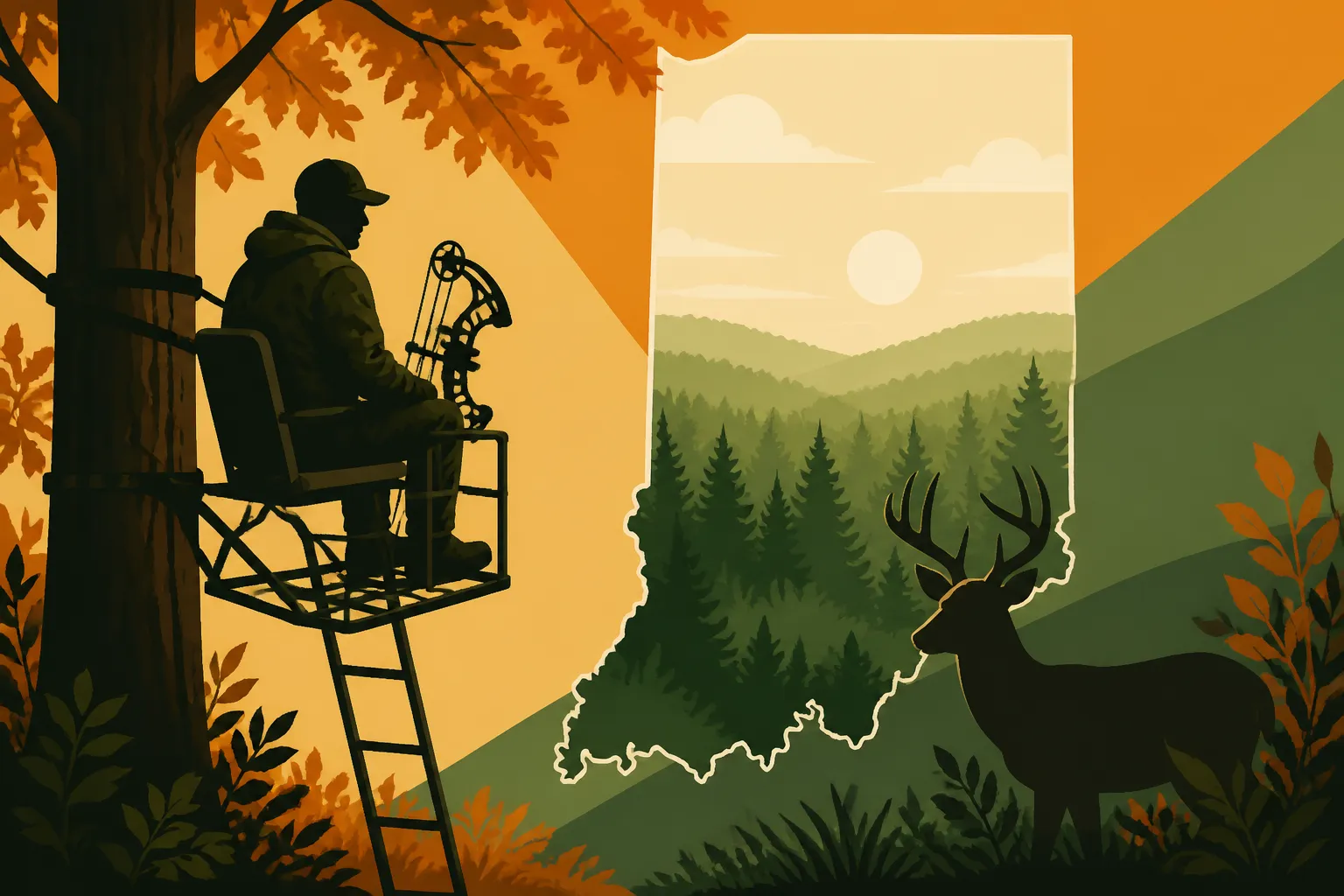
Saddle hunting has exploded in popularity in recent years, and for good reason, especially in challenging public land environments like the Hoosier. A saddle system essentially turns you into a part of the tree, allowing for 360-degree shooting lanes and incredible stealth. It’s arguably the most mobile and adaptable treestand setup, weighing significantly less than traditional stands.
The primary benefit of saddle hunting is its unparalleled versatility. You can climb virtually any tree that can support your weight, and you can position yourself on the backside of the tree, using the trunk as natural cover from a deer's line of sight. This level of concealment is difficult to achieve with a traditional platform stand. You also have the flexibility to shoot around the tree, adapting to deer movement in real-time. The learning curve for saddle hunting can be steeper than for traditional stands, as it requires mastering different climbing methods (like single-stick ascenders or rope climbing) and getting comfortable with the unique sitting posture. However, for those willing to put in the practice, Saddle Hunting in Indiana Hardwoods offers the ultimate advantage in stealth, mobility, and adaptability, making it perfect for hunting pressured deer on public land.
| Treestand Type | Ideal for Hoosier NF Scenario | Pros | Cons |
|---|---|---|---|
| Climbing Stand | Frequent relocation, active scouting, straight trees | Highly mobile, no sticks to carry, less theft risk | Requires straight, limb-free trees; can be noisy ascending |
| Fixed-Position (Lock-on) | Known hotspots, versatile tree choice, longer sits | Can be hung in almost any tree, quiet entry after setup | Initial setup is time-consuming/noisy; higher theft risk |
| Saddle Hunting | Maximum stealth, uneven terrain, high pressure areas | Extreme mobility & concealment, 360-degree shooting | Steeper learning curve; requires practice; some hunters find it less comfortable for long sits |
Optimal Treestand Placement Tactics and Entry/Exit Routes
Once you've done your scouting and picked your stand type, it's time to think about the actual placement and, just as crucially, how you get in and out of your hunting area without alerting deer. Many a perfect stand location has been ruined by a careless approach or departure.
Playing the Wind and Thermals in Hill Country
In the rolling hills of the Hoosier National Forest, wind and thermals are your absolute best friends – or your worst enemies. You simply cannot ignore them. Deer rely heavily on their sense of smell, and a single gust of wind carrying your scent can blow an entire hunt.
- Prevailing Wind: Always know the forecasted wind direction for your hunt. Position your stand so your scent cone blows away from where you expect deer to approach or pass. This means setting up downwind or crosswind of primary travel corridors, bedding areas, or feeding spots.
- Thermals: In hilly terrain, thermals are local air currents that move up and down with temperature changes. In the morning, as the air warms, thermals rise up the hillsides. In the evening, as the air cools, thermals fall down the hillsides into the hollows. This means a stand placed high on a ridge might be good for a morning hunt as your scent rises above deer in the hollows, but disastrous for an evening hunt as your scent drops directly into them. Conversely, a stand near a creek bottom might be ideal for an evening hunt as thermals carry your scent down and away. Ignoring this phenomenon is a common mistake. Understanding Wind and Thermals on a Southern Indiana Ridge is paramount to consistent success.
The trick is to have multiple stand locations, or at least a plan for different wind and thermal scenarios. Don't be afraid to adjust your hunt plan if the wind changes unexpectedly. Sometimes the best move is to not hunt a spot at all rather than push deer out of the area with bad scent control.
Concealment and Back Cover Considerations
Your treestand isn't just a platform; it's a part of your ambush strategy, and concealment is key. You want to be hidden from a deer's keen eyesight, both when you're still and when you're making small movements.
- Background Cover: Always prioritize a tree that offers good background cover. This could be a cluster of pine trees, a dense oak with thick limbs, or even positioning yourself against the darker woods of a ridge line so your silhouette doesn't stand out against the sky. A clear, open sky behind you makes you stick out like a sore thumb.
- Tree Selection: Choose a tree with a slightly larger diameter that can help break up your outline. Avoid small, isolated trees in open areas. Look for trees that have some lower branches you can use for natural camouflage, being mindful not to impede your shooting lanes.
- Height: While getting higher can often improve your concealment and shot angle, don't just climb for the sake of climbing. Find the "sweet spot" where you have clear shooting lanes, good cover, and a manageable angle for your shot. In dense Hoosier timber, this might be 15-20 feet, not necessarily 30 feet. The goal is to be out of the deer's primary line of sight, which is often focused on ground level.
Before you finalize your stand location, step away and look at it from a deer's perspective from various angles. Does it blend in? Can you move freely without being silhouetted? A well-camouflaged stand makes a world of difference for deer that are constantly looking for threats.
Establishing Silent Entry and Exit Paths
This is often the most overlooked aspect of treestand hunting, but it can make or break your success in the Hoosier. No matter how good your stand location is, if you stomp, crash, or scent up the area getting to and from it, you’ve likely ruined the hunt before it even began.
- Low-Impact Routes: Plan your entry and exit routes to be as quiet and unnoticeable as possible. This often means using creek bottoms (if dry), logging roads (if they don't spook deer), or following terrain features that naturally muffle your sound. Avoid walking directly through known bedding areas or across open fields in daylight.
- Use Water When Possible: If there's a shallow creek or stream, wading it can be an excellent way to mask your scent and sound, especially on entry to a morning hunt. Just be sure to wear appropriate footwear and assess water depth safely.
- Timing Your Approach: For morning hunts, arrive well before daylight, giving yourself ample time to quietly navigate to your stand without rushing. For evening hunts, get in early enough to settle in before deer start moving. Similarly, for exits, wait until the woods settle after dark or until you're certain all deer have moved out of the immediate vicinity.
- Gear Management: Minimize noisy gear. Ensure your backpack, bows, or climbing sticks don't clang together. Use gear straps and silent attachment methods. Wearing soft, quiet clothing is essential. Think about how Packs for a Hoosier Forest Day Hunt can be optimized for quiet movement.
Remember, every step you take on public land leaves a trace. The less you disturb the environment on your way to and from your stand, the more likely deer are to behave naturally, giving you a better chance at success.
Safety First: Essential Considerations for Hoosier NF
Hunting from a treestand, while incredibly effective, comes with inherent risks. In the rugged, often remote expanses of the Hoosier National Forest, a fall from a stand can quickly turn into a life-threatening emergency. Prioritizing safety isn't just good practice; it's non-negotiable.
Harness Use and Tree Selection
Far too many treestand accidents occur because hunters skip their safety harness or don't properly inspect their equipment. This is a statistic we simply cannot afford to be a part of.
- Always Wear a Full-Body Harness: This isn't optional. From the moment your feet leave the ground until they are back on solid earth, you should be tethered. This includes during the process of climbing up and down. A "lifeline" rope system that runs from the base of the tree up above your stand is an excellent investment, allowing you to stay connected throughout the entire ascent and descent. Don't compromise on Safety Harnesses and Lifelines.
- Inspect Your Equipment: Before every season, and before every hunt, inspect your treestand, climbing sticks, and harness for any signs of wear, cracks, frayed straps, or corrosion. Ratchet straps used to secure fixed stands can degrade over time due to UV exposure; replace them regularly. If anything looks suspect, replace it immediately.
- Sound Tree Selection: Not every tree is suitable for a treestand. Always choose a living, healthy tree that is straight and sturdy. Avoid dead, dying, or diseased trees, as they can be unstable and prone to breaking. Also, inspect the ground around the tree; avoid areas with loose soil, standing water, or heavy erosion that could compromise the tree's stability. Pay attention to any significant leaning or unusual growth patterns that could indicate weakness.
Remember, a good hunt is a safe hunt. A fall can have devastating consequences, not just for you, but for your family. No deer is worth that risk.
Communication and Emergency Preparedness
Hunting in the Hoosier National Forest can often mean being in areas with limited or no cell phone service. This makes communication and emergency preparedness even more critical.
- Share Your Hunt Plan: Always tell someone exactly where you are going, your planned route, when you expect to return, and who to call if you don't check in. Be as specific as possible, perhaps dropping a pin on a mapping app like GoHunt to share your exact stand location. This information is vital if search and rescue efforts become necessary.
- Carry Communication Devices: Even if cell service is spotty, carry your fully charged cell phone. Sometimes you can get a signal from a higher elevation. Consider a personal locator beacon (PLB) or a satellite communication device like a Garmin inReach, especially if you plan to hunt truly remote sections of the Hoosier National Forest. These devices can send an SOS signal with your exact location even when out of cell range.
- First-Aid Kit: A compact, well-stocked first-aid kit is essential. It should include basic wound care supplies, pain relievers, and any personal medications you might need. Knowing how to use these items is just as important as having them.
- Survival Essentials: Carry a few critical items that could get you through an unexpected night in the woods: a reliable light source (headlamp with extra batteries), a fire-starting tool (lighter or waterproof matches), a small knife, and an emergency blanket. Even if you don't plan to be out after dark, accidents happen, and getting lost or injured can force an unplanned overnight stay.
Being prepared for the unexpected is a hallmark of a responsible hunter. The Hoosier National Forest is beautiful, but it demands respect for its wild nature.
Disclaimer
The information provided in this guide is for general informational purposes only and does not constitute professional advice. Hunting regulations and safety practices can change, and it is the hunter's responsibility to stay informed and comply with all current Indiana Department of Natural Resources (DNR) laws and guidelines. Always prioritize safety, obtain proper licenses and permits, and respect wildlife and the natural environment.