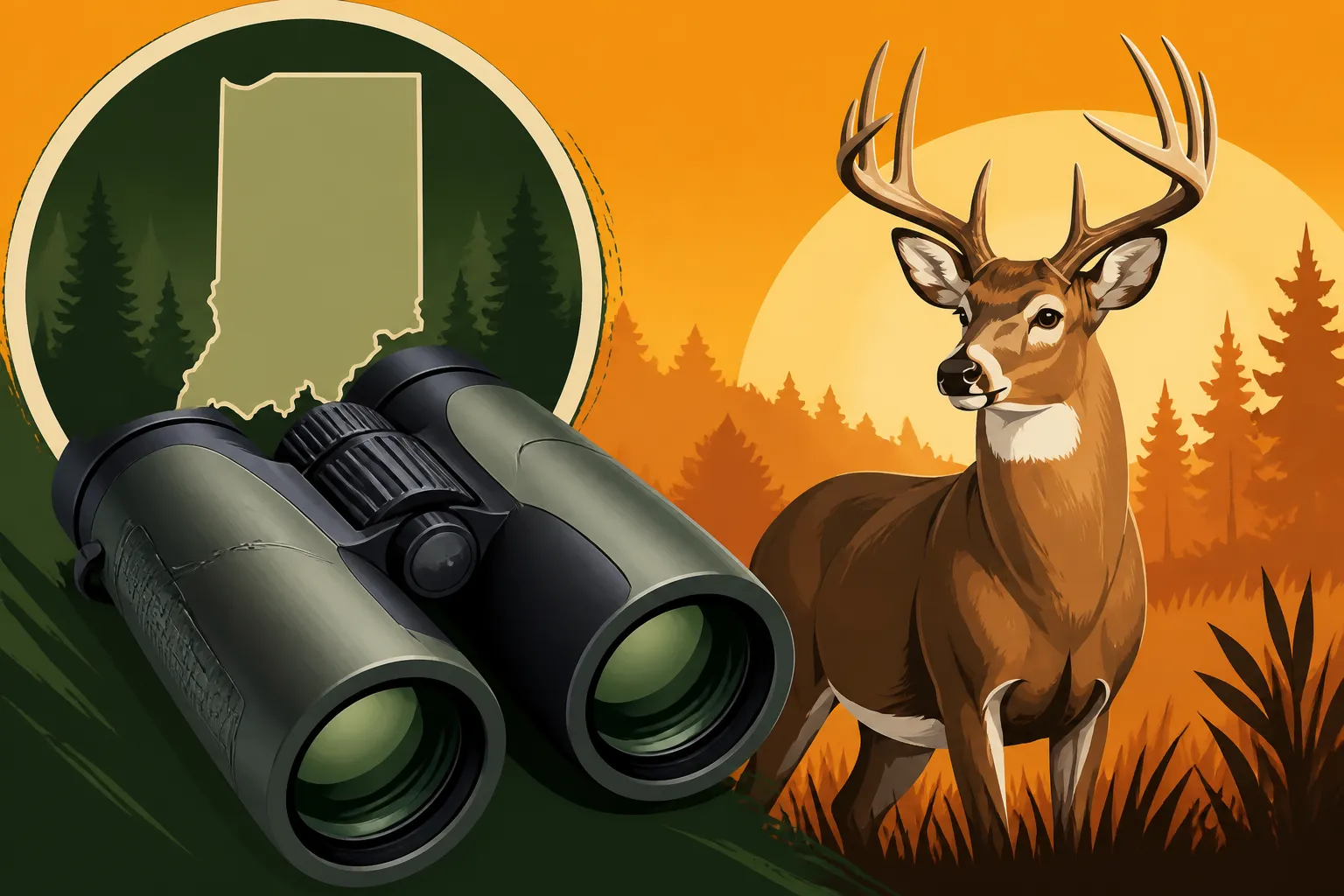
Binocular Choice for Indiana Whitetails
One of the most frustrating feelings in the deer woods is knowing a buck is out there, just out of clear sight, maybe shrouded in the thick undergrowth of an Indiana river bottom or on a distant ridge line just before dusk. You squint, you strain your eyes, but that tell-tale flicker of an ear or the subtle horizontal line of an antler rack remains frustratingly obscure. This guide is all about equipping you with the knowledge to choose the perfect binoculars, ensuring those crucial moments of identification turn into confident decisions, no matter where you're hunting in Indiana.
Understanding Binocular Basics for Whitetail Hunting
Choosing binoculars isn't just about grabbing the biggest or most expensive pair. It's about understanding what the numbers and jargon actually mean for you, the Indiana deer hunter, facing specific challenges like dense timber, open fields, or that last sliver of shooting light. Every piece of glass has a purpose, and knowing the fundamentals will help you cut through the marketing hype.
Magnification: How Much is Too Much?
The first number you see on a pair of binoculars, like "8x" or "10x," refers to its magnification. This tells you how many times closer an object appears compared to viewing it with the naked eye. An 8x magnification makes an object appear eight times closer. For many hunters, there's a natural inclination to think "more is better," but that's not always the case, especially in Indiana's varied terrain.
In thick woods or hilly country, where shots are often closer and the cover is dense, higher magnification can actually be a hindrance. A 12x or 15x binocular might seem great for picking out details, but it magnifies your hand shake just as much, making the image unsteady. This instability can quickly lead to eye fatigue and make it harder to distinguish a deer from the shadows. Imagine trying to identify a buck slipping through the hardwoods of Yellowwood State Forest; too much shake, and that fleeting glimpse is gone. For most timber hunting, an 8x or 10x binocular provides a much more stable and useful image, allowing you to quickly scan and pick up movement without feeling like you're on a roller coaster. You need to be able to steady that glass, and less magnification often translates to quicker target acquisition.
Objective Lens Size: Gathering Light
The second number in a binocular's specification, like "42" in an "8×42," denotes the diameter of the objective lens in millimeters. This lens, the one farthest from your eye, is the gatekeeper for light. A larger objective lens means more light can enter the binoculars, resulting in a brighter, clearer image, especially in low-light conditions. This is absolutely critical during those golden hours of dawn and dusk, which are often prime deer movement times in Indiana.
Consider hunting during the Hunting the Rut in Early November when bucks are cruising just after sunrise or right before sunset. If your binoculars have small objective lenses, that dimly lit deer might appear as little more than a silhouette. A larger objective lens, such as 42mm or even 50mm, can gather enough ambient light to reveal crucial details—is that a basket rack or a thick mainframe? What's the body language telling you? While larger objective lenses do add weight and bulk, the advantage they provide in light transmission often outweighs the minor inconvenience, especially if you're primarily hunting from a static position like a treestand or ground blind.
Lens Coatings: The Unsung Hero of Clarity
Often overlooked, lens coatings are arguably one of the most important factors in binocular performance. These thin, transparent layers applied to the glass surfaces reduce glare, increase light transmission, and enhance contrast. Without coatings, a significant amount of light would simply reflect off the glass surfaces, leading to a dim, washed-out image. There are various levels of coatings, from "coated" (a single layer on some surfaces) to "fully multi-coated" (multiple layers on all air-to-glass surfaces), with the latter being the gold standard for serious hunters.
Imagine glassing a distant field edge on a foggy morning in northern Indiana farmland, trying to discern if that blob at the edge of the standing corn is a deer or just a stump. Binoculars with excellent multi-coatings will cut through the haze and glare much better, giving you a sharper, more vibrant image with truer colors. This enhanced contrast can make the difference between spotting that subtly moving deer and dismissing it as part of the background. Investing in optics with high-quality lens coatings is like giving your eyes a superpower, allowing you to see what un-coated glass simply cannot reveal.
Key Considerations for Indiana's Diverse Terrain
Indiana is not a monolithic hunting landscape. From the steep, forested hills of the south to the flat, agricultural expanse of the north, and the meandering river bottoms in between, the terrain dictates what kind of binocular will serve you best. Tailoring your optic choice to your specific hunting grounds is paramount.
Southern Indiana Hills and Thick Timber
Hunting the rolling, timbered hills of southern Indiana, particularly in areas like Hoosier National Forest or Brown County Ridgelines, presents unique challenges. The terrain is often steep, requiring significant walking, and visibility can be limited by dense hardwoods, cedar thickets, and deep ravines. Here, portability and field of view are often more valuable than extreme magnification.
An 8×42 binocular is a fantastic choice for this type of hunting. The 8x magnification provides a wide field of view, allowing you to quickly scan large areas of timber and pick up subtle movements without constantly having to adjust your position. The 42mm objective lens gathers plenty of light for the dim forest understory, and the overall size and weight are manageable for long hikes up and down those hills. You're not often glassing across miles of open ground; instead, you're picking apart shadows and looking for movement in pockets of cover. A steady, wide view helps you locate deer that might be moving through those creek bottoms or along a ridge-top saddle. When you’re still-hunting southern Indiana ridges, quick, clear identification is key.
Northern Indiana Farmland and Field Edges
The expansive agricultural lands of northern and central Indiana offer a completely different glassing environment. Here, you might be overlooking vast soybean or corn fields, distant woodlots, and long fencerows. The need to resolve detail at greater distances becomes more pronounced, but so does the need for good low-light performance as deer often feed at the edges of fields during twilight.
For Hunting Northern Indiana Farmland Deer, a 10×42 or even a 10×50 binocular often shines. The 10x magnification gives you that extra reach to identify a buck on the far side of a 40-acre field or to pick out antler tine configuration on a deer feeding a quarter-mile away. While the field of view is slightly narrower than an 8x, the ability to zoom in on distant objects is invaluable. The larger objective lens in a 10×50, for instance, maximizes light gathering, ensuring you can still see clearly as legal shooting light fades. Many hunters find themselves setting up on a Setting Up on a Northern Indiana Field Edge, and being able to patiently glass for extended periods without eye strain from insufficient light is a huge advantage. Pairing these with a tripod or monopod can further enhance stability for those extended glassing sessions.
River Bottoms and Swamps
Indiana's numerous river bottoms, like the Wabash River Valley or White River Bottomland, are often characterized by dense, tangled cover, frequent flooding, and challenging light conditions due to thick canopy. These areas are deer magnets but can be tough to hunt. Your binoculars need to be rugged, waterproof, and offer excellent close-to-mid-range clarity.
In these environments, a robust 8×42 or 10×42 binocular is typically the sweet spot. The waterproof and fog-proof capabilities are non-negotiable due to the damp conditions. The magnification provides enough detail for the often-thick cover without being unwieldy. The wider field of view of an 8x can be a real benefit when trying to sort out a deer moving through willow thickets or heavy briar patches. You might be Recovering a Deer From a River Bottom, so having reliable optics for confirming the shot or tracking can be essential. Durability against bumps and scrapes is also a major plus, as navigating dense cover can put a lot of wear and tear on your gear.
Features That Actually Matter in the Deer Woods
Beyond the basic numbers, several other features can significantly impact your binocular's performance and your overall hunting experience. These are the details that separate a good pair of binoculars from a truly great one, helping you in those moments that matter most when pursuing whitetails in Indiana.
Eye Relief and Eyecups: Comfort for All
Eye relief refers to the distance your eye can be from the ocular lens (the one you look through) and still see the full, unvignetted image. This is a critical factor for comfort, especially if you wear eyeglasses. Binoculars with generous eye relief (typically 15mm or more) allow eyeglass wearers to keep their glasses on and still get a full field of view. Adjustable eyecups are also part of this equation, allowing you to fine-tune the distance for optimal viewing, whether you wear glasses or not.
Few things are more frustrating than having to take your glasses off and on every time you want to glass. Or worse, constantly pressing the binoculars too hard into your eye sockets just to see the whole picture, leading to eye strain and discomfort. If you're going to spend hours glassing a timbered funnel or a clear-cut regrowth edge, comfort is paramount. Binoculars with well-designed eye relief and smooth, multi-position eyecups can make all the difference, allowing you to comfortably and effectively scan your surroundings without distraction.
Field of View: Seeing the Bigger Picture
Field of view (FOV) refers to the width of the area you can see through the binoculars at a given distance, usually expressed in feet at 1,000 yards. A wider field of view means you can see more of your surroundings without moving the binoculars, which is a huge advantage when searching for deer, especially moving animals. Lower magnification binoculars generally offer a wider field of view.
Imagine you're Hunting a Funnel Between Two Woodlots, trying to intercept a buck cruising for does. A wide field of view allows you to quickly sweep the entire funnel, picking up movement from the periphery. If you're trying to locate a buck that just busted out of a thicket, a wider FOV increases your chances of spotting him before he disappears into the next patch of cover. While higher magnification narrows the FOV, for most Indiana deer hunting scenarios, especially in timber, a wider FOV often helps you acquire targets faster and track them more effectively, turning those quick glances into confirmed sightings.
Durability and Waterproofing: Built for Indiana Weather
Indiana weather is notoriously unpredictable. One day it's sunny and mild, the next it's a bone-chilling rain or even snow. Your binoculars need to be able to withstand these conditions without fogging up or sustaining damage. Look for binoculars advertised as "waterproof" and "fogproof," which typically means they are O-ring sealed and nitrogen or argon purged. This internal purging prevents moisture from getting inside and keeps the internal lenses from fogging when transitioning between temperature extremes, like going from a warm truck to a cold morning stand.
A sturdy, armored exterior is also essential. Rubber armor not only provides a better grip, especially when wet, but it also helps absorb impacts from accidental drops or bumps. When you're Hunting a Deer Reduction Zone and moving through thick brush or walking long distances on public land, your gear is going to take some abuse. Knowing your binoculars can handle a sudden downpour or an unexpected fall from your chest rig provides immense peace of mind. A robust, weatherproof pair of binoculars is an investment that will pay dividends across many Indiana hunting seasons.
Matching Your Binoculars to Your Hunting Style
Your personal hunting style plays a massive role in dictating the ideal binocular choice. Are you a patient treestand sitter, a mobile still-hunter, or a strategic spot-and-stalk hunter? Each approach benefits from specific binocular characteristics.
Treestand and Ground Blind Hunters
If you spend the majority of your time patiently waiting in a treestand or a ground blind, your priority might lean towards optical performance and comfort over extreme portability. From a static position, weight is less of an issue, and you can take advantage of the added light-gathering capabilities of slightly larger objective lenses.
For these hunters, a 10×42 or even a 10×50 can be an excellent choice. The higher magnification helps you scrutinize distant deer in fields or down long timber lanes, and the larger objective lens provides a brighter image during those critical low-light periods. You can comfortably glass for extended periods, trying to decipher if that shadow is a deer or just a brush pile. Many treestand hunters use a binocular harness to keep their optics accessible and secure against their chest, preventing them from swinging around or getting in the way. This setup allows for quick, silent deployment when a deer suddenly appears. When you're Hunting a Clover Plot at First Light or Sitting a Field Edge in Late Season, having clear, bright optics to peer into the shadows is invaluable.
Still-Hunting and Mobile Hunters
For those who prefer to be on the move, slowly creeping through the woods, or actively Still-Hunting Southern Indiana Ridges, portability and a wide field of view become paramount. Every ounce matters when you're covering miles of ground, and the ability to quickly scan an area and pick up movement is more important than extreme magnification.
An 8×32 or 8×42 binocular is often the perfect companion for the mobile hunter. The lighter weight and more compact size make them easy to carry all day without fatigue. The 8x magnification provides a wider field of view, which is crucial for picking up subtle movements in dense timber or spotting a deer before it sees you. You can quickly bring them up to your eyes, scan, and put them back down, all while maintaining stealth. Some hunters even opt for a monocular in extremely dense cover for ultimate portability, though you sacrifice the depth perception of two eyes. The goal here is to quickly confirm what your naked eye might have just glimpsed, without drawing attention to yourself.
Spot-and-Stalk Hunters
While not as common for whitetails in Indiana as it might be out West, spot-and-stalk does have its place, especially in more open terrain or when trying to close the distance on a feeding deer in a large field. This style demands binoculars that can provide excellent detail at long ranges, often from a prone or kneeling position, while still being manageable enough to carry.
For spot-and-stalk, you might lean towards a 10×42 or even a 12×50 if you're comfortable with the added weight and can keep it stable. The extra magnification is key for identifying antlers, assessing body language, and planning your approach from a distance. A stable platform, like a small tripod or monopod, is highly recommended to maximize the effectiveness of higher magnification. This allows you to break down distant cover, identify deer bedded down, and ensure you're stalking the right animal. Tools like GoHunt can be exceptionally useful here, allowing you to pinpoint your location relative to the deer and plan your approach while constantly glassing to ensure the deer hasn't moved. Glassing a Powerline Cut at Last Light for a distant buck would be a classic scenario where this setup shines.
Care and Maintenance of Your Optics
Your binoculars are an investment, and proper care will ensure they perform optimally for years to come. Neglecting them can lead to smudged lenses, internal fogging, or even permanent damage, all of which will severely hinder your ability to spot deer.
Cleaning Lenses Properly
The most common issue hunters face is dirty lenses. Fingerprints, dust, and water spots can significantly degrade image quality. It's tempting to wipe lenses with your shirt, but this is a surefire way to scratch the delicate coatings. Always carry a lens cleaning kit in your pack.
A proper lens cleaning routine involves a few steps:
- Blow off loose debris: Use a can of compressed air or a soft lens brush to gently remove dust and grit. Never rub a dusty lens.
- Apply lens cleaning solution: Use a specialized lens cleaning solution, never harsh chemicals or window cleaner. Apply a drop or two to a clean microfiber cloth, not directly to the lens.
- Wipe gently: Using the microfiber cloth, wipe the lens in a circular motion from the center outwards. Use a fresh, clean section of the cloth for each lens.
- Polish: Use a dry, clean section of the microfiber cloth to gently polish the lens until clear.
Regular, gentle cleaning ensures maximum light transmission and clarity. A smudged lens can make a quality binocular perform like a cheap one, masking crucial details when you're trying to Reading Indiana Mud for Fresh Deer Movement or pick out a buck's antlers.
Storage and Protection
When not in use, your binoculars should always be stored in a protective case. The soft case they often come with is usually sufficient for storage at home or in your vehicle. For field use, a good binocular harness or chest pack provides both protection and accessibility. These systems keep your binoculars snug against your chest, preventing bumps and scratches, and also distribute the weight comfortably.
Avoid leaving binoculars in direct sunlight or extreme heat, such as on the dashboard of your truck on a summer day, as this can damage internal seals and coatings. When you're out in the elements, especially during a wet late-season hunt, make sure to dry them thoroughly before putting them away. If they get wet, wipe them down, open any caps, and let them air dry completely to prevent mold or mildew from forming inside the case or on the exterior. This attention to detail will ensure your binoculars are ready for action, whether you're Hunting Deer After a January Cold Front or enjoying an early season archery hunt.
Routine Checks and Maintenance
Just like any other piece of gear, binoculars benefit from occasional checks. Inspect the rubber armor for any tears or peeling, which could compromise waterproofing. Check the focus wheel and diopter adjustment to ensure they turn smoothly without sticking. Make sure the eyecups extend and retract properly.
If you notice any internal fogging, it's a sign that the waterproof seals have been compromised, and your binoculars will likely need professional service. Attempting to fix this yourself can often do more harm than good. A quick inspection before and after each hunting trip will help you catch small issues before they become major problems. Just like you'd Sighting In a Centerfire Rifle for Indiana Woods before the season, a quick check of your optics ensures they are performing as they should, helping you make the most of your time in the Indiana deer woods.
Binocular Specifications Comparison for Indiana Deer Hunting
To help you visualize the trade-offs, here's a quick comparison of common binocular specifications and their typical uses in Indiana.
| Feature / Specification | 8×32 (Compact) | 8×42 (Mid-size, All-around) | 10×42 (Mid-size, Power) | 10×50 (Larger, Low-light) |
|---|---|---|---|---|
| Magnification | 8x | 8x | 10x | 10x |
| Objective Lens (mm) | 32 | 42 | 42 | 50 |
| Low-Light Performance | Good | Excellent | Very Good | Exceptional |
| Field of View | Excellent | Excellent | Very Good | Good |
| Shake Magnification | Low | Low | Medium | Medium |
| Portability | Very High | High | Medium | Medium-Low |
| Weight | Low | Medium | Medium | High |
| Ideal for Indiana | Mobile, thick cover | All-around, timber | Farmland, longer range | Farmland, low-light |
No matter your budget or hunting style, investing in a quality pair of binoculars suited for the challenges of Indiana's diverse deer habitats will significantly enhance your experience and increase your chances of success. They truly are an extension of your eyes, helping you unlock the secrets of the forest and fields.
Disclaimer
This article is for general informational purposes only and does not constitute professional advice. Laws, prices and regulations vary by location and change over time. Consult a qualified professional for guidance on your specific situation.