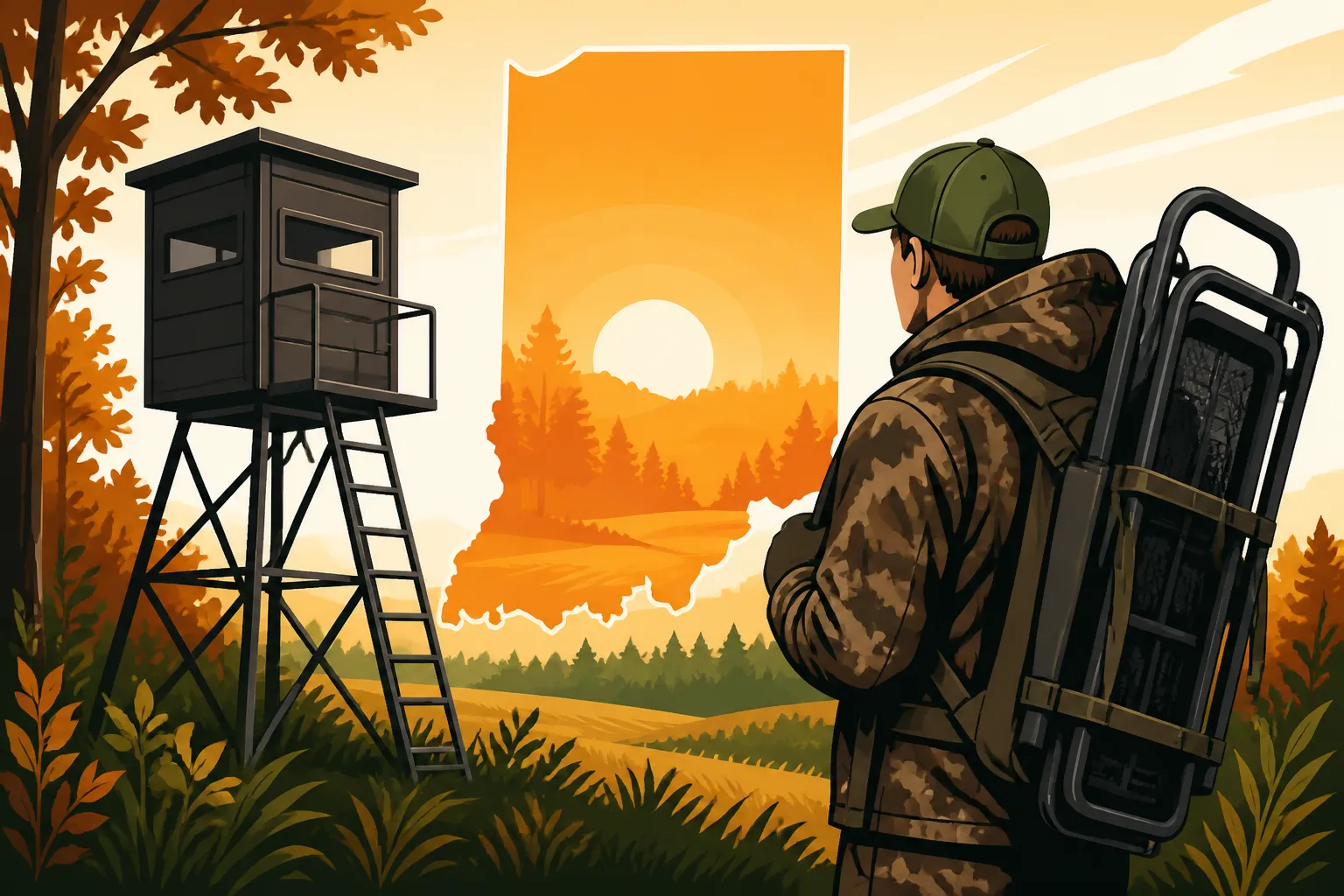
Portable Stands for Public Land Mobility
Hunting public land in Indiana can be a truly rewarding experience, but let's be honest, it often means dealing with pressure and deer that are constantly on the move. Sticking to one spot with a permanent stand, or even trying to hunt from the ground in open woods, can leave you scratching your head when the deer just aren't showing up. This guide is all about embracing mobility, diving deep into how portable treestands can be your ultimate advantage for consistently finding and getting on Indiana deer, no matter what surprises the woods throw your way.
The Undeniable Need for Mobility on Indiana Public Land
If you've spent any time chasing whitetails on Indiana's public lands, you know it's a different game than hunting a private, managed woodlot. These deer are savvy. They’re educated by human encounters, and their patterns can change on a dime based on pressure, food availability, and even subtle shifts in the weather. Being able to move with them, rather than hoping they come to you, is absolutely critical for consistent success.
Navigating Pressure and Finding Unseen Pockets
One of the biggest frustrations on public land is dealing with other hunters. You scout a spot, find fresh sign, and then come opening day, there are three trucks parked at the access point, or you walk in only to find someone else already sitting in your tree. It happens. Deer react to this pressure immediately, often relocating to thicker, harder-to-reach cover, or becoming largely nocturnal in accessible areas. If you're stuck to a single, heavy, cumbersome stand setup, you're out of luck.
Imagine you've planned to hunt a nice ridge system in the Hoosier National Forest. You've walked miles in, found a fantastic saddle, and even identified a great oak. But then, as you're hanging your stand, you hear another hunter walk by, or worse, see a ground blind already brushed in just 100 yards away. Instead of packing up and heading home in frustration, a truly portable setup allows you to pivot. You can quickly descend, grab your gear, and navigate to another, less-pressured funnel or bedding area you've scouted as a backup. The ability to make this mid-hunt decision, or even a pre-hunt adjustment based on parked vehicles, can literally make or break your day. Hunting Pressure on Indiana Public Land is a real factor, and mobility is your best counter.
Adapting to Shifting Deer Patterns and Food Sources
Deer are constantly seeking the easiest meal and the safest bed. Their movements are dictated by what's available, and what was hot last week might be cold this week. Early season might see them pounding a particular white oak flat, but once those acorns are gone, they'll shift to browse, standing crops, or other mast. During the rut, they're focused on does, and will follow them wherever they go. If your stand is fixed in a spot that was great for acorns but now those acorns are gone, you're essentially hunting a ghost town.
A portable stand allows you to follow these shifts. Perhaps you've been sitting over an alfalfa field edge that was getting hit hard, but a cold front rolls through and suddenly deer are seeking thermal cover in a thick cedar grove. Or maybe the peak of the rut arrives, and bucks are cruising a specific ridge-top saddle you haven't given much attention to before. With a lightweight setup, you can quickly relocate your hunt to where the deer are now. You can pull up your mapping apps, whether it's something like onX or even using a broader platform like GoHunt for topographical analysis and public land boundaries, identify new potential hotspots, and be hunting there within hours, not days. This responsiveness is invaluable for staying on top of the ever-changing whitetail game in Indiana.
Your Arsenal of Portable Perches: Types of Stands for Indiana Hunters
When we talk about portable stands, we're really talking about a few different categories, each with its own advantages and ideal uses. The best choice for you often comes down to the terrain you're hunting, the types of trees available, and your personal comfort level.
The Classic Climb: Versatility of Climbing Stands
Ah, the trusty climbing stand. For many, this is the quintessential portable option. Climbers are self-contained units that allow you to ascend and descend a tree using your body weight and leverage. They typically consist of two sections – a seat section and a platform section – that you alternately push and pull to "walk" up the trunk. They're quick to set up once you're at the base of the right tree, and once you're up, they offer a very stable and comfortable platform.
The biggest pro of a climbing stand is its all-in-one nature. You don't need separate sticks or ladders, reducing the overall gear you carry. They're generally pretty comfortable for an all-day sit, which is great during the peak of the rut. However, the catch is in the "right tree" part. Climbing stands require a relatively straight, limbless tree with consistent diameter, usually pines or specific hardwoods like poplars, for safety and efficient climbing. Finding such a tree on some public lands, especially in areas of mixed timber or young growth, can be a challenge. In places like the Hoosier National Forest Hunting where trees can be gnarly and limby, finding a suitable climber tree might limit your options significantly. If you primarily hunt areas with abundant, straight pines or large, mature hardwoods with clear trunks, a climber can be incredibly efficient.
Hang-Ons and Sticks: Unlocking Any Tree, Anywhere
If climbing stands are limited by tree choice, hang-on stands paired with climbing sticks are their opposite. This setup offers unparalleled versatility. The hang-on stand itself is a lightweight platform that straps to a tree, and you use separate sections of climbing sticks, or even a rope method, to get up to it. This means you can hunt virtually any tree that's sturdy enough to hold you, regardless of how many limbs it has or how crooked its trunk might be. This flexibility is a huge advantage when Hanging a Stand on a Southern Indiana Ridge where tree options can be varied.
The beauty of this system is that you can pre-set sticks on a couple of trees in an area you want to hunt, then just carry your lightweight stand from spot to spot. Or, if you're truly run-and-gun, you pack the sticks and stand in, set them up, hunt, and then take it all down. This is the setup many serious public land hunters gravitate towards because it allows them to get into prime spots that a climber simply can't reach. The downside is carrying more separate components, which can sometimes be noisier or feel more cumbersome on the walk in. You'll need to practice your setup to ensure it's quiet and efficient, but the freedom it offers to hunt the perfect tree, not just a climbable tree, is often worth the extra effort. Climbing Sticks for Indiana Hardwoods are a vital part of this system.
The Minimalist Advantage: Exploring Saddle Hunting
For the ultimate in lightweight and mobile hunting, saddle hunting has surged in popularity, especially among the public land crowd. A saddle isn't a stand in the traditional sense; it's more like a rock-climbing harness that you wear, which then attaches to a tree via a tether and a mobile platform or set of steps. You're literally "hanging" around the tree, allowing for 360-degree shooting angles and incredible concealment as you melt into the tree trunk itself.
The pros here are undeniable portability and adaptability. A complete saddle setup, including ropes and a small platform, can weigh significantly less than even the lightest traditional stands. This makes mile-plus treks into remote public land feel much more manageable. You can also hunt trees that would be impossible with a hang-on or climber—crooked trees, small trees, or trees with weird limb configurations become fair game. The ability to shoot around the tree, using it for cover, is also a huge tactical advantage. However, saddle hunting requires a different skillset and some practice to become truly comfortable and proficient. It's not sitting in a conventional seat; you're leaning and using your legs for support, which can take some getting used to. But for hunters who prioritize stealth, lightweight gear, and ultimate flexibility, Saddle Hunting in Indiana Hardwoods offers a distinct edge that few other systems can match.
Crafting Your Mobile Setup: Gear Considerations for Indiana's Woods
When you're packing your gear for a day of public land hunting in Indiana, every ounce matters. You're not just thinking about getting to your stand; you're thinking about moving it, quietly, efficiently, and safely. The right gear choices can turn a grueling day into a successful one.
Weight, Comfort, and Stealth: Balancing the Essentials
The mantra for mobile hunting is "light is right," but you can't sacrifice safety or comfort entirely. A stand that's too heavy will wear you out on long walks, making you less effective as a hunter. A stand that's uncomfortable will shorten your sits, especially in cold weather, causing you to leave prime areas early. And a stand that creaks or groans as you move or ascend will blow your cover before you even settle in.
Look for stands made from lightweight aluminum alloys. Pay attention to the overall packed profile – does it stack neatly, or does it have awkward protrusions that will snag on branches? For climbing sticks, consider single-stick options or modular sections that can be added or removed depending on your target height. Your primary goal is to minimize bulk and noise during transport. Many manufacturers now focus heavily on weight reduction, using advanced materials and minimalist designs. Think about how the stand will feel against your back during a long hike into a secluded part of a State Forest; a well-designed pack frame or comfortable straps on the stand itself can make a world of difference. Even if a particular brand caters more to western big game, the underlying principles of lightweight, durable gear are universal for public land hunting, so a quick search online, perhaps on a platform that analyzes gear like GoHunt, might give you insights into innovative materials used in various hunting setups.
| Stand Type | Pros | Cons | Ideal Use in Indiana |
|---|---|---|---|
| Climbing Stand | All-in-one unit, quick setup on the right tree, often comfortable for long sits. | Limited by tree straightness and limb clearance, can be noisy if not practiced. | Areas with consistent, mature, straight timber (e.g., some pine plantations, large hardwoods). |
| Hang-on Stand + Sticks | Extreme versatility (hunt almost any tree), can leave sticks for quick future access, relatively quiet once set. | More components to carry, can be slower to set up if not practiced, potentially less comfortable for all-day sits than some climbers. | Mixed timber, limby hardwoods, areas where specific tree selection is crucial (e.g., Hunting Indiana River Bottom Funnels). |
| Saddle Hunting | Ultimate lightweight and portability, 360-degree shooting, excellent concealment. | Requires practice for comfort and proficiency, different shooting mechanics, not a "sitting" stand. | Deep woods, aggressive run-and-gun tactics, highly pressured public land, steep terrain (e.g., Still-Hunting Southern Indiana Ridges). |
Accessories for Safety and Efficiency
No matter which portable stand you choose, a few key accessories are non-negotiable for safety and making your hunt more efficient. First and foremost, a full-body safety harness and a lifeline are absolutely essential. Falls from treestands are a leading cause of serious injury among hunters. Never, ever climb without being tethered from the moment your feet leave the ground until they return. Safety Harnesses and Lifelines are not optional; they are life-saving gear.
Beyond safety, consider a quality haul rope to pull up your bow or rifle after you're secured in your stand. A small gear hanger or hook to keep your pack and calls organized is also helpful. Many hunters also swear by a small level for their stand platform, ensuring a stable and comfortable perch even on slightly angled trees. If you're using a hang-on, invest in a good set of platform-leveling straps. For saddles, a reliable lineman's belt for ascending and descending is paramount. Don't forget a headlamp for those predawn walks in and after-dark walks out, especially when Blood Trailing After Dark in Indiana.
Quiet Carry and Deployment Strategies
Carrying your stand and sticks quietly through the woods is an art form. Rattling aluminum on aluminum or sticks banging against each other is a sure way to alert every deer within a quarter-mile. Invest in cam straps or bungee cords to cinch down all loose components. Many portable stands and climbing sticks come with rubber or silent-touch coatings, but you can also add your own stealth wraps or tape to minimize noise.
Practice your setup at home, in the dark, without making a sound. The goal is to be able to set your stand and sticks with minimal movement and zero metallic clanging. When you're walking in, try to keep your stand snug against your back, perhaps secured to a good pack designed for hunting gear, to prevent it from swinging and bumping. Packs for a Hoosier Forest Day Hunt often have external straps specifically for this. Before you even head out, identify your exact entry route and the specific tree you intend to climb. Visualizing the entire process, from parking to ascending, will help you move with purpose and stealth.
Mastering the Mobile Mindset: Tactics for Success with Portable Stands
Having the right gear is only half the battle; knowing how to use it strategically is what truly unlocks the power of public land mobility. It’s about becoming more like the predator you are, constantly adapting and seeking the advantage.
Strategic Scouting and Tree Selection
Your mobile stand becomes infinitely more effective when paired with aggressive, year-round scouting. This isn't just about finding a good tree, it's about finding the best tree for a given wind direction, time of day, and deer behavior pattern. Start with topo maps and aerial imagery, looking for natural funnels, pinch points, subtle saddles on ridges, and bedding areas. Areas where different timber types meet, or where thick cover borders a food source, are always worth investigating. Tools like the Indiana DNR app or even more detailed mapping software (where you might find features on platforms like GoHunt useful, despite their primary focus) can help you identify these key terrain features before you ever set foot in the woods. Scouting Indiana Public Land Before Season is your homework.
Once on the ground, confirm sign: rubs, scrapes, tracks, and droppings. But don't just focus on the ground. Look up! Identify trees that offer good cover, clean shooting lanes, and a safe, comfortable platform. Consider multiple trees in a single area, each offering a different setup for varying wind directions or approach routes. Sometimes the best tree isn't the biggest, but the one that allows you to ascend with the most concealment and has branching structure that breaks up your outline. For example, when Reading a Ridge for Hoosier Forest Deer, look for an oak with a dense canopy or a cluster of smaller pines that allow you to blend in.
The Art of the Quick, Quiet Setup
You've done your scouting, found your tree, and made a silent approach. Now comes the moment of truth: setting up your stand. This is where practice pays off. Every movement needs to be deliberate and quiet. Start by clearing any leaves or sticks from around the base of your tree. If you're using a hang-on, get your climbing sticks on first, securing them tightly. Avoid letting straps slap against the tree or metal parts clank together. Slowly ascend, taking your time, and paying attention to every sound.
Once you reach your desired height, which typically gives you a better view and helps your scent dissipate, securely attach your stand. Ensure it's level and stable before stepping onto it fully. For saddle hunters, this means getting your platform securely set and your tether tightened before you shift your weight. Remember, the goal isn't just to get up the tree, but to get set up in the tree without drawing any attention. A fast setup might save you time, but a quiet, efficient setup will get you closer to a deer.
Hunting Multiple Spots: Becoming a Predator
The true power of portable stands lies in your ability to hunt more like a predator than a static observer. Instead of committing to one stand site for an entire season, you can have a "milk run" of potential spots, moving as conditions or deer sign dictates. If the wind is wrong for your primary spot, you move to your secondary. If you hunt a morning spot and the deer aren't moving, you can pack up, move a mile, and be set up in a different location for an afternoon hunt.
This isn't about being restless; it's about being strategic. Maybe you have three different funnels on a piece of public land. Instead of guessing which one will be active, you can hit one hard for a morning hunt, observe deer movement, then if necessary, pack up and move to another funnel for an evening sit. This allows you to cover more ground, react to real-time information, and put yourself in front of more deer. The confidence that comes with knowing you can move at a moment's notice to Finding Ground Others Walk Past or react to a new sign is a game-changer for public land hunters in Indiana. You're no longer confined; you're free to pursue deer wherever they choose to roam.
Disclaimer
This article is for general informational purposes only and does not constitute professional advice. Laws, prices and regulations vary by location and change over time. Consult a qualified professional for guidance on your specific situation.