Rattling Volume in Thick Cover
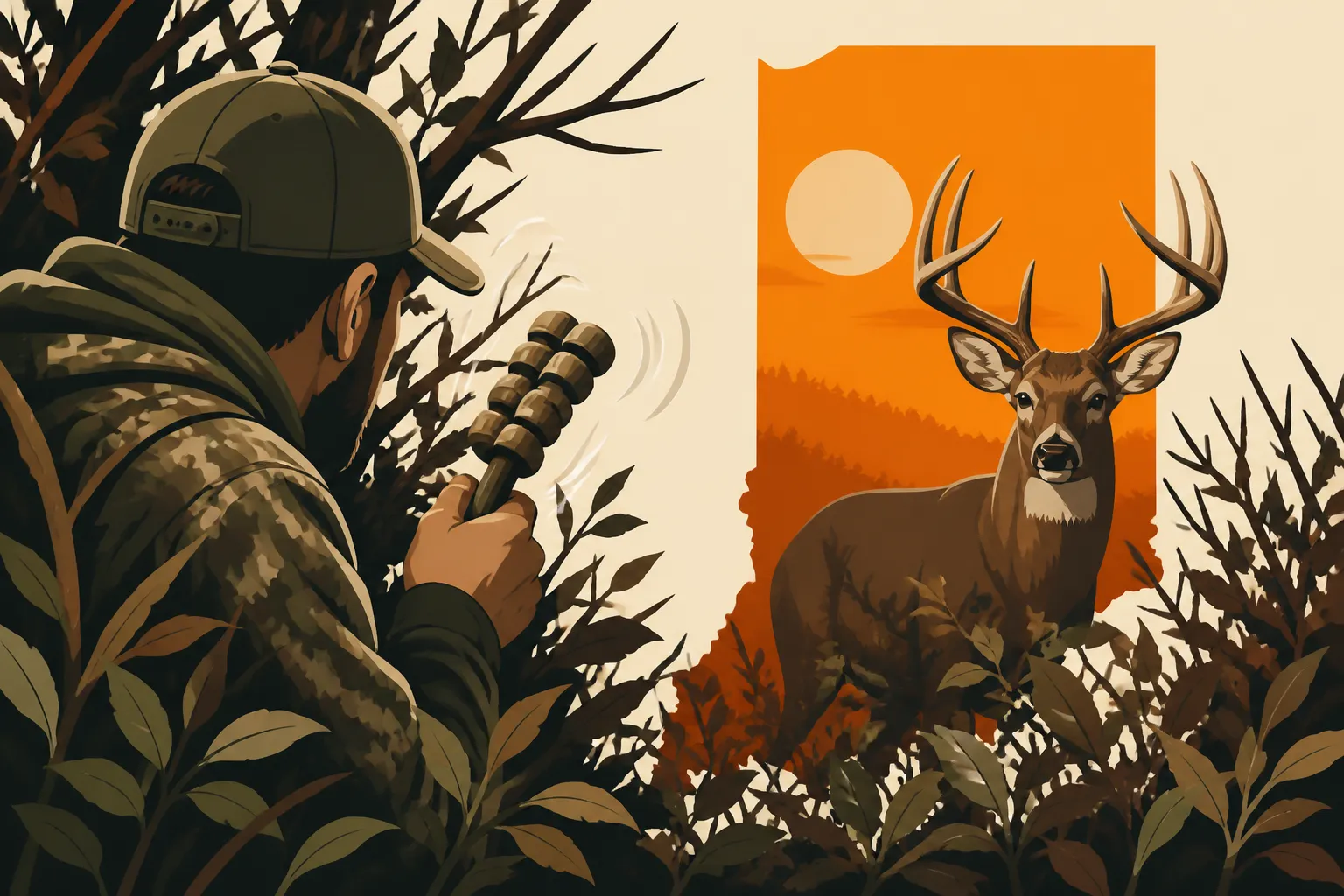
Hunting in Indiana, especially during the deer rut, often brings up visions of aggressive bucks clashing antlers in an open hardwood forest. We see it in videos, read about it in magazines, and naturally, we want to replicate that heart-stopping excitement. But let's be real: a lot of Indiana's best deer habitat, whether it's the thick creek bottoms of the Wabash Valley or the dense regrowth on a clear-cut in the Hoosier National Forest, isn't open timber. When you're tucked into a gnarly cedar thicket or a dense pocket of multiflora rose, trying to get a buck's attention with rattling antlers can feel like shouting into a pillow. You hit those synthetic or natural antlers together, and the sound just seems to get swallowed up, leaving you wondering if any deer beyond 50 yards even heard it. This guide is all about tackling that exact frustration, helping you understand how sound behaves in thick cover and how to adjust your rattling volume and technique to effectively pull in those elusive Indiana whitetails.
The Acoustic Challenge of Thick Indiana Cover
The first step to effective rattling in dense habitat is understanding why it’s so darn hard for sound to travel there in the first place. It's not just your imagination; the woods literally eat sound, especially in areas with thick undergrowth, numerous small trees, and heavy leaf litter.
How Sound Dissipates in Dense Woods
Think about it: every leaf, every branch, every tree trunk, and every patch of thick brush acts as a barrier or an absorber for sound waves. When you clash your antlers, those sound waves spread out, but in thick cover, they're constantly hitting obstacles. Each impact dissipates energy, scattering the sound in multiple directions or simply absorbing it. This means the crisp, clear crack you hear when you hit your antlers together might quickly devolve into a muffled thump just a short distance away. It’s a completely different acoustic environment compared to wide-open fields or mature, park-like timber where sound can travel much further and more directly. Areas like those found when Reading a Ridge for Hoosier Forest Deer might have more open sections, but even then, the dense pockets are where deer often hide.
Consider a patch of honeysuckle or an old clear-cut that's grown up in saplings and briars – prime bedding or staging areas for Indiana bucks. Sound just won't cut through that stuff like it will through sparse woods. The physical density of the vegetation literally blocks and distorts the sound, making it harder for a deer to pinpoint the source and even harder for them to hear it from any significant distance. This is why just rattling louder isn't always the answer; sometimes, it just creates more muffled noise closer to you, rather than projecting usable sound further out.
The Deer's Auditory Perspective
Deer, of course, have incredible hearing. Their large, swiveling ears can pick up faint sounds and pinpoint their origin with astonishing accuracy. However, even with their keen senses, they face the same acoustic challenges we do in thick cover. Wind, rain, rustling leaves, and even the distant hum of traffic can create a cacophony of ambient noise that masks your rattling efforts. What sounds like a decent fight to us might just be a faint whisper to a deer 100 yards away, especially if the wind is wrong or there's a lot of background noise.
Furthermore, deer are highly attuned to natural sounds. If your rattling sounds artificial or out of place for the environment, it can alarm them rather than attract them. A deer hearing a full-blown, aggressive battle in a thick bedding area might be more prone to circle downwind cautiously or even just sneak away, rather than charge in. They're constantly evaluating threats and opportunities, and an unnatural-sounding racket in their bedroom could signal danger. This is why tailoring your volume and intensity to match a realistic fight within that specific type of cover is paramount.
Common Mistakes Hunters Make
One of the most common pitfalls is simply rattling too loud and too long, assuming that more volume means more reach. In dense cover, this often backfires. You might just create a lot of noise that's startling to any deer already close, causing them to bolt before you even know they were there. Another mistake is rattling too softly, almost tentatively, hoping to sound subtle. While subtlety has its place, if the sound isn't getting past the first few layers of brush, it's essentially useless.
Many hunters also neglect the crucial waiting period after rattling. Deer rarely charge in immediately, especially mature bucks or those coming from thick cover. They'll often approach slowly, cautiously, using the wind and terrain to their advantage. A lack of patience, leading to rattling too frequently or moving too soon, can blow an opportunity. Finally, ignoring the wind is a classic error. Rattling directly upwind is a recipe for disaster, as the sound won't carry well, and any deer approaching will almost certainly scent you before you see them. Knowing how Wind and Thermals on a Southern Indiana Ridge impact your sound is crucial.
Mastering Volume and Intensity for Close Quarters
When you're in a thick patch of Indiana woods, the goal isn't necessarily to sound like two B&C bucks fighting to the death across a quarter-mile field. It's about sounding like a realistic, localized interaction that piques curiosity or challenges a buck's dominance within a smaller, more intimate space.
Subtle Clashes for Curiosity
In dense cover, sometimes less is truly more. Instead of crashing antlers together with all your might, consider a more subtle approach. Think about a younger buck, or even two medium-sized bucks, sparring cautiously. This could involve light tickling of the tines, gentle grinding of the bases, or soft, short clashes. The goal here is to create just enough sound to pique a deer's curiosity without alarming it. A soft, inquisitive sequence suggests that there might be some activity nearby, but nothing overtly threatening.
This approach is especially effective in heavy bedding areas or when you know deer are already very close by, but you haven't seen them yet. You're not trying to call a deer from half a mile away; you're trying to get the attention of a buck that might be bedded down or slowly moving within 75-100 yards. The sound should be just enough to make him lift his head, listen, and perhaps take a few steps to investigate. Many successful hunters have found that these quieter sequences often pull in some of the biggest, most wary bucks, precisely because they don't scream "hunter!"
Controlled Aggression for Challenging Bucks
While subtlety is key, there are times when you need to inject a bit more aggression, even in thick cover. This doesn't mean reverting to ear-splitting crashes, but rather a controlled increase in volume and intensity. Picture two mid-sized bucks getting a bit more serious in their sparring match. You can achieve this by adding slightly more force to your clashes, incorporating more vigorous grinding, and perhaps a few more realistic "thumps" as if bodies are making contact. The key is to make it sound like a real fight that's happening just out of sight, not an over-the-top performance.
The distinction here is that "loud" in thick cover is relative. What would be considered a medium-volume sequence in open timber might be perceived as a loud, aggressive fight in dense brush. The idea is to challenge a buck’s dominance or territorial instincts. This works particularly well if you've already observed buck sign (scrapes, rubs) in the area, indicating an active buck with a strong sense of territory. The goal is to draw him in, thinking he needs to break up a fight or assert himself. Remember to maintain realism; if the fight sounds too prolonged or consistently aggressive, it can sound fake.
Varying the Tempo and Duration
Real deer fights aren't one-note concerts; they ebb and flow. Your rattling sequence should mimic this natural progression. Start with a short, light sequence, perhaps 15-20 seconds of clashing and grinding, as if two bucks are testing each other. Then, pause for a minute or two. Next, you might increase the intensity slightly, adding a louder clash or a more vigorous grinding session for another 20-30 seconds, followed by another pause.
The duration of your sequences and pauses is critical. Too short, and a deer might not have time to pinpoint the sound or decide to investigate. Too long, and it sounds artificial and predictable. A common rhythm involves 20-30 seconds of rattling, followed by 1-3 minutes of intense listening, then repeating the sequence two or three times over a 10-15 minute period. Within each sequence, vary the tempo – some quick, sharp clashes, followed by slower, drawn-out grinding. This adds realism and keeps a buck guessing. Incorporating some of the insights from Rattling and Grunting in Indiana can further enhance the realism.
Listening and Waiting
This is arguably the most crucial, yet often overlooked, part of rattling in thick cover. Once you finish a rattling sequence, drop your antlers quietly, grab your weapon, and prepare for a shot. Deer, especially mature bucks from thick cover, rarely come charging in like a freight train. They will almost always circle downwind, approach silently, and pick their way through the cover. Your job is to be absolutely still, blend in, and listen intently. Use your eyes to scan for any subtle movement – a flick of an ear, a dark silhouette, or even just the horizontal line of a deer's back against the vertical trees.
The waiting period needs to be longer than you think, especially when Hunting the Indiana Rut in Early November. Five, ten, even fifteen minutes of absolute stillness after your last rattle is not uncommon. A buck might approach cautiously, stop just out of sight, and try to pinpoint the source of the sound. If you make any movement, or rattle again too soon, you could spook him. Patience is your best friend. Many a big buck has been busted because a hunter got antsy and rattled a second time while the deer was already halfway in.
Positioning and Environmental Considerations
No matter how perfectly you mimic a buck fight, your efforts can be undermined by poor positioning or ignoring environmental factors. In thick Indiana cover, these elements become even more critical.
Strategic Setup in Dense Pockets
Where you choose to set up your rattling ambush is paramount. In thick cover, you’re often dealing with limited visibility, so you need to maximize your shooting lanes and minimize the chances of a deer appearing out of nowhere without a shot opportunity. Look for natural funnels, pinch points, or travel corridors within the dense cover. These could be subtle deer trails, edges of different vegetation types, or even a logging road. Setting up near a funnel, like Hunting a Funnel Between Two Woodlots, can concentrate deer movement.
When selecting your exact spot, consider your backdrop. Can you blend in effectively? Is there enough cover behind you to break up your silhouette? Think about your entry and exit routes. Can you get in quietly without spooking deer, and can you leave without disturbing the area? Remember, in thick cover, a deer only needs to hear or see you for a split second to vanish. A good setup ensures you have an advantage, even if it's just a 30-yard shooting lane, rather than a wide-open view. Mapping tools, like those available through GoHunt, can be incredibly useful for pinpointing these strategic locations before you even step foot in the woods, helping you visualize the terrain and cover density.
Accounting for Wind and Thermals
Wind is always a critical factor in deer hunting, but its impact on rattling in thick cover is twofold. First, it dictates scent control. Any deer approaching your rattling sequence will almost certainly try to get downwind to scent-check the "fighting bucks." You must position yourself so that a deer circling downwind will pass within shooting range before it gets directly downwind of your position. This might mean setting up with the wind quartering to your back or side, or even slightly into your face if you know the deer typically approach from a specific direction.
Second, wind affects sound propagation. A strong wind can make it incredibly difficult for your rattling to carry, especially across thickets. However, a light, consistent breeze can sometimes help carry your sound, almost like a whisper, through the dense foliage. Understanding how wind currents move through specific terrain, particularly in hilly areas where thermals play a role, is vital. Early morning hunts in southern Indiana, for example, often have rising thermals that carry scent and sound upwards, while evening hunts have falling thermals carrying them down. Being mindful of these nuances, as discussed in Wind and Thermals on a Southern Indiana Ridge, can significantly improve your chances.
Using Visual Cues with Auditory Ones
While this guide focuses on rattling, it's worth remembering that deer are highly visual creatures too. In open areas, decoys can be incredibly effective, but in thick cover, their utility is limited due to restricted visibility. However, that doesn't mean you can't use visual cues. Your setup should allow you to see a buck approaching, even if it's just a glimpse. Make sure to clear any small branches or leaves that might obstruct your view or a potential shot.
Being still and camouflaged is your primary visual cue. If a buck hears rattling and then slowly approaches, he'll be scanning the area intensely. Any unnatural movement or exposed skin will be immediately picked up. Therefore, think of yourself as part of the visual puzzle. Your stealth and ability to blend in after rattling are just as important as the sound itself. Having your bow or gun ready and positioned for a quick, silent shot is paramount, as the opportunities in thick cover are often fleeting.
Integrating Rattling with Other Calls and Techniques
Rattling is a powerful tool, but it's often most effective when combined with other elements to create a more compelling and realistic scenario for a wary Indiana buck.
Combining Rattling with Grunts and Bleats
Imagine two bucks fighting. Rarely is it just the clatter of antlers. There's often huffing, grunting, and perhaps even the sound of a doe bleating nearby. Adding vocalizations can elevate your rattling sequence from a simple noise to a believable interaction. A deep, guttural grunt can signify a challenging buck, while a series of shorter grunts might indicate a buck chasing or working a scrape. Doe bleats, especially during the peak rut, can also draw in curious bucks looking for a receptive female. Many hunters find that a combination of a dominant grunt call, like those discussed in Grunt Calls in Mature Indiana Timber, followed by a short, aggressive rattling sequence, can be irresistible to a territorial buck.
A common and effective sequence might involve a few soft antler tickles, followed by a couple of tending grunts, then a slightly more aggressive rattling sequence, concluding with a single, challenging grunt. This tells a story: bucks are sparring, a dominant buck is asserting himself, and perhaps there's a doe nearby. This multi-sensory appeal is much harder for a buck to ignore, especially when he's trying to process sounds through dense cover. The key is to make these vocalizations sound natural and in context with the rattling – don't just blast them out randomly.
Still-Hunting and Rattling
Sometimes, sitting and rattling isn't the most effective strategy, especially if you're trying to cover a lot of ground in expansive thick areas, like parts of the Hoosier National Forest. This is where a "stop and rattle" still-hunting approach can shine. Instead of committing to one stand for hours, you slowly, carefully, and silently move through a promising area, stopping every 100-200 yards to perform a rattling sequence. This allows you to cover more territory while actively engaging deer.
When executing this, move against the wind, pausing frequently to scan the woods. Once you find a good spot with some cover, perform a subtle to medium-volume rattling sequence, then remain absolutely still for 5-10 minutes, observing your surroundings intensely. After the waiting period, if nothing responds, move on to the next likely spot. This highly mobile strategy can be particularly effective during the pre-rut and rut, when bucks are actively cruising for does or looking for a fight. It's a fantastic way to combine the benefits of still-hunting with the aggressive calling of rattling, especially when Still-Hunting Southern Indiana Ridgelines.
Trail Camera Scouting for Rattling Locations
Modern trail cameras are invaluable scouting tools, and they can significantly improve your rattling success. Before the season, or even during early archery, strategically placed cameras can reveal buck travel patterns, bedding areas, and rutting activity. You might find a specific thicket where bucks are consistently working scrapes, or a dense cedar stand where they're frequently seen chasing does. These are prime locations for a rattling setup. Using tools like GoHunt and combining them with your trail camera intel to identify potential hotspots can really pay off.
When Where to Hang a Camera on a Logging Road or a well-used deer trail through thick cover, pay attention to the time of day bucks are most active. This intel can help you time your rattling sequences for maximum impact. If you're getting consistent photos of a mature buck at dawn and dusk near a particular dense funnel, that's your cue to set up an ambush and deploy your rattling strategy during those peak times. The more you know about the local buck behavior and movement patterns, the more effectively you can deploy your rattling efforts in challenging cover.
| Rattling Scenario | Cover Density | Recommended Volume | Ideal Duration/Pacing | Complementary Calls | Expected Deer Behavior |
|---|---|---|---|---|---|
| Piquing Curiosity | Very Thick (Bedding) | Soft to Medium | 15-20s, 3-5 min pause | Soft Grunts/Bleats | Slow, cautious approach, circling |
| Challenging Bucks | Thick (Transition) | Medium (Controlled) | 20-30s, 2-3 min pause | Aggressive Grunts | More direct approach, still cautious |
| Cruising Buck | Moderate (Travel) | Medium to Loud | 30-45s, 1-2 min pause | Grunts | May come in quickly, looking for a fight |
| Open Timber | Sparse to Open | Medium to Loud | 30-60s, 1-2 min pause | Grunts/Chases | May approach faster, more visible |
Remember, rattling in thick Indiana cover is an art, not a science. It requires patience, keen observation, and a willingness to adapt your strategy. By understanding how sound behaves, mastering your volume and intensity, and integrating your rattling with intelligent scouting and other calls, you'll dramatically increase your odds of pulling in that buck you've been chasing.
Disclaimer
Hunting is an inherently dangerous activity. Always prioritize safety, follow all Indiana Department of Natural Resources regulations, and obtain appropriate licenses and permissions before hunting. The information provided in this guide is for educational purposes only and should not be taken as professional advice. Always scout your area, understand local laws, and use proper judgment in the field.