Fall Turkey Tactics With Archery Gear
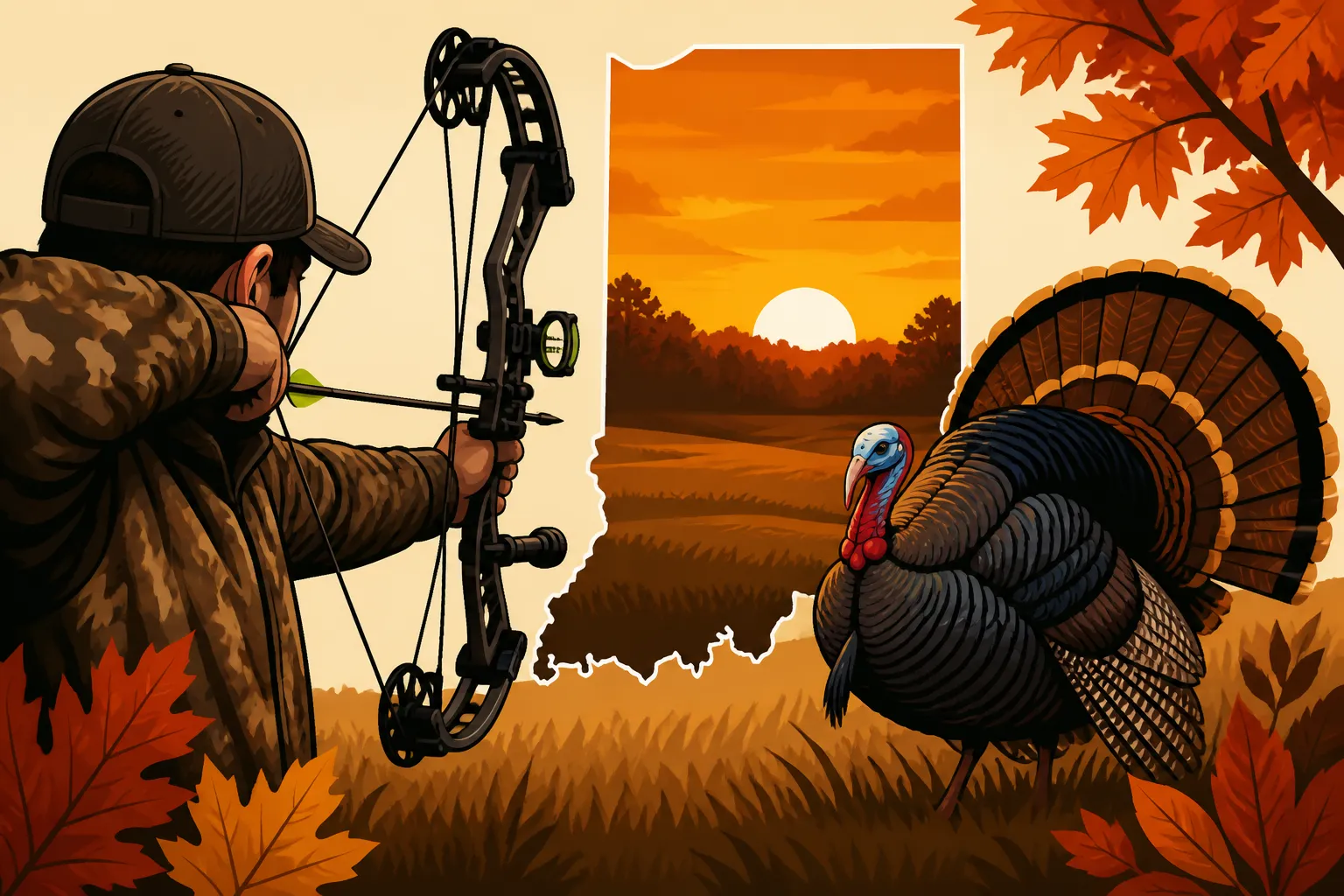
For many Indiana archers, the fall season is synonymous with deer. We spend countless hours scouting rub lines, setting treestands, and perfecting our deer calling. But for those willing to broaden their horizons, the fall turkey season offers a unique and exhilarating challenge, particularly when armed with a bow. It's a completely different ball game than spring gobblers, requiring a shift in strategy, calling, and gear considerations. This guide aims to equip you with the knowledge and tactics needed to successfully pursue Indiana's fall turkeys with your archery equipment, transforming those late-season hunts into double-duty opportunities.
Understanding Fall Turkey Behavior for Archers
Before you even nock an arrow, truly understanding how wild turkeys operate in the fall is paramount. This isn't the same strutting, gobbling tom from April; these are birds focused almost entirely on feeding and survival, often in much larger social groups.
Flock Dynamics and Scouting for Fall Birds
Unlike the spring, where solitary gobblers are actively seeking hens, fall turkeys are typically found in larger, more cohesive flocks. You'll often see several distinct types of flocks: the hen and poult flock (which might include a jake or two), bachelor groups of adult gobblers, and sometimes mixed-sex flocks if younger birds haven't fully separated. These groups are constantly on the move, ranging across large areas in search of food. Their primary focus is to pack on calories for the coming winter, which means they'll be keying in on mast crops like acorns, pecans, and beechnuts, as well as agricultural fields such as standing corn or recently harvested soybean fields. Recognizing these patterns is the first step in successful fall turkey hunting.
Scouting for these fall birds demands a different approach than springtime. Instead of listening for gobbling, you'll be looking for visual cues and food sources. Drive quiet backroads at dawn or dusk, glassing open fields and powerline cuts where turkeys might be feeding or traveling. Walk logging roads and field edges, looking for fresh tracks, droppings, and scratched-up areas under oak trees, indicating where a flock has been feeding. Pay close attention to areas where you might find them traveling between roosting sites and feeding grounds. You can find more specific guidance on this by checking out our deep dive into Hunting the Fall Archery Turkey Window.
Accessing detailed aerial and topographical maps can be a game-changer for this kind of scouting. Tools like GoHunt's mapping features can help you identify prime food sources, dense cover, and potential travel corridors, even before you set foot in the woods. This allows you to pinpoint likely turkey locations and plan your approach, saving you countless hours of aimless wandering. Understanding these flock dynamics will influence every tactical decision you make in the field, from calling to ambush points.
Reading Sign and Locating Roosts
Reading turkey sign in the fall is crucial for predicting their movements. Fresh tracks, especially those of multiple birds, can tell you which direction a flock is traveling. Look for dusting bowls, which are shallow depressions where turkeys "bathe" in dirt to clean their feathers and remove parasites; these are often found in dry, sandy areas or on sunny hillsides. Droppings are another excellent indicator: large, coiled droppings typically belong to gobblers, while smaller, more amorphous ones come from hens and jakes. The size and freshness of the droppings can tell you about the birds themselves and how recently they were in the area.
Finding roost trees in the fall can lead to prime hunting opportunities. Turkeys typically roost in tall, mature trees, often near water sources or on ridges with good visibility. Look for large droppings, scattered feathers, and even splash marks on the ground directly beneath likely roost trees. If you find an active roost, you can plan an early morning ambush, setting up quietly before the birds pitch down, or a late evening setup as they fly up to roost. Remember, the goal is to get as close as possible without being detected, allowing for a high-percentage shot with your bow. For a more general approach to preparing for the season, consider our advice on Scouting Indiana Public Land Before Season.
When you're trying to locate these signs and roosts, think like a turkey. What are they trying to accomplish? Safety, food, and water. Ridges that offer a vantage point, creek bottoms with heavy timber, and transitional zones between open fields and dense woods are all prime areas to investigate. If you're using a scouting app like GoHunt, you can mark these locations as waypoints, building a comprehensive picture of turkey activity in your hunting area. This detailed reconnaissance pays dividends when it comes time to set up your ambush.
Archery-Specific Strategies for Fall Turkeys
Bowhunting turkeys, especially in the fall, presents its own unique set of challenges compared to using a shotgun. You need closer ranges, more precise calling, and a keen understanding of how to get a bird within your effective archery zone.
Breaking Up a Flock: The Classic Fall Tactic
One of the most effective and time-honored strategies for fall turkeys, particularly with archery gear, is the "bust 'em up and call 'em back" method. This tactic capitalizes on a turkey's strong social instinct to re-gather with its flock. The idea is to locate a flock, then aggressively run or charge into them, scattering the birds in all directions. It might sound counterintuitive to scare game away, but trust me, it works! The more thoroughly you scatter them, the better. Once the birds are dispersed, you quickly find a hidden setup position, ideally near the point of impact or in a natural travel corridor where they're likely to re-congregate.
After busting the flock, wait quietly for 15-30 minutes, letting the woods settle down. Then, begin calling softly, mimicking lost yelps, kee-kees, or even the distinct assembly calls of a hen trying to gather her poults. The scattered birds will instinctively want to reunite, often responding to your calls with their own anxious sounds. This creates a perfect scenario for a bowhunter, as these birds will often come in cautiously but directly, looking for their mates. Your goal is to get them within 20-30 yards for a clean, ethical shot. This tactic is so effective it warrants its own discussion, and you can learn more about it in our article on Breaking Up a Fall Turkey Flock.
Remember, with a bow, you need birds to come into your setup, not just within range. A ground blind (which we'll discuss more later) is almost essential for this strategy, allowing you to draw your bow undetected as the turkeys approach. Focus on scattering all the birds if possible, including the dominant hen, as this increases the likelihood of them responding to calls. If you're hunting public land, be aware of other hunters and make sure your busting approach is safe and visible. This strategy really shines on those colder fall days when turkeys are eager to re-flock for warmth and safety.
Calling Techniques for Scattered Flocks
Fall turkey calling is vastly different from the aggressive, gobbler-focused calling of spring. Your goal isn't to provoke a tom into a fight or a breeding frenzy; it's to sound like a lost, lonely turkey seeking companionship. The primary calls you'll use are lost yelps, which are longer, more drawn-out yelps often given by a turkey separated from its group, and kee-kees, which are the whistle-like sounds made by young turkeys trying to find their flock. An assembly call, a series of excited, rapid yelps, can also be very effective at drawing in scattered birds.
Start with soft, infrequent calls. You don't want to overcall or sound too aggressive. Think of yourself as a hesitant, solitary bird trying to locate others. Use a variety of calls – a slate call for soft clucks and purrs, a diaphragm call for realistic kee-kees, and even a box call for those louder lost yelps when you need to reach out. Pay close attention to any responses. If a bird answers, mirror its tone and cadence, but always err on the side of caution with volume, especially as birds get closer. Remember, for a bow shot, you need them at spitting distance, and any sudden, loud calls might make them wary at that critical range. If you're interested in refining your calling repertoire, check out our guide on Turkey Calls Worth Carrying in Indiana.
The magic of fall calling is often the silence between calls. Give the turkeys time to respond and approach. They might circle, trying to pinpoint your location, so remain absolutely still and ready. Sometimes, a series of soft purrs or clucks from a pot call can bring a hesitant bird the last few yards. The less you move, the more chances you have for a successful draw. Using natural terrain features, like a ridge or a thicket, to hide your approach and setup will also give you an advantage, allowing you to call birds into a tight shooting lane without exposing yourself.
Decoy Strategies for Bowhunters
Decoys can be incredibly effective for fall bowhunting, but they require a slightly different approach than spring. In the fall, turkeys are less focused on territorial dominance and more on social reunion. Therefore, simple, realistic setups often work best. A single hen decoy or a jake decoy can be very effective at drawing in scattered birds, appealing to their instinct to gather. Place your decoy within your comfortable bow range, typically 10-20 yards from your blind, and positioned so that an incoming bird will offer a broadside or quartering-away shot as it approaches the decoy.
When using multiple decoys, such as a small flock setup, consider the social dynamics. A couple of hen decoys and a jake can simulate a small group, making it very appealing for lonely birds to join. For mature gobblers that might still be in bachelor groups, a single full-strut gobbler decoy combined with a couple of hens can sometimes work, triggering their competitive instincts, but this is often more effective in spring. In the fall, the emphasis is usually on social attraction rather than aggression.
Remember, with a bow, turkeys need to commit fully. Decoys help draw their attention away from your blind and provide a focal point, allowing you to draw your bow when their head is behind the decoy or their attention is fixed elsewhere. Ensure your decoys are set up realistically, facing slightly away from your blind so that incoming birds tend to walk past them, presenting ideal shot opportunities. Avoid setting decoys too far out, as this can hold birds at a distance beyond your effective archery range.
Gear and Shot Placement Considerations for Archery Turkey
Bowhunting turkeys is inherently challenging due to their small vital zones and keen eyesight. Your equipment choices and understanding of turkey anatomy are crucial for ethical and successful hunts.
Bow and Broadhead Selection for Turkeys
For fall turkey hunting with a bow, consistency and quietness are key. Any compound bow that you shoot confidently for deer will generally work well for turkeys. Ensure your bow is perfectly tuned and sighted in, as turkeys offer a much smaller target than deer. A smooth draw cycle is critical because you might have to hold at full draw for an extended period while a turkey moves into position or offers a clean shot. Noise dampeners on your bowstring and limbs are also beneficial, as turkeys have excellent hearing and can spook at the slightest sound. For more on optimizing your archery setup, take a look at our guide on Bow and Crossbow Setups for Indiana.
When it comes to broadheads, there are strong opinions on what works best for turkeys. Mechanical broadheads with a large cutting diameter (1.5 to 2 inches or more) are extremely popular. Their wide cutting swath creates massive trauma, which can bring a bird down quickly, especially for body shots. Some hunters prefer fixed-blade broadheads, valuing their reliability and penetration, particularly if a wing bone or other dense tissue is hit. Whether you choose fixed or mechanical, ensure your broadheads are razor-sharp. Consider using a broadhead designed specifically for turkeys, like a "guillotine" style head, if you're aiming for a head/neck shot, as these offer a much larger cutting surface for that small target. When researching different broadhead options, remember that resources like GoHunt often provide detailed product reviews and comparisons that can help you make an informed choice for your specific setup.
Regardless of your broadhead choice, practice with it extensively before the season. Shoot at turkey targets, ideally 3D ones, to get a feel for shot placement and arrow flight with your chosen head. This ensures you're confident in your gear when that moment of truth arrives.
Critical Shot Placement and Anatomy
This is perhaps the most crucial aspect of bowhunting turkeys. Unlike deer, where a broadside shot to the lungs is often forgiving, a turkey's vital organs are relatively small and well-protected by dense feathers and bone. There are essentially three primary shot placement options for an ethical bow kill:
- Head and Neck Shot: This is often considered the most humane and instantly lethal shot, if executed perfectly. It requires extreme precision, as the target area is tiny. Specialty broadheads designed to decapitate or inflict massive trauma to the head/neck region are often used for this. If you take this shot, make sure the bird's head is completely still and you are within your absolute comfortable range.
- Base of the Wing/Body Cavity Shot: For a body shot, aim for the "crease" where the wing meets the body, or slightly behind it. This targets the heart and lungs, which are tucked up high and forward in the bird's body cavity. A broadside or slightly quartering-away shot is ideal for this. Avoid aiming too low or too far back, as these areas are less lethal. The large cutting diameter of a mechanical broadhead can be particularly effective here.
- Spine Shot: Some hunters aim for the spine when a bird is strutting directly away, with its back facing them. This aims to sever the spinal cord, incapacitating the bird immediately. Again, this requires precision and understanding of the bird's anatomy.
It's vital to study turkey anatomy diagrams thoroughly and know exactly where to aim from different angles. Practice shooting at turkey targets to familiarize yourself with these small vital zones. For more detailed insights into broadhead performance on different game, you might find our article on Broadheads for Timber Shots to be a useful read.
Here's a quick reference table for turkey shot placement considerations:
| Shot Type | Target Area | Ideal Angle | Broadhead Preference | Notes |
|---|---|---|---|---|
| Head/Neck Shot | Base of the head | Any (still head) | Guillotine/Large Fixed | Instant kill, but tiny target; extreme precision needed. |
| Base of Wing/Body | Where wing meets body | Broadside/Q-Away | Large Mechanical/Fixed | Targets heart/lungs; good for committed birds. |
| Spine Shot | Center of the back | Strutting Away | Large Mechanical/Fixed | Incapacitates quickly, but requires bird facing directly away. |
Blind and Treestand Setups for Bowhunting Turkeys
When bowhunting fall turkeys, concealment and the ability to draw your bow undetected are paramount. This is where a good ground blind truly shines. A pop-up ground blind offers complete concealment, allowing you to shift, fidget, and draw your bow without being seen by sharp-eyed turkeys. It also helps contain human scent, although turkeys don't rely on scent as heavily as deer. Position your blind in a strategic location: on a field edge, along a travel corridor, or near a prime feeding area. Make sure to brush it in thoroughly with natural vegetation to break up its outline. Leave shooting lanes clear for your bow, but keep them as narrow as possible to maintain concealment. For tips on setting up, refer to our article on Using a Ground Blind on Indiana Public Land.
While less common, hunting turkeys from a treestand can also be effective, particularly if you're hunting near a known roost or a travel route that takes birds past an elevated position. The advantage here is getting above their line of sight, which can make drawing your bow easier. However, it can be harder to call birds directly into a treestand setup, and the angles for body shots can be more challenging. If using a treestand, ensure you have sufficient cover to break up your outline, especially when birds are approaching. A well-placed leafy camo suit can make a big difference.
No matter your setup, pay attention to the sun. Avoid setting up with the sun directly in front of you or shining directly into your blind windows, as this can silhouette you or make it difficult to see incoming birds. Wind direction is also a factor, although less critical than for deer; a steady breeze can mask sounds and carry your calls further. Comfort is also important, especially during long sits in cooler fall weather, so a comfortable chair in your blind can make a huge difference in your patience and ability to remain still.
Ethical Considerations and Post-Shot Protocol
Hunting fall turkeys with archery gear is incredibly rewarding, but it comes with a heightened responsibility for ethical hunting and diligent recovery.
Ethical Shot Selection and Range Limitations
Taking an ethical shot is always the primary concern for any hunter, and this is magnified when bowhunting turkeys. Given their small vital zones and notorious toughness, only take shots that are within your absolute comfortable and proven range. For many archers, this means limiting shots to 20-30 yards, sometimes even closer depending on conditions and the specific broadhead setup. Never attempt a shot at a running or moving bird, as the chances of a clean kill are drastically reduced, leading to potential wounding and loss. Wait for a bird to stop, ideally with its head up and alert, offering a clear shot at the head/neck or body.
Patience is your greatest ally. It's far better to let a bird walk than to take a marginal shot that results in a wounded animal. Understand that pass-throughs with broadheads are generally preferred for maximum blood trailing, even if the bird doesn't drop on the spot. If you're hunting in areas with specific rules or high hunting pressure, like some of Indiana's managed hunting grounds, adherence to these principles becomes even more important. You can find more insights into specific hunting scenarios, like those on field edges, by reading Turkey Tactics for Farmland Field Edges. Always consult the current Indiana Fall Archery Turkey Rules before heading afield to ensure you are compliant with all regulations.
When considering a shot, ask yourself: Can I put this arrow exactly where it needs to go? Is the bird calm enough? Is the shot unobstructed? If there's any doubt, hold off. The thrill of the hunt should never come at the expense of an ethical kill. Using your GoHunt app, you can mark your exact shooting lanes and distances from your blind setup, helping you visualize and commit to those ethical range limits.
Tracking and Recovery of Bow-Shot Turkeys
Even with a perfect shot, a bow-shot turkey might not drop instantly. Turkeys are incredibly tough birds, and their powerful wings can carry them a surprising distance even with a fatal hit. If you take a body shot, it's often wise to wait before initiating the track. Give the bird at least 15-30 minutes, or even longer if it wasn't a perfect hit. This allows the bird to expire and stiffen up, making recovery much easier. Mark the exact spot where the turkey was standing when you shot, and the direction it flew or ran.
When you begin tracking, look for blood, feathers, and disturbed ground. Turkeys will often crash into heavy cover, so be prepared to crawl and search thoroughly. If the bird drops its wings, it's often a good sign of a fatal hit. If you lose the trail, expand your search in concentric circles from the last known sign. Having a tracking partner can make a significant difference. A good headlamp is essential if your track extends into low light or after dark. For general guidance on tracking, our article on Blood Trailing After Dark in Indiana offers valuable tips that can be adapted for turkeys.
Recovering a bow-shot turkey is a testament to your skill and persistence. Once found, admire your hard-earned trophy. Remember to immediately attach your tag and fulfill any reporting requirements with the Indiana DNR. This final step completes the hunting process and ensures you honor the animal and adhere to all regulations.
Disclaimer
Please note: Hunting regulations and seasons can change. Always consult the latest Indiana Department of Natural Resources (DNR) regulations and local ordinances before hunting. The information provided in this guide is for informational purposes only and should not be considered legal advice.