Sitting a Field Edge in Late Season
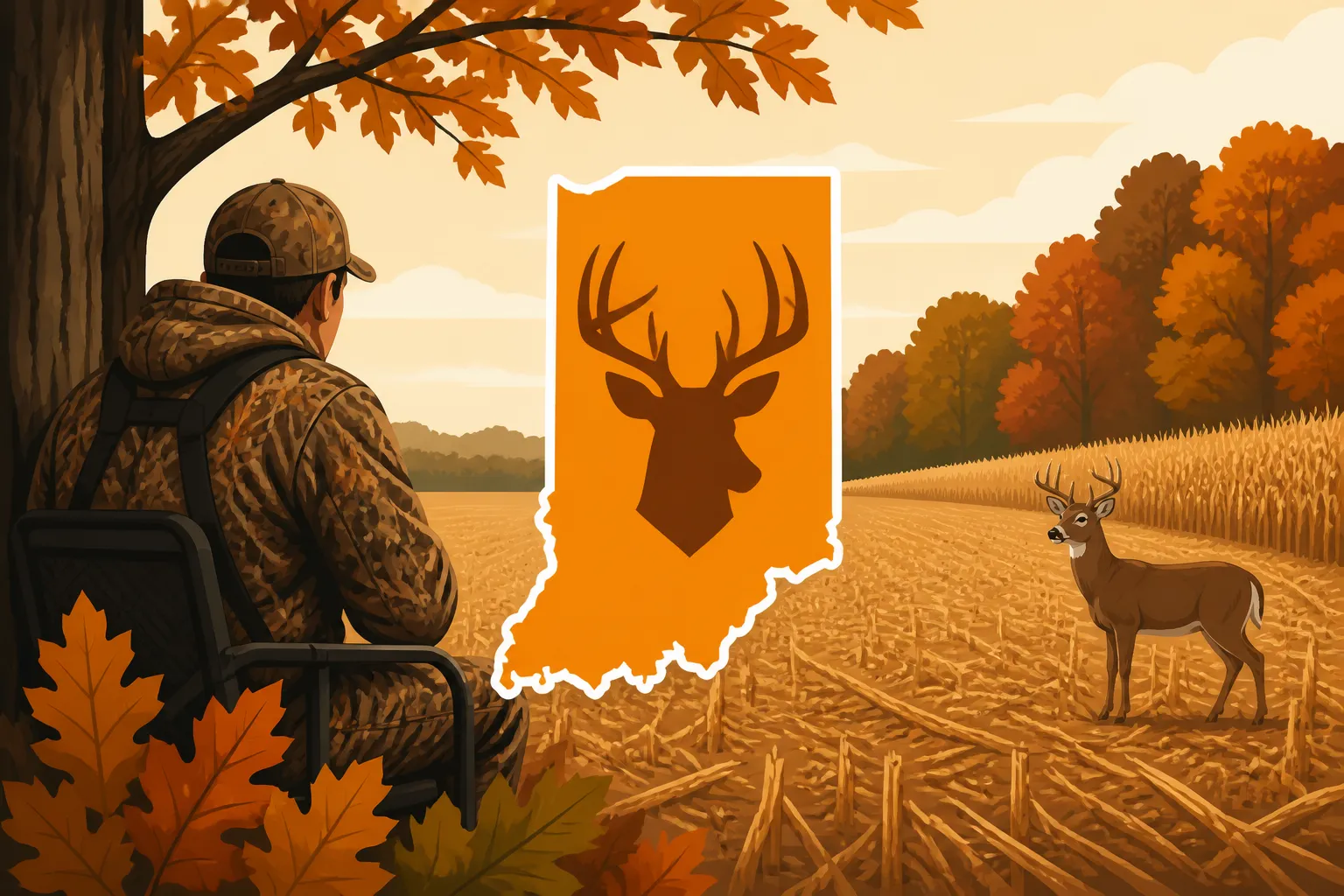
The late season in Indiana can be incredibly frustrating for deer hunters. The leaves are down, the rut is a distant memory, and deer patterns seem to have vanished into thin air. Many hunters pack it in, but for those willing to brave the bitter cold and adapt their strategy, late season can offer some of the most rewarding opportunities, especially when focusing on those crucial field edges. This guide is all about understanding why deer flock to these spots and how to set yourself up for success when the temperatures drop and the snow flies.
Why Late Season Field Edges Become Deer Magnets
As Indiana transitions from fall to deep winter, the landscape changes dramatically, and with it, the deer's priorities. Gone are the days of chasing does or relying on abundant acorns. Now, it's all about survival, and that means finding calories. This fundamental shift makes agricultural field edges incredibly attractive to deer.
The Critical Search for Calories and Sustenance
Once the mast crops like acorns and beechnuts are depleted, and the lush green browse of summer has withered, deer turn to the most reliable, high-energy food sources available. For many Indiana deer, this means agricultural fields. Think about it: a deer needs to pack on or at least maintain weight to get through the harsh winter months. Fields offer exactly that.
Standing corn, if still present, is a five-star buffet, providing not just food but also crucial thermal and visual cover. Deer will spend entire days bedded deep within cornfields, only emerging briefly. Cut cornfields, while offering less cover, still have plenty of waste grain on the ground, making them a consistent draw. Similarly, soybean fields, even after harvest, scatter beans on the ground that are packed with protein and fat. Winter wheat or brassica plots, if planted, are like magnets, offering highly palatable, nutritious forage when little else is green. These are critical Late-Season Food Sources for Indiana Whitetails and understanding what crops are available in your hunting area is paramount.
The Survival Imperative Beyond the Rut
After the exhaustive demands of the rut, bucks are often run down, having lost significant body weight. Does, especially those bred, need to build up their reserves for gestation. Every deer in the woods is acutely aware of the approaching cold, and their primary instinct shifts entirely to feeding and conserving energy. They will prioritize food and security above almost everything else.
This means their movement patterns become more predictable, at least in relation to food. Deer will often move directly from thick bedding cover to a preferred food source, feed efficiently, and then return to bed. Field edges represent the threshold of that movement—the place where they transition from cover to open feeding, or vice-versa. This concentrated activity makes them prime locations for a late-season sit, provided you can intercept them during their brief, often low-light, feeding windows.
Mastering the Art of Scouting Field Edges in Winter
Effective late-season hunting starts long before you ever climb into a stand or settle into a blind. The colder months, especially with snow on the ground, offer a unique opportunity to read the landscape like an open book. Scouting now is about precision.
Deciphering Tracks and Trails in the Snow
When the ground is covered in a fresh blanket of snow, deer sign becomes incredibly obvious. This is your chance to really learn their patterns. Look for heavy trails leading directly from dense timber or thickets out into a field. These are their highways. Pay close attention to the size and freshness of tracks. Large, deep tracks might indicate a mature buck, while smaller, clustered tracks suggest does and fawns.
More importantly, observe where these trails intersect the field edge. Are there specific pinch points or funnels where deer are entering and exiting? Are they favoring one corner of the field over another? Also, look for feeding sign within the field itself: pawed-up snow over waste grain, nibbled brassicas, or disturbed soil. This tells you exactly what they’re eating and where. A good mapping app, like GoHunt, can help you overlay snow patterns with aerial imagery to quickly identify and mark these high-traffic zones, allowing you to return to them later. Knowing how to interpret Reading Indiana Mud for Fresh Deer Movement becomes even easier with snow.
Pinpointing Bedding Areas Adjacent to Food
Deer won't travel far from their food source in late season, especially during daylight hours. Their bedding areas will typically be in the thickest cover imaginable, often within a few hundred yards of the field edge. Think south-facing slopes that catch the sun, dense cedar thickets, brushy creek bottoms, or heavy stands of pines or other evergreens that offer thermal protection from harsh winds.
During your scouting, try to identify these areas without disturbing them. You don’t want to bump deer out of their preferred bedding spots right before you plan to hunt. Use binoculars or a spotting scope from a distance to observe where deer enter and exit the field and then look for the nearest security cover in that direction. The goal is to set up an ambush point that allows you to intercept them as they travel between their sanctuary and their supper. This kind of detailed reconnaissance is vital for Scouting Indiana Public Land Before Season but also applies significantly during the season.
Understanding Wind, Thermals, and Sun Exposure
The late season brings distinct challenges with wind and thermals. Your setup must account for them. A stiff northwest wind might mean deer are bedded on the lee side of a ridge, moving along a protected draw to reach a field. Thermals, while less pronounced than in early season, still play a role. In the evenings, cool air descends into drainages and low spots, while in the mornings, warming air rises.
Sun exposure is also a significant factor. Deer will often bed on sun-drenched slopes to soak up warmth, especially on cold, clear days. When they move to feed, they might favor the sunny side of a field edge first. Knowing this helps you predict not just where they'll be, but when. Always consider your scent cone. In the late season, with sparse foliage, scent can travel further, so staying downwind of expected travel routes is even more critical.
Strategic Setup for Your Cold-Weather Ambush
Once you've done your homework and identified a promising field edge, the next step is setting up your ambush. Late season demands extra attention to detail for concealment, comfort, and quiet entry.
Choosing Your Platform: Ground Blind Versus Treestand
For late-season field edge hunting, ground blinds often have an advantage over treestands. The primary reason is warmth and concealment. A well-brushed-in ground blind, especially one with an interior heater (where legal and safe), can make those long, frigid sits much more tolerable. They also offer excellent concealment in the often-barren late-season landscape. Deer are used to seeing brush piles and natural features, making a well-camouflaged blind less alarming. Consider a quality pop-up blind like those from Barronett Blinds or a sturdy hard-sided option if you're hunting private ground and can leave it out. For more details, check out Using a Ground Blind on Indiana Public Land.
Treestands can still be effective, especially if you can find a suitable tree along a field edge that offers good concealment and an elevated vantage point. However, without leaves, you're much more exposed. A climbing stand or a saddle hunting setup might work if you can find a tree with heavy limbs or evergreens that break up your silhouette. Regardless of your choice, ensure it's placed carefully, preferably where you have some background cover.
Masterful Concealment and Entrance/Exit Routes
Concealment is non-negotiable. If you're in a treestand, use natural features like a thick pine or a cluster of dormant hardwoods to break up your outline. For a ground blind, brush it in thoroughly with local vegetation (dead corn stalks, cedars, brush) until it virtually disappears into the background. Deer are incredibly wary in the late season. Any unnatural outline will send them packing.
Your entrance and exit routes are just as important as your setup itself. You must be able to get to and from your hunting spot without bumping deer or leaving a scent trail across their preferred travel paths. This often means using natural terrain features—creek beds, ditches, fence lines, or dense timber—to mask your approach. Walk around known bedding areas, not through them. Many hunters use the wind to their advantage here, approaching from a direction that carries their scent away from where deer are likely to be. Using a mapping tool like GoHunt can help you plot these routes precisely, noting terrain changes and potential wind currents. Consider how you'd manage Entry Routes Through Standing Corn to remain undetected.
The Power of Warmth Management and Patience
Late-season hunting in Indiana means dealing with serious cold. Without proper warmth management, your hunt will be miserable and short-lived. Layering is key: start with a good moisture-wicking base layer, add insulating mid-layers (fleece, down, or synthetic puffies), and top it with a windproof and waterproof outer shell. Wool is an excellent choice for quietness and warmth, even when damp. Don't forget your extremities: a warm hat, insulated gloves or mittens, and good, insulated boots are critical. Chemical hand and foot warmers are a hunter's best friend. For comprehensive advice, see Cold-Weather Sitting Strategy in Indiana and ensure you have the right Insulated Boots for All-Day Sits.
Once you're set, patience becomes your most valuable tool. Late-season deer often don't move until the last hour or two of daylight. They'll spend the day bedded, conserving energy, and only move when hunger drives them. Be prepared to sit for extended periods, even when it feels like nothing is moving. The last 30 minutes of legal shooting light can be the most productive.
Key Tactics for a Successful Late Season Field Edge Hunt
With your scouting done and your setup optimized for the cold, it's time to put these strategies into action. A successful late-season hunt often comes down to precise timing and subtle adjustments.
Timing Your Hunt: Afternoon Dominance
While morning hunts can sometimes intercept deer returning from fields to bedding, they carry a higher risk of spooking deer off their primary food source. In the late season, afternoon hunts typically offer the best odds. Deer will often wait until the bitter cold starts to ease slightly, or until the sun is low, before they venture out of their bedding areas to feed.
Plan to be in your stand or blind at least 2-3 hours before sunset, allowing the woods to settle down after your entry. This gives you ample time to observe, let your scent dissipate, and be ready for those last-light movements. The prime window will usually be the final hour of daylight, right up until legal shooting time ends. This is when deer are most confident entering the open, knowing darkness is quickly approaching to provide cover.
Minimal Movement and Maximum Observation
Once you're on stand, become a statue. Every unnecessary movement can spook a wary, late-season deer. With fewer leaves on the trees, deer's vision is even more acute, and they will pick up on subtle motions. Use your eyes and ears to scan the field and the edge constantly. Quality binoculars are absolutely essential for this kind of hunting. You need to be able to pick apart distant tree lines, check fencerows, and scrutinize every dark blob in the field. Having a good pair of Binocular Choice for Indiana Whitetails will make a huge difference in spotting deer before they spot you.
If you spot deer far off, resist the urge to immediately raise your rifle or bow. Watch them, observe their direction of travel, and wait for them to close the distance naturally. The more patient you are, the better your chances of getting a shot when they are in range and broadside.
Table: Common Late-Season Indiana Food Sources & Deer Appeal
| Food Source | Availability (Late Season) | Deer Appeal | Key Considerations |
|---|---|---|---|
| Standing Corn | Dec-Jan (if unharvested) | High: Food, thermal cover, visual cover | Hunt edges, trails leading into/out of; deer may bed inside. |
| Cut Cornfield | Dec-Jan | Moderate-High: Waste grain offers consistent calories | Hunt trails to edges, especially if cover is nearby; deer feed actively. |
| Soybean Fields | Dec-Jan (after harvest) | Moderate-High: Residual beans are high in protein/fat | Similar to cut corn; watch for pawed-up areas in snow. |
| Winter Wheat | Nov-Mar | High: Green, palatable forage when little else is available | Often planted for deer; highly attractive, especially after a frost. |
| Brassica Plots | Nov-Feb (after freezing) | Very High: Freezing converts starches to sugars, making them incredibly sweet | Exceptional deer draw once temperatures consistently drop below freezing. |
| Hardwood Browse | Dec-Jan | Low-Moderate: Tips of dormant woody plants | Secondary food source; primarily utilized when agricultural options are scarce or when moving between bedding/fields. |
Subtle Calling and Minimal Disturbance
Unlike the rut, where aggressive calling can often pay off, late-season calling should be subtle and minimal. A soft grunt or a short bleat might catch the attention of a deer that's slowly working its way towards the field, but overdoing it will likely do more harm than good. The goal isn't to draw them into a fight or a breeding encounter; it's to pique their curiosity and subtly redirect their path a few yards.
Focus on simply being present and observing. Let the deer come to you. Avoid any unnecessary noise or movement that could give away your position. Even the smallest twig breaking underfoot during your entrance can be enough to put a mature deer on high alert. Utilizing technology like the GoHunt app for silent mapping and tracking can help ensure minimal disturbance, keeping your focus on the hunt. By understanding these subtle nuances, you increase your chances significantly, even when hunting during Hunting the Late-Season January Lull when deer are most cautious.
Don't Forget the Details: Processing and Reporting
The hunt doesn't end when the shot is fired. Especially in cold weather, proper game care is crucial to preserve the meat.
Field Dressing and Retrieval in Cold Conditions
Cold weather can be both a blessing and a curse for field dressing. While the cold helps preserve the meat, dealing with freezing temperatures and numb fingers can make the task challenging. Be prepared with warm gloves, a sharp knife, and a headlamp if hunting into the evening. Getting the deer field-dressed quickly is still important to allow the carcass to cool uniformly.
Retrieval can be difficult in snow or frozen ground. A deer sled can be an absolute lifesaver, making it much easier to drag a deer out of a field, especially if you're alone. If you're on public land, remember to follow specific rules regarding vehicle access. For comprehensive insights into game handling, particularly after a cold front, consider reading up on Hunting Deer After a January Cold Front.
Reporting Your Harvest
Once your deer is recovered, remember to fulfill your reporting requirements with the Indiana DNR. This is typically done online or through the Go Outdoors Indiana mobile app. You'll need your license information and details about the harvest (sex, county, date). This simple step helps the DNR manage Indiana's deer herd effectively and ensures you're in compliance with state regulations.
No matter how many late-season hunts you endure without success, remember that the opportunity for a mature deer to step out into that field is always there. It's a game of patience, preparation, and understanding how deer adapt to the coldest parts of the year.
Disclaimer
The information provided in this article is for general guidance and educational purposes only. Hunting regulations and conditions can change rapidly. Always consult the most current Indiana Department of Natural Resources (DNR) hunting regulations before heading afield. Safety should always be your top priority.