Mandatory Testing Inside Indiana’s Positive Area
Finding out you've harvested a deer in an area where Chronic Wasting Disease (CWD) has been detected can be a real moment of panic, especially when you hear the words "mandatory testing." It adds a whole new layer of concern and responsibility to what should be a joyous occasion, leaving many Hoosier hunters feeling confused about what steps they absolutely must take next. This guide is here to walk you through exactly what mandatory CWD testing entails within Indiana's designated positive areas, from understanding the zones to the testing process and what to do with your harvest.
Understanding Indiana's CWD Positive Area
Chronic Wasting Disease is a serious, fatal neurological disease affecting deer, elk, and moose. It's caused by abnormal proteins called prions and unfortunately, there's no cure. When CWD is detected in a new area, the Indiana Department of Natural Resources (DNR) takes immediate action to contain its spread and monitor the deer population. This often includes establishing what's known as a CWD "positive area" or "management zone," where specific rules apply to hunters to help control the disease.
Defining the CWD Positive Area
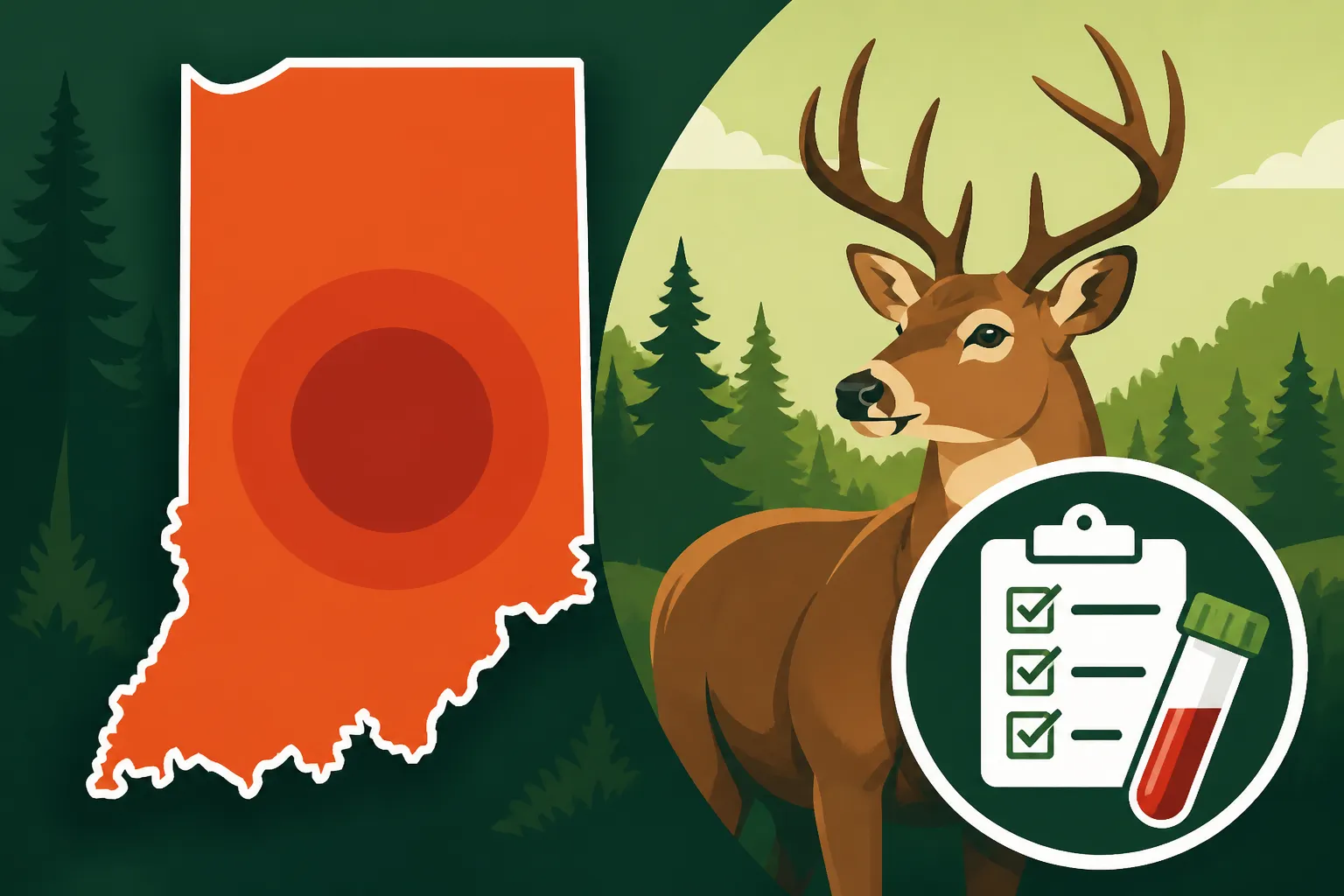
Currently, Indiana's CWD positive area is primarily concentrated in the northeastern part of the state. It started with detections in LaGrange and Steuben counties, and then the discovery of a positive deer in Noble County led to an expansion of this area, bringing DeKalb and Elkhart counties into the fold. This means if you're hunting deer in these specific counties, you're operating within the designated CWD positive area, and different rules apply to you than to hunters in other parts of the state.
The boundaries of these zones are not arbitrary; they are meticulously drawn by wildlife biologists to encompass areas where CWD has been confirmed and where the risk of further spread is highest. It's critical for every hunter to know if their hunting ground falls within these borders. A tool like GoHunt or the Indiana DNR's online mapping resources can be incredibly helpful for checking property lines and CWD zone boundaries before you even step foot in the woods. Staying informed is your first line of defense in responsible hunting within these sensitive areas. You can also learn more about Indiana's Chronic Wasting Disease Positive Area in our detailed breakdown.
Why Mandatory Testing is Crucial
The DNR doesn't impose mandatory testing lightly. It's a vital surveillance tool designed to gauge the prevalence and distribution of CWD within the affected herd. By testing a significant number of harvested deer from the positive area, biologists can track how the disease is spreading, if at all, and make informed decisions about future management strategies. Without mandatory testing, it would be much harder to understand the true scope of the problem and implement effective control measures.
Think of it this way: CWD can be present in deer for an extended period before they show any outward symptoms. A deer that looks perfectly healthy could still be carrying the disease and shedding prions into the environment. Mandatory testing helps identify these seemingly healthy carriers, providing a clearer picture of the disease landscape. It's a collective effort, and your participation as a hunter in a CWD positive area is absolutely essential for the long-term health of Indiana's deer herd. For more context on how this area has evolved, see our article on Why Noble County Expanded the CWD Positive Area.
The Specifics of Mandatory CWD Testing
So, you've successfully harvested a deer within one of Indiana's CWD positive counties. Now what? The rules are clear, but navigating them can feel a bit overwhelming, especially when you're excited (and maybe a little tired) after a successful hunt.
When and Where to Get Your Deer Tested
If you harvest a deer in one of the mandatory CWD testing counties – currently LaGrange, Steuben, Noble, DeKalb, and Elkhart – you are legally required to submit its head for CWD testing. This isn't a suggestion; it's a non-negotiable step. The DNR typically establishes specific CWD sampling locations within or very close to these counties. These might include staffed check stations, convenient drop-off coolers, or partnerships with taxidermists and meat processors.
The timeframe for submission is also critical. Generally, you'll need to submit the head within a certain period, often 24 to 48 hours, depending on the specific regulations for that season. Always check the most current Indiana Hunting & Trapping Guide or the DNR website for the exact dates and locations of CWD check stations and drop-off points for the current season. Some counties may even offer specialized services or have different protocols for certain periods, so staying updated is paramount. Don't just assume what worked last year will work this year. For details on how the state facilitates this, check out Indiana CWD Testing for Hunters.
The Testing Process Explained
When you bring your deer's head to a mandatory CWD testing location, here's generally what to expect:
- Identification: You'll need to provide your deer harvest confirmation number (from when you reported your deer through the Indiana Deer Reporting Requirements or the Reporting a Deer Through Indiana's App), along with information about where the deer was harvested. The DNR needs to know the exact county and often the nearest township or even GPS coordinates to accurately map disease distribution.
- Sample Collection: Trained DNR staff or volunteers will collect tissue samples from the deer's brainstem and lymph nodes. These are the specific tissues where CWD prions accumulate and are detectable. This process is relatively quick and doesn't require the entire deer carcass. They typically take just the head.
- Tagging and Information: Your sample will be tagged with a unique identification number that links back to your deer and your hunter information. You'll likely receive a receipt or confirmation that your sample has been submitted.
- Transport to Lab: The samples are then carefully transported to a diagnostic laboratory, usually the Indiana Animal Disease Diagnostic Laboratory at Purdue University, where they undergo specialized testing to detect the presence of CWD prions.
It’s important to remember that these check stations are there to help you comply with the law and help the deer herd. The staff understands that you might have questions, so don't hesitate to ask if anything is unclear.
Carcass Movement Restrictions to Know
Beyond submitting the head for testing, one of the most significant rules in a CWD positive area concerns carcass movement. This is put in place to prevent hunters from inadvertently spreading CWD prions to unaffected areas. Because prions can persist in certain parts of a deer's body, particularly the brain, spinal cord, and lymph nodes, strict rules apply.
Generally, you cannot transport an entire deer carcass out of a CWD positive county. This means you need to field dress and process your deer within the CWD zone. The only parts typically allowed to leave the zone are:
- Deboned meat
- Clean skull plates (antlers attached)
- Clean antlers
- Hides
- Upper canine teeth
- Finished taxidermy products
This might mean adapting your hunting routine. Instead of bringing a whole deer home to process, you might need to find a local processor within the CWD area or be prepared to bone out the deer yourself in the field. This is where good planning, and perhaps a detailed mapping app like one from GoHunt that shows public land boundaries, becomes crucial for knowing where you can and cannot take certain parts of your harvest. For comprehensive information, consult our guide on Indiana Carcass Movement Restrictions.
What Happens After Your Deer Is Tested
The waiting game after submitting a sample can be a bit nerve-wracking. Every hunter hopes for a negative result, but it's important to understand the possibilities and how the DNR communicates these outcomes.
Receiving Your Test Results
Once the lab finishes its analysis, the DNR will notify you of the results. This notification usually comes via mail, email, or sometimes through an online portal where you can check the status using your sample ID number. The timeframe for receiving results can vary, typically taking a few weeks, depending on the volume of samples being processed and the lab's workload.
If your deer tests negative for CWD, you'll simply receive confirmation that no CWD was detected. This means your venison is good to go, provided you've followed all other processing and storage guidelines. It's a relief for sure, and you can enjoy your harvest with peace of mind.
If Your Deer Tests Positive for CWD
While it's not what any hunter wants to hear, it's possible your deer could test positive for CWD. If this happens, the DNR will contact you directly to discuss the results and next steps. They understand this is difficult news and will provide guidance and answer any questions you have.
Here's what typically happens:
- Notification and Counseling: The DNR will inform you of the positive result and explain what it means for you and your harvested venison. They will advise against consuming meat from a CWD-positive animal. While there's no evidence CWD can spread to humans, health organizations recommend extreme caution, and it's simply not worth the risk.
- Disposal of Carcass Parts: You will be instructed on the proper disposal of any remaining carcass parts that were not submitted for testing. This is crucial for preventing further environmental contamination. The DNR may offer specific disposal sites or guidance.
- Further Surveillance: Your positive harvest becomes a critical data point for the DNR's ongoing CWD surveillance. It helps them focus their efforts and potentially adjust management strategies in that specific area.
This is a scenario no one wants, but it highlights the importance of mandatory testing and acting responsibly. It's part of being a steward of the land and the deer herd. Our guide on Handling Venison From a CWD Positive Area offers more detailed advice on this challenging situation.
Practical Tips for Hunters in a CWD Zone
Hunting in a CWD positive area requires a bit more forethought and preparation, but it doesn't have to diminish the experience. With the right approach, you can still have a successful and responsible hunt.
Scouting and Hunting Strategy in a CWD Area
When you're hunting in a known CWD zone, your scouting and hunting strategy might evolve slightly. While you're still looking for classic deer sign like rubs, scrapes, and food sources, you're also keenly aware of the health of the herd.
- Be Observant: Pay close attention to the deer you see. Are any animals looking unusually thin, walking with an odd gait, or showing other neurological symptoms? While these signs are rare in the early stages of the disease, reporting any visibly sick deer to the DNR is important.
- Target Healthy Animals: Focus on harvesting deer that appear healthy and robust. This doesn't mean passing up opportunities, but it adds another layer of consideration to your decision-making.
- Utilize Public Resources: The Indiana DNR provides a wealth of information. Their website often includes maps, updates on CWD detections, and recommended hunting strategies for affected areas. Pairing this with tools like GoHunt can give you a powerful scouting advantage, especially when trying to understand Scouting Indiana Public Land Before Season.
- Consider Antlerless Tags: In some CWD management zones, the DNR might encourage harvesting more antlerless deer to help control herd density. Higher deer densities can sometimes contribute to quicker CWD transmission. Always check the specific regulations for the counties you're hunting in, as they can sometimes differ from general statewide rules, particularly in areas like a Deer Reduction Zone.
Field Dressing and Handling Your Harvest
Field dressing a deer is a routine part of hunting, but in a CWD positive area, it requires extra care to minimize any potential spread.
- Gloves are Essential: Always wear disposable gloves when field dressing any deer, but especially so in a CWD zone. This protects you from potential exposure to blood and other fluids.
- Minimize Contamination: Try to keep brain and spinal cord material intact and avoid cutting through these areas. Use separate tools for breaking the pelvis or sternum if possible. If you must remove the head for testing, do so carefully.
- Proper Disposal of Carcass Waste: The safest practice is to leave all carcass waste (guts, bones, brain, spinal cord) at the site of the kill, deep in the woods where scavengers won't easily spread it and where it can decompose naturally. If you must transport waste, do so in a sealed bag or container to a landfill that accepts such materials. Never dump it on a roadside or dispose of it in a way that could expose other deer.
- Clean Your Tools Thoroughly: After field dressing, thoroughly clean and disinfect your knives, saws, and any other tools. A bleach solution (50% bleach, 50% water) is effective for disinfecting metal surfaces.
- Cooler and Game Bag Prep: If you're boning out your meat in the field, use clean coolers and game bags. For more tips on field care, especially in cooler weather, you might find our article on Field Dressing a Deer in Cold Weather helpful.
- Understand Late-Season Food Sources: Knowing where deer congregate for Late-Season Food Sources for Indiana Whitetails can also give you a leg up, but be mindful that higher concentrations of deer might also mean higher potential for disease transmission.
Table: CWD Testing and Carcass Management Overview for Indiana's Positive Area
| Aspect | Standard Indiana Rules (Outside CWD Zone) | CWD Positive Area Rules (LaGrange, Steuben, Noble, DeKalb, Elkhart) |
|---|---|---|
| Deer Reporting | Mandatory for all harvested deer within 48 hours. | Mandatory for all harvested deer within 48 hours. |
| CWD Testing | Voluntary (though encouraged for vigilance) | MANDATORY for all harvested deer. |
| Submission Timing | N/A (for voluntary, follow specific testing program guidelines) | Within 24-48 hours of harvest (check current DNR regulations). |
| Submission Method | Voluntary drop-off points, taxidermists, processors | Designated staffed check stations, specific drop-off coolers. |
| Carcass Movement | Entire carcass may be transported statewide. | RESTRICTED: Only deboned meat, clean skull plates, antlers, hides, finished taxidermy allowed out of zone. |
| Venison Consumption | Generally safe once properly processed. | ADVISED AGAINST if deer tests positive for CWD. |
| Disposal of Waste | Landfill, buried, or left in the woods in an inconspicuous manner. | Specific disposal guidance from DNR may apply for positive deer. |
| Tools/Hygiene | Good practice to wear gloves and clean tools. | ESSENTIAL to wear gloves and thoroughly disinfect tools. |
By taking these extra steps, you're not just complying with regulations; you're actively contributing to the health of Indiana's deer population and the future of hunting in our state.
Disclaimer
Please remember that hunting regulations, including those related to Chronic Wasting Disease, can change. Always consult the most current Indiana Hunting & Trapping Guide published by the Indiana Department of Natural Resources (DNR) or visit their official website for the most up-to-date and legally binding information before heading out into the field. This guide is for informational purposes only and should not be considered a substitute for official DNR regulations.