Indiana Cave Salamander Encounters Afield
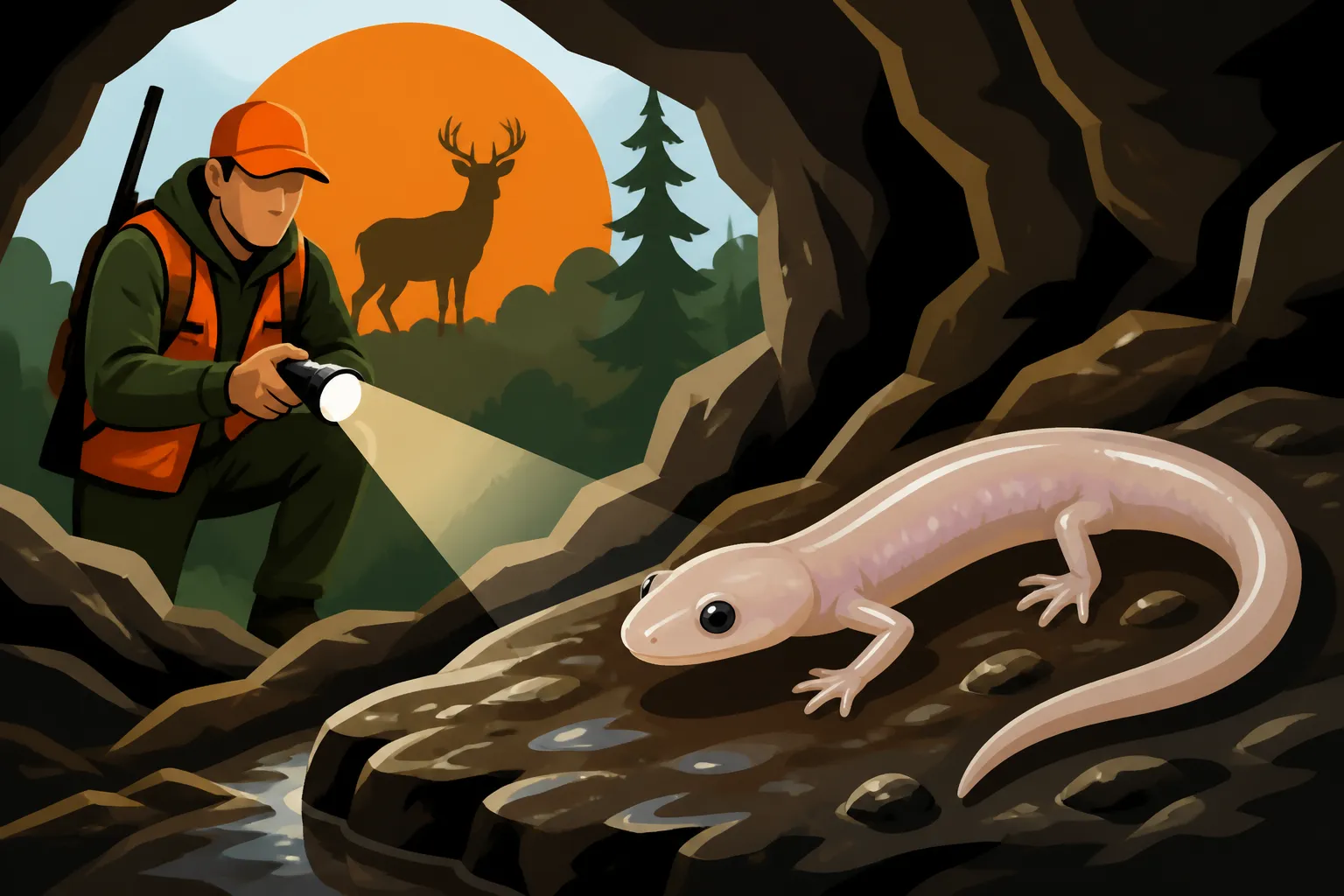
You're out in the Indiana woods, probably deep in some southern Indiana hill country, scouting for deer sign or listening for a gobbler, when you flip over a mossy log or peek under a limestone ledge. Instead of finding a spider or a beetle, you see a flash of orange-red, maybe with some dark spots, and a creature that definitely isn't a lizard. What on earth did you just stumble upon? This guide is all about those unexpected and intriguing moments when Indiana hunters encounter a cave salamander, helping you understand what they are, where they live, and how to appreciate these secretive amphibians responsibly.
What Exactly is an Indiana Cave Salamander?
It's easy to dismiss any small, moist-skinned creature as "just another salamander," but Indiana is home to a surprising diversity of these amphibians, and the cave salamander is one of the more unique ones you might find. While not as flashy as a cardinal or as imposing as a whitetail buck, they're a fascinating part of our state's natural heritage, particularly in specific geological regions.
Identifying the Cave Salamander
When you encounter one, the most striking feature of an Indiana cave salamander (scientific name Eurycea lucifuga) is its coloration. You'll typically see a bright, often vivid, orange to reddish-orange background color, generously splashed with irregular black or dark brown spots. These spots aren't usually organized into stripes or bands, but rather scattered across its back and sides, sometimes merging into larger blotches. Their bellies are a much paler yellow or cream color. They're typically slender, with a long tail that makes up a good portion of their total length, which can be anywhere from about 4 to 7 inches.
One key identifying characteristic is their eyes, which are fairly prominent and have a dark bar running from the eye to the nostril. This feature, combined with their distinctive color pattern, helps differentiate them from other common salamanders you might encounter in the Hoosier woods. For instance, a red-backed salamander is typically smaller and lacks the bright orange hues and large, distinct spots, often appearing more uniformly dark with a red stripe. A dusky salamander, while sometimes found in similar moist habitats, is usually duller in coloration and has a more robust body. The sheer vibrancy of the cave salamander often makes it stand out.
Its Role in the Hoosier Ecosystem
Beyond their striking looks, cave salamanders play a subtle but important role in their unique habitats. Like many amphibians, they are insectivores, meaning their diet consists primarily of small invertebrates. They'll snack on tiny insects, mites, and other subterranean critters, helping to control these populations within their micro-ecosystems. In turn, they can become a food source for larger predators like snakes, raccoons, or even some cave-dwelling birds or mammals, though their secretive nature means they're not typically a primary food source for many species. They are part of the intricate food web that sustains the health of our forests and cave systems.
More significantly, cave salamanders, like many amphibians, are considered indicator species. This means their presence, or absence, and the health of their populations can tell scientists a lot about the environmental quality of their habitat. Because their skin is permeable and they require very specific conditions of moisture and temperature, they are highly sensitive to pollution and habitat degradation. If you're finding healthy populations of cave salamanders, it's often a good sign that the water quality in that area is clean and the surrounding ecosystem is relatively undisturbed. This sensitivity makes them biological sentinels, silently signaling the health of our precious natural resources.
Where Hunters Might Encounter Them in Indiana
Indiana might not be known for its vast cave systems on a national scale, but we have some truly special limestone karst regions, especially in the southern part of the state. These geological formations create the perfect, cool, damp, and dark environments that cave salamanders absolutely thrive in. Hunters who spend time in these specific areas are the most likely to stumble upon these hidden gems.
Prime Habitats in Southern Indiana
The primary range for the cave salamander in Indiana is concentrated in the south-central and southeastern portions of the state, particularly within what's known as the "karst region." This area is characterized by soluble bedrock like limestone, which over millennia has been eroded by groundwater to form caves, sinkholes, disappearing streams, and springs. When you're out hunting in places like the Hoosier National Forest Hunting, Yellowwood State Forest Hunting, or Morgan-Monroe State Forest Hunting, you're often traversing prime cave salamander territory.
Think about those deep ravines and creek bottoms you trek through while still-hunting for a November buck, or the rocky bluff lines you follow when scouting for turkey roosts in spring. These are exactly the kinds of spots where cave salamanders reside. They prefer the twilight zones of caves – the entrances and areas just beyond where some light penetrates – as well as rock shelters, deep crevices, and the rocky banks of spring-fed creeks. The consistent cool temperatures and high humidity in these spots are critical for their survival. If you're Reading a Ridge for Hoosier Forest Deer and notice a prominent rock outcropping or a small cave entrance, that's precisely where you might find one.
Chance Encounters Afield
Most encounters with cave salamanders happen by chance. You might be carefully working your way through a thicket near a creek looking for a rub line, or Scouting Indiana Public Land Before Season in late summer. Perhaps you're flipping over loose rocks or logs to investigate insect activity, a common practice for many curious outdoorsmen. When you disturb their hiding spot, a cave salamander might quickly dart away into deeper cover. They are shy creatures and quite adept at disappearing quickly when exposed.
Sometimes, you might even spot them active on damp, rainy nights, especially after a warm rain when they might venture out from their hiding spots to forage. However, for most hunters, the typical scenario involves inadvertently uncovering one during daylight hours. Whether you're investigating a spring head, navigating a rocky creek bed, or exploring a small rock shelter that might offer a good pinch point for deer, always be mindful of what lies beneath. Even while checking for Finding Sign in Big Hoosier Forest Timber, turning over a moss-covered rock could reveal one of these vibrant creatures. Using mapping tools like GoHunt can help you identify areas with significant elevation changes, rock formations, and perennial water sources, which are all indicators of potential salamander habitat. These maps can guide you to game-rich areas that also happen to be biologically diverse.
Respecting Indiana's Amphibian Inhabitants
While the thrill of the hunt often focuses our attention on game species, encountering other wildlife like the cave salamander offers a wonderful opportunity to broaden our appreciation for Indiana's natural world. As ethical hunters and outdoors enthusiasts, it's important to know how to interact with and respect all species, especially those that are non-game.
Observing Without Disturbing
The cardinal rule when you encounter any non-game wildlife, especially amphibians, is to observe without disturbing. Cave salamanders are fragile creatures, and their skin is incredibly sensitive. The oils, lotions, or even natural salts from our hands can be harmful to them. Also, picking them up can cause them undue stress and potentially transfer pathogens. So, as tempting as it might be to hold one of these beautiful animals, the best practice is to simply admire them from a distance. Let them be.
If you happen to uncover one by moving a log or a rock, the most respectful thing you can do is gently place the log or rock back exactly as you found it. This ensures their cover and microhabitat remain intact. Imagine you're trying to stay hidden from a deer, and suddenly your perfectly camouflaged spot is removed! We want to leave the woods just as we found them, or even better, for all its inhabitants. This quiet respect aligns perfectly with the hunter's conservation ethic, recognizing that a healthy ecosystem depends on the well-being of every species, big or small.
The Legal Side of Amphibian Encounters
When it comes to the legalities, cave salamanders are not game animals, so there are no open seasons or bag limits for them. Generally, Indiana law protects all native wildlife from being collected, possessed, or harassed without a specific permit from the Indiana Department of Natural Resources (DNR). While an accidental, brief encounter while hunting won't put you in legal hot water, knowingly collecting or harming them would be a violation. It’s always best to assume any native wild animal you encounter should be left undisturbed unless you have a specific permit.
If you ever encounter a salamander that appears injured, sick, or behaves unusually, it's generally best to leave it be unless you are specifically trained in wildlife rehabilitation or have been advised by the DNR. Trying to "help" an animal without proper knowledge can often do more harm than good. Our role as hunters and outdoor users is to appreciate the wildness of these creatures and allow them to fulfill their natural roles in the environment, secure in their habitat.
Broader Biodiversity and the Hunter's Role
The pursuit of game, whether it's Bowhunting Indiana's Long Archery Season or Spring Turkey Hunting in Indiana, often takes us to some of the most wild and beautiful corners of our state. These journeys naturally expose us to a myriad of non-game species, from tiny insects to majestic raptors, and yes, even secretive amphibians like the cave salamander. These encounters are more than just momentary distractions; they are opportunities to deepen our connection to the land and embrace our role as conservationists.
Hunters as Conservationists
For generations, hunters have been at the forefront of conservation efforts in North America, contributing funding and advocating for habitat preservation that benefits not just deer and turkeys, but every creature sharing those woods. Spotting a cave salamander while you're focused on Hunting Southern Indiana Hill Country or Reading a Ridge for Hoosier Forest Deer reinforces this broader understanding. It reminds us that the healthy hardwood forests, clean spring-fed creeks, and undisturbed rock shelters that hold our game animals also provide essential refuge for countless other species.
When we advocate for sound forest management, clean water initiatives, or responsible public land use, we're not just ensuring future hunting opportunities; we're protecting the entire web of life. A robust population of sensitive amphibians like the cave salamander is a testament to the health of the entire ecosystem – a health that hunters strive to maintain. Our understanding of Wind and Thermals on a Southern Indiana Ridge or how to set up Treestand Setups in Hoosier National Forest takes on a deeper meaning when we realize the intricate living community around us.
Documenting Your Discoveries Responsibly
There's a natural urge to share the wonders we witness in the wild. Seeing a vibrant cave salamander is definitely one of those moments that makes you want to pull out your phone. While photos are fine, remember the rule of minimal disturbance. A quick, well-aimed shot from a respectful distance is perfect. Avoid using flash, especially in dark, sensitive habitats, as it can disorient and stress the animal. The goal is to capture the memory without interfering with the creature's natural behavior.
Many hunters are also keen naturalists, keeping detailed notes on what they see and hear in the woods. Incorporating sightings of non-game species like the cave salamander into your hunting journal or scouting notes can add another layer of richness to your outdoor experience. These personal observations, over time, can help you develop an even deeper understanding of the ecological health of your hunting grounds. It's a fantastic way to engage with nature beyond the harvest, celebrating the incredible biodiversity that Indiana offers.
| Feature | Indiana Cave Salamander (Eurycea lucifuga) | Red-backed Salamander (Plethodon cinereus) | Dusky Salamander (Desmognathus fuscus) |
|---|---|---|---|
| Primary Color | Bright orange to reddish-orange | Dark grey to black | Brown, grey, or olive-green |
| Pattern | Scattered black/dark brown spots | Red or orange stripe down back (most common) or uniformly dark | Often mottled, light stripe from eye to jaw (sometimes) |
| Size (Adult) | 4-7 inches | 2-5 inches | 3-6 inches |
| Preferred Habitat | Twilight zone of caves, rock shelters, spring-fed streams | Forest floor, under logs/leaves, moist woodlands | Along edges of streams, springs, seeps, under rocks/logs in water |
| Eye Feature | Prominent eyes with a dark bar to nostril | Smaller, less prominent eyes | Often a pale, distinct stripe from eye to back of jaw |
Disclaimer
This article is for general informational purposes only and does not constitute professional advice. Laws, prices and regulations vary by location and change over time. Consult a qualified professional for guidance on your specific situation.