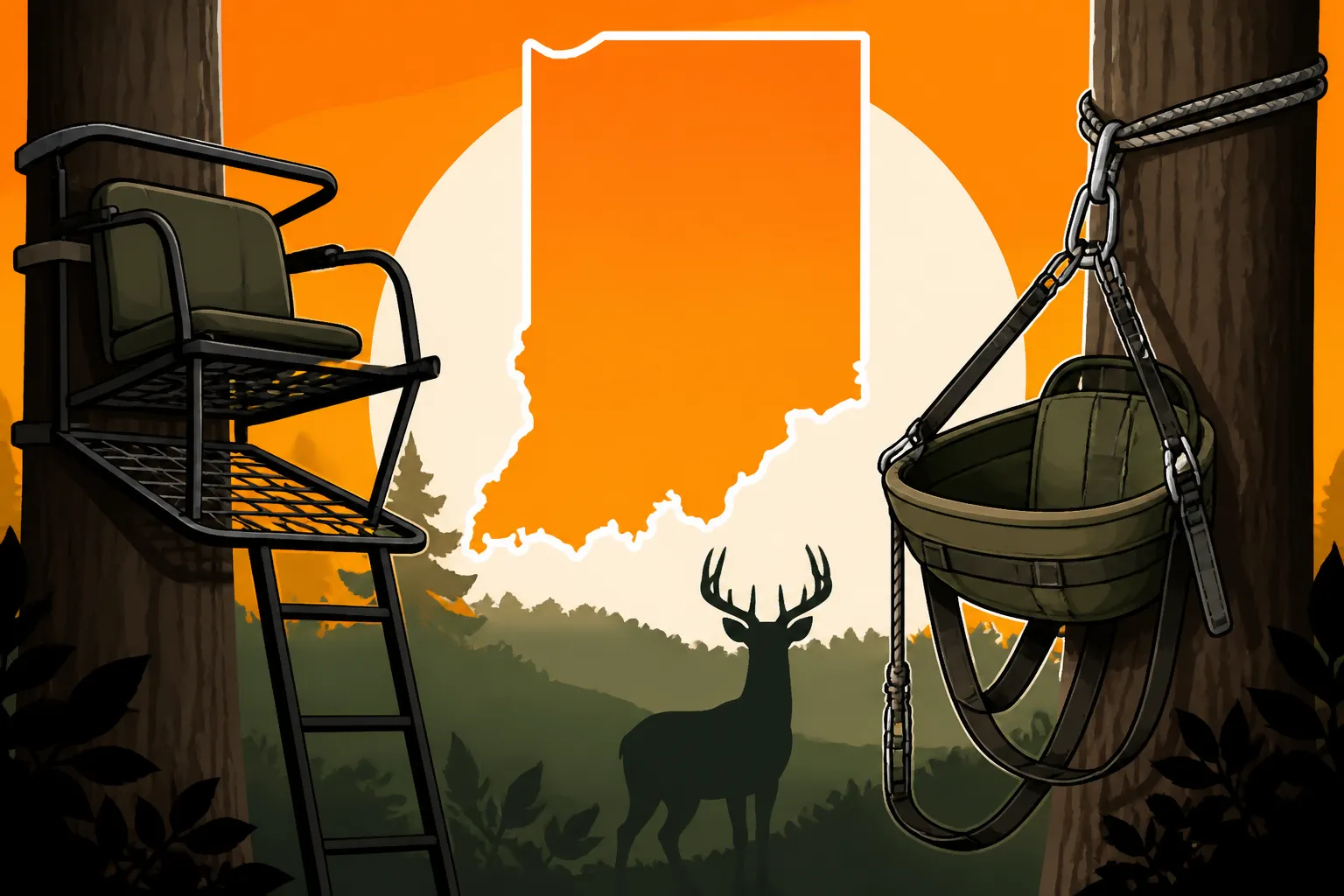
Treestands and Saddles on Public Land
There's nothing quite like the freedom and challenge of hunting public land in Indiana, but it comes with its own set of unique demands. One of the biggest hurdles hunters face is how to effectively get off the ground, gain a better vantage point, and stay concealed, all while adhering to public land regulations and maintaining mobility. This comprehensive guide will walk you through the world of treestands and saddle hunting, dissecting the pros and cons of each for your public land forays, and helping you decide which system best fits your hunting style in the Hoosier State.
Understanding the Public Land Challenge in Indiana
Public land hunting isn't like hunting a private farm where you might leave a ladder stand up all season. In Indiana, state forests, Fish and Wildlife Areas, and the Hoosier National Forest present specific challenges that demand thoughtful gear choices and meticulous planning. You're often dealing with diverse terrain, from the rolling hills of southern Indiana to the flatter, agricultural-adjacent woodlots up north, and with varying levels of hunting pressure.
The Demands of Public Access
When you step onto public land in Indiana, whether it's a bustling Fish and Wildlife Area during firearms season or a remote ridge in the Hoosier National Forest during archery, you're entering a shared space. This means your gear needs to be portable, adaptable, and often, easily concealable. You can't just drive an ATV right to your spot and spend an hour setting up a massive blind; you're likely walking in, sometimes for miles, often pre-dawn. The ability to pack your entire setup on your back and move silently is paramount. This mobility allows you to react to changing deer patterns, scout new areas, or simply escape crowded spots. Packs for a Hoosier Forest Day Hunt are often designed with this in mind, integrating features to carry your stand or saddle.
Furthermore, public land deer often behave differently. They're more skittish, more nocturnal, and incredibly adept at detecting human presence. Getting above their line of sight and into the canopy helps immensely with concealment, breaking up your silhouette against the sky, and allowing your scent to dissipate higher up. This is where treestands and saddles truly shine, offering that crucial elevation advantage that can make or break a public land hunt.
Navigating Regulations and Ethics
Indiana's public land comes with a clear set of rules, and it's your responsibility as a hunter to know and follow them. When it comes to treestands, the regulations are pretty consistent: stands must be entirely portable, cannot damage trees, and typically must be removed at the end of the season, if not after each hunt. For example, Treestand Rules on Indiana Public Land generally prohibit damaging trees with screws or nails, meaning screw-in steps are a no-go. You'll need strap-on steps or climbing sticks.
Beyond the written rules, there's an unwritten code of ethics on public land. "Leave No Trace" is a good mantra to live by. This means taking everything out that you brought in, being mindful of noise, and certainly not leaving trash or discarded gear. When you're using a treestand or saddle, this translates to choosing systems that are quiet to deploy and retrieve, and that won't leave a permanent mark on the landscape. Respect for the resource and your fellow hunters ensures that these precious public hunting opportunities remain available for everyone. Tools like the GoHunt app can be invaluable for understanding property boundaries and identifying specific regulations for different public tracts before you even set foot in the woods.
The Traditional Treestand: Pros, Cons, and Public Land Realities
For many, the treestand is the quintessential elevated hunting platform. It’s what most of us grew up seeing in magazines and on hunting shows. But not all treestands are created equal, especially when you're talking about hoofing it into a public parcel.
Fixed-Position Stands: When and Where They Work
Fixed-position stands, also known as hang-on stands, are designed to be attached to a tree and left in place for an extended period, or hung and hunted on the same day. They consist of a platform and a seat, and require separate climbing aids like climbing sticks or sectional ladders to get up the tree.
On Indiana public land, using a fixed-position stand generally means carrying it in, hanging it, and then taking it down each time you hunt, or certainly by the end of the season. The primary benefit here is stability and potentially greater comfort for longer sits, especially if you've got a favorite spot you can access somewhat easily. For example, if you've done your Scouting Indiana Public Land Before Season and identified a killer pinch point or a secluded feeding area that's not too far off a trail, a hang-on stand might be a good choice. You can pre-set your climbing sticks quietly, then simply hang your stand quickly on hunt day. Many serious public land hunters who focus on specific areas will have a lightweight, packable hang-on stand coupled with three to four sections of climbing sticks. This system allows them to get 15-20 feet up a tree fairly efficiently.
The downside, of course, is the bulk and weight. Even the most lightweight hang-on stands, when combined with climbing sticks, can be a significant load for a long walk. Plus, you have to find a suitable tree that's straight enough and free of major limbs where you want your platform. Still, for hunters who prioritize a solid, comfortable platform and don't mind the added weight, a good hang-on can be a game-changer. Hanging a Stand on a Southern Indiana Ridge requires careful attention to wind, thermals, and deer travel routes, and a stable hang-on allows for precise placement.
Climbing Treestands: The Mobile Hunter's Friend
Climbing treestands are a single unit that allows the hunter to ascend a tree by "climbing" it with the stand itself. They typically consist of two sections – a seat section and a foot platform section – that work in tandem to grip the tree and move upwards. These are the epitome of mobile hunting, especially for those who like to "run and gun" or scout new areas on the fly.
For the public land hunter in Indiana, a climbing stand offers unparalleled flexibility. You can walk into almost any public land timber, find a suitable tree (straight, relatively limbless, and healthy), and be set up in 15-20 minutes. This means you can hunt a new spot every day, or even move during the day if the deer aren't cooperating. This adaptability is crucial on pressured public land, where deer patterns can change rapidly. The portability of modern climbing stands has improved drastically, with many models weighing under 20 pounds. You simply pack it in like a backpack, find your tree, and climb. This system also eliminates the need for separate climbing sticks, reducing the number of pieces of gear to manage.
However, climbing stands aren't without their drawbacks. They require a specific type of tree – generally, one that's straight and doesn't have many limbs for the first 20-25 feet. This can be limiting in some parts of Indiana, especially in dense bottomlands or areas with very gnarly, old-growth timber. They can also be noisy to set up if you're not careful, which can spook deer nearby. Practice is key to smooth, quiet operation. The climbing motion itself can be tiring, especially if you're out of shape or wearing heavy winter gear. Despite these points, many Indiana public land hunters swear by their climbers for the sheer freedom they offer.
The Impracticality of Ladder Stands on Public Ground
Ladder stands are the behemoths of the treestand world. They feature a seat, a platform, and a long ladder section that leans against the tree, providing easy access. While incredibly comfortable and stable, they are almost universally impractical for public land hunting in Indiana.
The most significant issue is their size and weight. Ladder stands are designed for semi-permanent or permanent placement, often on private land where they can be assembled once and left for the season. Transporting even a single section of a ladder stand through dense woods, let alone an entire multi-section stand, is a herculean task. You'd need a large vehicle just to get it to the public access point, and then a team of people to drag it deep into the timber. This completely negates the core principle of public land hunting: mobility.
Furthermore, leaving a large, conspicuous ladder stand on public land is generally against regulations, which often require stands to be removed daily or by the season's end. Even if you could somehow get it in and out, the sheer effort involved would make it untenable for regular hunting. Ladder stands are fantastic for comfort on private tracts, for youth or older hunters needing easier access, or for creating a comfortable blind setup that lasts all season. But when you’re pushing into a deep block of state forest, they are simply not a viable option.
Saddle Hunting: A New Frontier for Indiana Public Land
Saddle hunting has exploded in popularity over the last decade, particularly among mobile, public land hunters. It's a method that prioritizes ultimate portability, stealth, and a 360-degree shooting radius. For Indiana hunters looking to go deeper and hunt smarter, it's definitely worth exploring.
What is Saddle Hunting Anyway?
Imagine wearing a rock climbing harness, but designed specifically for hunting from a tree. That's essentially what a hunting saddle is. Instead of sitting on a platform, you're leaning into a comfortable sling, tethered to the tree via a main rope and a short bridge. Your feet might rest on small platforms or steps (often called "mini-platforms" or "sticks with platforms") attached to the tree below you.
The core idea is to be suspended around the tree, rather than sitting directly on it. This allows you to rotate silently around the trunk, using the tree itself as natural cover. When a deer approaches from an unexpected angle, you simply shift your body and pivot, always keeping the tree between you and the deer until it's time to shoot. This level of concealment and shooting versatility is a huge advantage, especially when Hunting Pressure on Indiana Public Land makes deer incredibly wary and unpredictable. Many hunters find that the experience of saddle hunting is much more intimate with the tree and the forest, fostering a deeper connection to the hunt.
The Mobility and Concealment Advantage
The primary draw of saddle hunting, especially for public land in Indiana, is its incredible mobility and stealth. A complete saddle setup – including the saddle itself, a lineman's belt, a tether, a climbing method (typically lightweight climbing sticks), and a small platform – is incredibly compact and lightweight. You can often carry your entire system in a small daypack, leaving your hands free for your bow or rifle. This makes covering long distances into remote public ground far less taxing than lugging a traditional treestand. Portable Treestands Worth Packing In are good, but a saddle takes it to another level.
Once you're at your chosen tree, the setup is often quicker and quieter than a traditional stand. You ascend the tree using your climbing sticks, secure your tether, clip into your bridge, and you're ready to hunt. Because you're wrapped around the tree, your profile is significantly reduced compared to sitting on a stand platform. The tree acts as natural camouflage, breaking up your silhouette from all angles. This enhanced concealment is a game-changer when deer are constantly looking for danger. When paired with a reliable mapping tool like GoHunt, saddle hunting allows you to easily access and hunt obscure pockets of timber that most other hunters overlook, increasing your chances of finding unpressured deer.
Common Misconceptions and Learning Curve
While saddle hunting offers distinct advantages, it's not without a learning curve or some common misconceptions. Many new to saddle hunting worry about comfort. It's true that it's a different kind of "sit" than a traditional treestand. Instead of sitting upright, you're leaning back, distributing your weight across your hips and rear. For some, this is incredibly comfortable for all-day sits, while others find it takes some getting used to. Positional adjustments throughout the hunt are key to staying comfortable.
Another common concern is safety. Just like any elevated hunting, safety is paramount. You are always tethered to the tree, using a lineman's belt for climbing and a primary tether for hunting. This essentially means you're tied in 100% of the time you're off the ground, arguably making it one of the safest methods when practiced correctly. Safety Harnesses and Lifelines are just as crucial here as with any treestand. The shooting platform (if used) is often much smaller than a treestand, which can feel precarious at first. Practicing at low heights in your backyard before heading to the woods is essential to build confidence. Learning to shoot from different positions around the tree also takes practice. It's not a set-it-and-forget-it system; it requires active engagement and familiarity.
Making the Choice: Treestand vs. Saddle for Your Hunt Style
Deciding between a treestand and a hunting saddle for public land hunting in Indiana really boils down to personal preference, your hunting style, and what you prioritize in your gear. Both have their merits, but they cater to different needs.
Portability and Packability: The Ultimate Decider
For the public land hunter, portability is often the single most critical factor. How far are you willing to walk? How much weight can you comfortably carry for that distance?
| Feature | Traditional Treestand (Hang-on/Climber) | Hunting Saddle System |
|---|---|---|
| Weight | Moderate to Heavy (15-30+ lbs with sticks) | Light to Moderate (8-18 lbs with sticks/platform) |
| Bulk/Size | Can be cumbersome, especially hang-ons with sticks | Very compact, often fits entirely in a small pack |
| Packability | Often carried externally on a pack, or as its own pack | Can often be packed inside a normal hunting pack |
| Setup Speed | Moderate (climber can be faster, hang-on with sticks slower) | Moderate (requires methodical stick placement) |
| Tree Choice | Climber: specific straight, limbless trees; Hang-on: any reasonably straight tree with climbing aids | Any reasonably straight tree with climbing aids |
| Stealth (Setup) | Can be noisy with metal-on-metal; climbers can scrape | Generally quieter, less metal contact with tree |
If you're primarily hunting smaller public woodlots, or areas where you don't have to walk too far from the truck, a lightweight climbing stand might be perfectly adequate. Its all-in-one nature simplifies things. However, if you're pushing miles deep into the Hoosier National Forest, trying to get away from other hunters, or frequently changing locations based on deer sign, the minimal bulk and weight of a saddle system often makes it the superior choice. The less you carry, the further you can go, and the fresher you'll be when you get there. Climbing Sticks for Indiana Hardwoods are essential for both systems, but especially for saddles, allowing you to quickly and quietly ascend to hunting height.
Comfort, All-Day Sits, and Positional Versatility
Comfort is subjective, and what one hunter finds comfortable, another might not.
Traditional treestands, especially those with larger platforms and padded seats, can feel like a mini-couch in the woods. This is a huge draw for hunters who want to spend sunup to sundown in a stand, particularly during the Indiana rut in early November, when waiting out a cruising buck is often the best tactic. You can easily stretch your legs, adjust your position, and settle in for hours. However, this comfort often comes at the expense of mobility and concealment – you're a stationary target.
Saddle hunting offers a different kind of comfort. It's more active. You're leaning, standing, and shifting your weight. This active comfort can actually reduce fatigue for some hunters by preventing stiff muscles and promoting better circulation. The real advantage, however, lies in its positional versatility. With a saddle, you can easily pivot 360 degrees around the tree. This means if a buck comes in behind you, you can simply rotate, keep the tree as cover, and wait for your shot opportunity. You're never "stuck" facing one direction, which is a common frustration with fixed treestands when deer don't read the script. This ability to continuously adjust and use the tree as cover makes saddle hunting incredibly effective for stealth and shot angles.
Cost, Customization, and Learning Investment
The initial investment for both systems can vary widely. Basic hang-on stands or entry-level climbers can be found for relatively modest prices, while high-end, ultralight models can cost a pretty penny. A full saddle setup, including the saddle, ropes, and a set of climbing sticks, is often comparable in price to a good quality treestand system, sometimes a bit more on the higher end of the spectrum for premium components.
Where saddles really shine is in customization. The modular nature of a saddle system means you can mix and match components from different manufacturers. Want ultra-light sticks from one brand, a custom platform from another, and a saddle from a third? You can do that. This allows hunters to fine-tune their setup to their exact preferences, body type, and hunting style. GoHunt's gear reviews and community forums are excellent places to research different components and see what other hunters are using.
The learning investment is also something to consider. While anyone can quickly get the hang of a treestand, saddle hunting requires more deliberate practice. Mastering the climbing technique, understanding rope management, learning to move silently, and practicing shooting from various tethered positions takes time and repetition. It's not something you want to try for the first time on opening day. Investing time in practicing in your backyard at low heights is crucial for safety and confidence.
Setting Up Safely and Ethically on Indiana Public Land
Regardless of whether you choose a treestand or a saddle, safety should always be your number one priority. Beyond that, respecting the land and your fellow hunters is paramount.
Pre-Season Scouting and Hanging Your Setup
The work for a successful hunt often begins long before the season opens. Scouting Indiana Public Land Before Season is essential to identify promising areas like pinch points, food sources, and bedding areas. Once you've narrowed down a few spots, you'll need to locate suitable trees. For both treestands and saddles, you're looking for a healthy tree that offers good cover and a clear shooting lane. For a climber, it needs to be relatively straight and limbless for the first 20-25 feet. For a hang-on or saddle with climbing sticks, you have more flexibility in tree choice. Reading Aerial Photos for Southern Indiana Deer can help you pinpoint these potential stand locations from home, reducing your time on the ground.
When hanging a stand or setting up your saddle system, quietness is key. Metal clanking against metal or loud adjustments will alert every deer in the vicinity. Many hunters wrap their stands in silencing tape or use rubber coatings to dampen noise. Pre-setting climbing sticks or practicing your climb until it's fluid and silent will significantly increase your odds of success. Remember to always bring out everything you bring in, leaving no trace of your presence. This includes trimming branches. While it's tempting to trim a few small branches for better shooting lanes, be judicious. Over-trimming can make your setup obvious and degrade the natural environment. Also, keep in mind that rules like Treestand Rules on Indiana Public Land prohibit leaving stands overnight for longer than 72 hours in some areas, or even require removal daily.
Essential Safety Gear: Always a Priority
No matter what system you use, safety gear is non-negotiable. An accidental fall from a treestand or saddle can have devastating consequences.
Here's what you absolutely need:
- Full-Body Harness: This is the most critical piece of safety equipment. It distributes impact across your body in the event of a fall. Never hunt from an elevated position without wearing one.
- Lifeline: A lifeline is a rope that extends from the base of the tree up to your stand or saddle tether point. It allows you to stay connected to the tree from the moment your feet leave the ground until you're back down. This is critical for preventing falls during the ascent and descent, which are common times for accidents.
- Lineman's Belt: For saddle hunters and those hanging hang-on stands, a lineman's belt keeps you securely attached to the tree while climbing or working to install climbing sticks. It frees up both hands, making the process much safer and easier.
- Prusik Knot/Rope Grab: These mechanisms allow your tether or lifeline to slide freely up and down while climbing but lock instantly under pressure in case of a fall.
- Suspension Relief Strap: In the event of a fall, you might be suspended in your harness. A relief strap allows you to stand up in your harness, taking pressure off your arteries and preventing suspension trauma.
Always inspect your ropes, straps, and buckles before each hunt for any signs of wear or damage. Replace anything that looks compromised. Take a moment to check that your harness fits properly and that all straps are snug. Don't rush your setup, especially in the dark. A few extra minutes of careful attention can prevent a lifetime of regret.
Respecting Public Land Rules and Fellow Hunters
Hunting public land is a privilege, and respecting the rules and other users is part of upholding that privilege. Indiana's public lands are often multi-use, meaning you might encounter hikers, birdwatchers, or mountain bikers. Being considerate means keeping noise to a minimum, especially early in the morning, and ensuring your presence isn't detrimental to their experience.
Regarding treestands and saddles, understanding the specific rules for the property you're hunting is crucial. While many Fish and Wildlife Areas require stands to be removed daily, some state forests might allow them to be left for longer periods, often with specific tagging requirements. Always check the current regulations published by the Indiana Department of Natural Resources (DNR) or the US Forest Service for the specific area you plan to hunt.
Ethically, it also means not encroaching on another hunter's space. While public land is open to all, if you come across an existing treestand or sign of another hunter, it's generally good etiquette to move on and find another spot. Finding Ground Others Walk Past is a skill public land hunters cultivate, often by walking deeper or into less accessible areas. Tools like GoHunt can show you public land access points and help you identify potential areas of higher or lower pressure. The goal is to enjoy your hunt without negatively impacting someone else's.
Maximizing Your Setup: Tips for Success and Longevity
Once you've chosen your system and committed to safe and ethical practices, there are always ways to refine your approach and get the most out of your public land setup.
Stealth and Entry/Exit Strategies
No matter how good your stand or saddle is, if you spook deer on your way in or out, your hunt is likely compromised. Stealth starts long before you reach your tree. Planning your entry and exit routes carefully, considering wind direction, thermals, and topography, is paramount. Deer in Indiana are incredibly sensitive to human intrusion, especially on public land where they face consistent pressure.
- Wind and Thermals: Always approach your stand with the wind in your favor, or at least crosswind. In hilly southern Indiana, understanding Wind and Thermals on a Southern Indiana Ridge is critical; thermals tend to drop in the morning and rise in the afternoon. Plan your routes to use these air currents to your advantage, keeping your scent away from where you expect deer to be.
- Natural Cover: Use ditches, creek beds, fence rows, and dense timber to conceal your movement. Walk slowly, deliberately, and avoid breaking branches or making unnecessary noise.
- Time of Day: For morning hunts, arrive well before daylight to allow the woods to settle down. For evening hunts, slip in during the midday lull when deer activity is typically lower.
- Quiet Gear: Ensure all your gear, including your pack, clothing, and the stand or saddle itself, is as quiet as possible. This means no jingling keys, no loose zippers, and no squeaking stand parts.
Your entry and exit are just as important as your time in the tree. A perfectly executed hunt can be ruined by a careless exit, educating every deer in the area for future hunts.
Maintenance, Storage, and Off-Season Prep
Taking care of your gear ensures it lasts longer and performs safely. After each hunt, especially in wet or muddy Indiana conditions, take a few minutes to clean your stand, sticks, and saddle components. Mud, dirt, and moisture can lead to corrosion or wear.
- Inspect Regularly: Before and after each season, thoroughly inspect all straps, ropes, cables, and hardware for wear, fraying, cracks, or damage. Rodents can chew through ropes and straps if gear is stored improperly.
- Proper Storage: Store your treestand or saddle in a dry, cool place, away from direct sunlight, which can degrade plastics and fabrics over time. Keep ropes and harnesses clean and free of kinks.
- Lubrication: For treestands with moving parts, a light application of silicone lubricant can prevent squeaks and ensure smooth operation. Avoid petroleum-based lubricants, which can attract dirt and degrade some materials.
- Replacement Parts: Be aware that components like straps, ropes, and some hardware may need to be replaced periodically due to wear and tear. Don't hesitate to replace anything that looks suspect.
Off-season is also the perfect time to practice. Set up your saddle or treestand in your backyard or a safe area on your property. Practice climbing, attaching your harness, drawing your bow or raising your rifle, and making mock shots from various angles. This not only builds confidence but also helps you identify any squeaks, snags, or inefficiencies in your system before it matters in the field. This consistent prep will make you a more confident, safer, and ultimately more successful public land hunter in Indiana.
Disclaimer
This article is for general informational purposes only and does not constitute professional advice. Laws, prices and regulations vary by location and change over time. Consult a qualified professional for guidance on your specific situation.