Scrape Lines Along a Logging Road
It can be incredibly frustrating to hunt Indiana's dense woods or expansive farmlands, walking for miles and feeling like you're just wandering aimlessly. Finding those consistent deer signposts, especially ones mature bucks actually use, feels like uncovering a secret map. But if you've ever found yourself walking an old logging road, you might be closer to that map than you realize. This guide will walk you through how to identify, understand, and effectively hunt the productive scrape lines often found right along these old timber trails, giving you a real edge in the Hoosier woods.
Why Logging Roads are Deer Magnets and Scrape Hotbeds
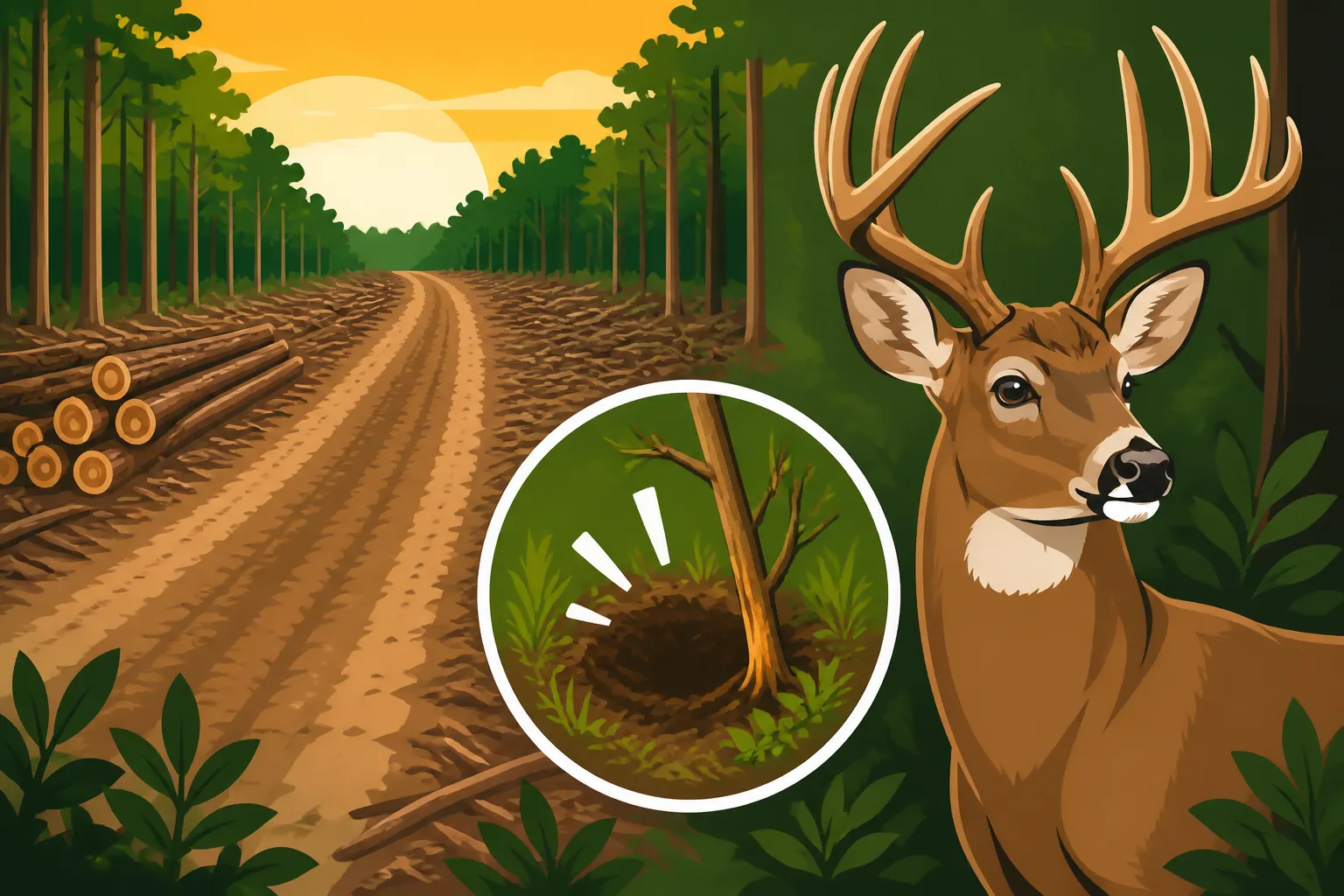
Logging roads, whether they're well-maintained gravel paths or overgrown, barely discernible two-tracks, often create some of the best deer hunting opportunities in Indiana. They're not just remnants of past timber operations; they become integral parts of the deer's daily lives, especially during the breeding season. Understanding why deer favor these features is the first step to unlocking their potential.
The Allure of Easy Travel
Deer are creatures of efficiency. Just like we prefer a clear path over bushwhacking through dense brush, deer will often choose the path of least resistance. Logging roads provide exactly that. They serve as natural travel corridors, connecting different habitat types that deer utilize throughout the day. A buck might use a logging road to travel from his bedding area on a secluded ridge down to a creek bottom for a drink, or from a thick stand of pines to a cut cornfield for an evening meal.
Think about it from a buck's perspective during the rut. He's constantly cruising, covering ground, looking for does. A logging road allows him to move quickly and quietly (relative to busting through thickets), conserving energy while maximizing the area he can check. These roads act like arterial highways within the deer's home range, and because they're used so frequently, they become prime locations for bucks to leave their calling cards – scrapes and rubs. You might see a buck moving along a road and then subtly veering off into an "Entry Routes Through Standing Corn" field adjacent to the road, using it as a direct access point.
Edge Habitat and Transition Zones
One of the most powerful draws of a logging road is the edge habitat it creates. An "edge" in wildlife management refers to the boundary where two different habitat types meet. Deer absolutely thrive in these transition zones because they offer a combination of security cover and food resources. On one side of a logging road, you might have dense, mature timber, offering thermal cover and bedding opportunities. On the other, there could be a younger clear-cut, an open hardwood bottom, or even an agricultural field.
This blend of habitats provides everything a deer needs close at hand. A buck can travel the relative openness of a logging road, scent-checking for does, while still being within mere yards of thick cover to quickly escape if danger arises. This vulnerability, coupled with the high traffic, makes these edges ideal locations for bucks to establish scrape lines. They know does will be traveling these same routes, making it a perfect spot to communicate their presence and readiness to breed. It's a natural funnel, channeling deer movement and making it predictable.
Water and Mineral Access
While not every logging road offers direct water access, many do. Over time, these roads can create depressions or ditches that collect rainwater, forming temporary puddles or seeps. In hilly terrain, especially in Southern Indiana, logging roads often follow contours or drainages, leading them close to creeks, springs, or larger water sources. Deer, like all animals, need water daily, and these convenient stops along well-used travel routes are heavily frequented.
Beyond water, the act of cutting and maintaining a logging road often exposes mineral-rich subsoils. Deer are drawn to these areas, especially where there's a low-hanging branch above. They'll paw at the ground, lick the exposed soil, and chew on the branches above, creating what we know as a "licking branch." This combination of factors — easy travel, edge habitat, and potential mineral/water access — makes logging roads incredibly attractive to deer, culminating in the perfect scenario for scrape line development.
Reading the Sign: Identifying Active Scrape Lines
Once you understand why logging roads are so productive, the next step is learning how to identify and interpret the sign they hold. Not all scrapes are created equal, and knowing the difference between an active, hot scrape and an old, abandoned one can make or break your hunt.
The Anatomy of a Productive Scrape
An active scrape is more than just a pawed-up patch of dirt. It's a sophisticated communication hub for deer. The most critical component is almost always the licking branch or "overhead branch." This branch, typically hanging 3-6 feet off the ground, is repeatedly rubbed, chewed, and scent-marked by deer. Bucks will often rub their preorbital glands on it, leaving their scent, and will also urinate over their tarsal glands (located on their hind legs) directly into the pawed earth below. This urine contains a potent cocktail of hormones and pheromones, broadcasting their presence and status.
Below the licking branch, you'll find the pawed earth. This is where the buck has scraped away leaves and debris with his front hooves, exposing the bare soil. This soil often looks fresh, moist, and disturbed. Look for fresh tracks embedded in the soil – deep indentations, clear dewclaw marks, or even the distinct impression of a buck's hooves. The size and depth of these tracks can give you clues about the size of the deer making the scrape.
Finally, consider the location. Productive scrapes along logging roads are often found in strategic spots: where the road makes a bend, at a junction with a secondary trail, or right where a major deer trail intersects the road. These are natural pinch points or intersections where deer activity is naturally concentrated.
Distinguishing Active Versus Old Scrapes
Knowing whether a scrape is currently being used is paramount. Hunting an old scrape is a waste of time, but setting up on a hot one can lead to success.
- Freshness of the Pawed Earth: An active scrape will have freshly disturbed, moist soil. You might even see loose dirt piled up around the edges. An old scrape will be dried out, crusted over, and often covered with a layer of fallen leaves or debris. In a wet Indiana autumn, you might even see mud splattered around the fresh scrape. Learning to differentiate these nuances is key, and skills like "Reading Indiana Mud for Fresh Deer Movement" will certainly come in handy.
- Scent: This is harder for humans to detect, but sometimes, on a calm, damp morning, you might catch a musky odor around a truly hot scrape. This is the scent from the buck's tarsal glands.
- Licking Branch Activity: An active licking branch will show signs of recent use. Leaves might be broken, stems frayed, and the bark on the branch itself might be rubbed smooth or even chewed. An old branch will look weathered and untouched.
- Tracks: Look for fresh deer tracks, especially larger buck tracks, in the pawed area and on the trails leading to and from the scrape. The absence of fresh tracks, or the presence of only old, washed-out tracks, is a clear indicator that the scrape isn't currently active.
- Game Cameras: This is where modern technology shines. Setting up a trail camera on a logging road scrape is one of the best ways to determine its activity level. Place it a good distance back, facing the scrape, to capture images without spooking deer. If you're seeing frequent visits, especially by different bucks, you've found a winner. Check the rules on "Trail Camera Rules on Indiana Public Land" if you're on public ground. Many hunters use hunting apps, like GoHunt, to help manage their trail camera photos and analyze deer movement patterns near these scrapes.
Rub Lines as Companion Sign
While scrapes are a primary communication tool, don't overlook rub lines in conjunction with logging roads. Rubs are made by bucks rubbing their antlers against saplings and trees, often stripping the bark and leaving scent from their forehead glands. They serve to mark territory, show dominance, and act as a signpost for other deer.
When you find a logging road with a series of fresh rubs leading to or from a scrape line, you've discovered a truly high-traffic area. These rub lines often parallel the logging road or branch off into nearby cover, indicating the travel path of a buck. A cluster of rubs near a scrape on a logging road signifies a buck's heavy presence and ownership of that particular breeding hotspot. Pay close attention to the size of the rubs; larger rubs often indicate larger-antlered bucks.
Hunting Strategies for Logging Road Scrapes
Once you've located an active scrape line along a logging road, the real work begins: devising an effective hunting strategy. These spots are high-potential, but they also require careful planning and execution to capitalize on the deer activity.
Stand Placement and Wind Considerations
The absolute most critical factor when hunting a scrape is playing the wind correctly. Bucks will almost always approach a scrape from downwind to scent-check for does or other bucks. If your scent drifts into the scrape or onto their approach path, your hunt is likely over before it begins.
Your stand or blind placement should be downwind of the scrape and any obvious deer trails leading to it. Consider the prevailing wind direction for your planned hunt, but also understand that "Wind and Thermals on a Southern Indiana Ridge" can be tricky, especially in the morning and evening. Thermals will typically fall down into valleys and low spots in the morning and rise up slopes in the evening. Position yourself so your scent is carried away from the scrape and any potential approach routes. This might mean setting up 20-30 yards downwind, perhaps just inside the timber edge, offering you a clear shot at the scrape and the adjacent logging road.
For treestands, look for a tree that offers good cover and a clear shot. In the Hoosier National Forest, for example, finding the right tree for "Treestand Setups in Hoosier National Forest" is crucial. If you prefer a ground blind, ensure it's well-brushed in and set up far enough away that deer don't detect your presence before they reach the scrape. Remember, deer are inherently wary, especially mature bucks near active scrape lines.
Timing Your Hunts for Peak Activity
While bucks might visit scrapes throughout the day, certain times are consistently more productive. The rut, typically peaking in early to mid-November in Indiana, is prime time for scrape hunting. During this period, bucks are actively cruising, scent-checking, and marking their territory, making scrape lines buzzing hubs of activity. You can learn more about "Hunting the Rut in Early November" to time your visits perfectly.
Mornings and evenings are generally the best times, coinciding with deer's natural activity patterns. During the first few hours of daylight, bucks will often revisit scrapes they made or checked overnight. In the late afternoon, they'll head to scrapes again before moving to feeding areas. However, during the peak of the rut, bucks can show up at scrapes at any time of day, so an all-day sit near a hot scrape on a logging road can be highly effective. The key is to be patient and committed.
Using Calls and Scents Effectively
Adding calls and scents can significantly enhance your chances at a scrape line. When used judiciously, they can draw a buck closer or pique his curiosity enough for him to commit.
- Calls: A soft grunt call can often grab a buck's attention if he's cruising nearby. Don't overdo it; a few subtle grunts are usually enough. A buck will often circle downwind to investigate, so be ready. Sometimes, a doe bleat can convince a cruising buck that a receptive doe is in the vicinity of the scrape. For deep dives into specific calling tactics, refer to resources like "Grunt Calls in Mature Indiana Timber".
- Scents: Scents can be very effective when used directly on the licking branch or in the pawed earth of a scrape. During the pre-rut, a dominant buck urine or a tarsal gland scent can challenge a buck, drawing him in to investigate the "intruder." As the rut progresses, a doe in estrus scent becomes incredibly powerful, mimicking a receptive doe in the area. Always use fresh, high-quality scents and apply them carefully to avoid contaminating the area with your own human scent. Many hunters find using a spray bottle or a small wick tied to the licking branch to be effective.
Maximizing Your Chances: Gear and Scouting Tips
Success on logging road scrape lines isn't just about finding them and setting up. It's also about meticulous preparation, smart scouting, and having the right gear to ensure you're as stealthy and efficient as possible.
Pre-Season Scouting with Tools like GoHunt
The work for a successful scrape hunt often begins months before the season opens. Pre-season scouting is absolutely critical for identifying promising logging roads and potential scrape locations. Walk these roads in late summer or early fall, looking for last year's scrapes, rubs, and heavy deer trails. Pay attention to the topography – funnels created by ridges, creek bottoms, or dense cover where deer naturally concentrate.
Modern mapping tools are invaluable here. Applications like GoHunt provide detailed aerial imagery, topo maps, and public/private land boundaries that can help you identify logging roads, clear-cuts, and potential travel corridors from the comfort of your home. You can mark potential scrape locations, plan your access routes, and identify prevailing wind directions for future hunts. Using an app to "Scouting Indiana Public Land Before Season" allows you to maximize your time in the woods by focusing on high-probability areas. Once you've identified a promising area, place trail cameras discreetly to monitor activity. For advice on specific camera placement, you might check out articles like "Where to Hang a Camera on a Logging Road".
Choosing the Right Gear for a Quiet Approach
Deer, especially mature bucks, are incredibly sensitive to sound and movement. Your gear choice can significantly impact your success.
- Quiet Clothing: Opt for quiet fabrics like wool or fleece that won't rustle or snag on branches as you walk. Layers are key for adapting to Indiana's variable weather.
- Boots: Choose comfortable, quiet boots with good traction. Rubber boots can be excellent for scent control if you're walking through muddy or damp areas.
- Optics: Good binoculars are essential for scanning the logging road and surrounding timber for approaching deer.
- Pack: A well-organized, quiet pack will hold all your essentials without creating unnecessary noise. If you're planning a long hike into a remote logging road, a pack optimized for extended treks, like those discussed in "Packs for a Hoosier Forest Day Hunt", will make a difference.
- Bow/Rifle Sling: A comfortable sling can free up your hands and make a long walk into your stand site much easier.
- Scent Control: Always shower with scent-free soap, use scent-free laundry detergent for your hunting clothes, and store them in sealed bags or containers. While no scent control is 100% effective, minimizing your odor is paramount, especially when hunting close to a scrape.
Adapting to Pressure and Weather
Logging roads, being accessible, can sometimes see significant hunting pressure, especially on public land. If you notice signs of other hunters, don't give up on logging roads entirely, but adapt your strategy.
- Go Deeper: Often, the easiest-to-access sections of logging roads are pressured. If you're willing to walk further, you might find untouched scrape lines deeper in the woods where fewer hunters venture.
- Hunt Off the Road: Instead of setting up directly on the road, consider finding a scrape just off the road, perhaps 20-50 yards back in the timber, on a parallel deer trail. Bucks will often use these secondary trails to avoid the main thoroughfare if it's too busy.
- Weather Changes: Pay close attention to weather forecasts. Deer often become more active right before a cold front or after a period of rain. A light rain can even wash away some human scent, making your approach stealthier. However, heavy rains can wash out scrapes, making them appear inactive. After a heavy rain, re-evaluate the scrape for fresh activity.
- Timing: During high-pressure times, focusing on midday movement can be effective, as many hunters are in and out of the woods during primetime. Bucks might feel safer moving during these quieter periods.
By combining thorough scouting with mapping tools like GoHunt, selecting the right gear, and intelligently adapting to conditions, you'll significantly increase your odds of success on Indiana's logging road scrape lines.
Comparing Active vs. Inactive Scrapes
To summarize, here's a quick comparison to help you tell the difference between a hot scrape and one that's gone cold.
| Feature | Active Scrape | Old/Inactive Scrape |
|---|---|---|
| Licking Branch | Broken, frayed, chewed leaves, fresh scent. | Intact, weathered, no fresh activity, covered in leaves. |
| Pawed Earth | Freshly disturbed soil, moist, visible tracks. | Dried, crusted, covered in leaves/debris, faint tracks. |
| Scent | Strong, musky odor (urine, tarsal glands). | Faded or non-existent. |
| Trail Cameras | Frequent deer activity, multiple bucks, does, fawns. | Infrequent activity, mostly does/fawns. |
| Season | Typically pre-rut through late rut, high traffic. | Earlier in season, or post-rut, low traffic. |
| Mud/Dust | Clearly visible, fresh tracks if ground is soft. | Tracks faded, washed out, or obscured. |
Disclaimer
Hunting involves inherent risks. Always prioritize safety, follow all Indiana Department of Natural Resources regulations, and obtain proper licenses and permits before heading afield. Be sure to check public land rules for specific equipment restrictions or access requirements.