Indiana Fox Squirrel Color Variations
If you've spent any time at all chasing squirrels through Indiana's woods, whether it's the sprawling hardwoods of the Hoosier National Forest or the smaller woodlots tucked between cornfields up north, you've probably noticed that not all fox squirrels look exactly alike. It's easy to think of them as just "brown," but the reality is far more interesting, and sometimes, a little confusing when you're trying to identify movement in dappled sunlight. This guide will take a deep dive into the fascinating world of Indiana fox squirrel color variations, helping you understand why these bushy-tailed residents boast such a diverse palette, and what it means for the observant hunter.
Understanding Indiana's Fox Squirrels Beyond Just "Brown"
When most folks picture a fox squirrel, they probably imagine that classic reddish-brown critter scampering up an oak. And while that's certainly the most common appearance, it's far from the only one. Indiana's fox squirrel population, like those in many other states, exhibits a surprising array of colors and patterns, largely due to genetics and sometimes even their local environment. It's a testament to the incredible biodiversity right in our own backyards, and it's something I've always found fascinating during my years afield.
The Classic Rusty Orange and Agouti Pattern
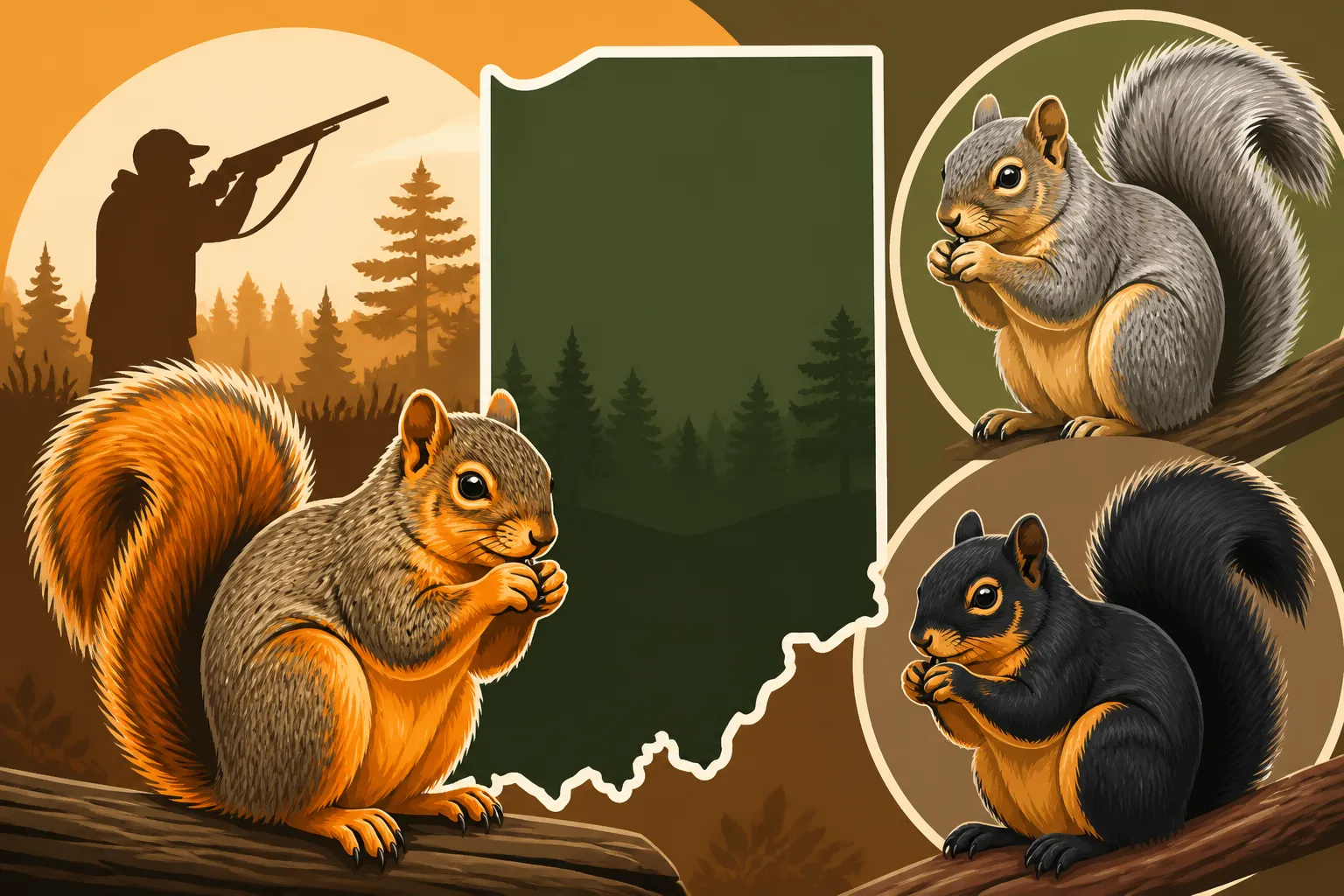
The textbook fox squirrel, Sciurus niger, found throughout Indiana, typically presents with a beautiful rusty orange underbelly, sometimes extending up the sides of its body. Its back and head are usually a mix of grizzled gray, brown, and black hairs, creating what's known as an "agouti" pattern. This isn't one solid color, but rather individual hairs that are banded with different colors, giving them a mottled, somewhat iridescent appearance that helps them blend seamlessly into tree bark and leaf litter. Their tails are almost always a combination of these colors, often bordered with white or light gray, making that signature bushy flag really pop when they're agitated or on the move. This classic coloration is highly effective camouflage, making them incredibly difficult to spot when they freeze on a branch, especially in the thick canopy of a Squirrel Hunting Indiana Bottomland Hardwoods or a dense hickory grove.
For the hunter, this typical coloration is what you're mostly looking for. When the leaves are on the trees in early archery season, or even later when the canopy thins, seeing that flash of rusty orange or the flick of a grizzled tail is often your first clue that a squirrel is nearby. Knowing this standard helps you appreciate the variations when you encounter them, distinguishing them from, say, the smaller, often grayer Gray Versus Fox Squirrels in Indiana.
Regional and Genetic Influences on Color
So, why the variations? It boils down to a combination of genetics and, to a lesser extent, environmental factors. Just like humans can have different hair and eye colors, animals within a species carry different genetic markers that can express themselves as different coat colors. These genes are passed down through generations, and if a particular gene for a unique color provides some advantage (or simply isn't a disadvantage), it can persist and even spread within a local population.
Sometimes, isolated populations might develop a higher prevalence of a certain color. For instance, you might notice a higher number of darker squirrels in one specific woodlot compared to another just a few miles away. This isn't usually a hard and fast rule across vast regions, but rather micro-regional pockets where certain genetic traits have become more common. This makes scouting and observing your local spots even more interesting. You might start noticing patterns within your usual hunting grounds. I've often used tools like GoHunt to mark specific trees or areas where I consistently see uniquely colored squirrels, curious if their presence is tied to certain habitat features.
Common Color Variations You'll Encounter
Beyond the classic rusty orange, Indiana's fox squirrels can display a spectrum of colors that might surprise you. These aren't different species, but simply different expressions of their genetic code. Spotting these unique individuals is always a treat, and sometimes, a momentary puzzle when you first glimpse them.
Melanistic (Black) Fox Squirrels
Perhaps the most striking and frequently talked-about variation is the melanistic, or all-black, fox squirrel. While not as common as their typically colored cousins, these sleek, dark squirrels are absolutely stunning. Instead of the brown and orange, their fur is a deep, glossy black, often with a hint of a darker brown in certain lights. I've seen them in various parts of the state, from city parks to deep woods, and every time, it makes you do a double-take. They're particularly prevalent in some parts of the Midwest, and while not super common in Indiana, they definitely exist.
The black coloration is due to an abundance of melanin, the same pigment that gives us dark hair and skin. It’s essentially the opposite of albinism. From a hunting perspective, a black squirrel can be a bit easier to spot against a snow-covered branch or lighter-colored tree bark, but they can also disappear into deep shadows with remarkable efficiency. They're still very much a fox squirrel, just wearing a different coat. You might even find yourself looking for that tell-tale twitch of their black tail as you try to pick them out against a dark tree trunk when you're hunting during Indiana's Small Game Season Rules.
Erythristic (Red) Fox Squirrels and Other Shades
Beyond black, you can also encounter fox squirrels that lean heavily into the red or even blonde end of the spectrum. Erythristic squirrels are characterized by an excess of red pigment, making them appear significantly more vibrant and uniformly reddish-brown than the typical fox squirrel. Sometimes they're an almost fiery red, especially on their undersides and flanks. Then there are the lighter variations—squirrels that might be almost golden-blonde, or even a soft, creamy tan instead of the usual rusty orange. These can be particularly challenging to spot in dried grasses or against lighter-colored deadfall.
I once spent a good fifteen minutes trying to locate what I thought was a bizarrely large chipmunk only to realize it was an exceptionally small, blonde fox squirrel perfectly camouflaged in a patch of dry leaves during the late fall. These lighter variations can sometimes be confused with tree squirrel species from other regions, but in Indiana, if it's large and has that distinct fox squirrel build, it's likely just a genetic variant. These color shifts make the pursuit of Squirrel and Small Game Hunting in Indiana a little more engaging, as you never quite know what interesting individual you might spot next.
Here’s a quick overview of some common fox squirrel colorations in Indiana:
| Color Variation | Description | Typical Habitat Observation |
|---|---|---|
| Classic Agouti/Rusty | Grizzled gray-brown back with rusty orange belly and flanks; multi-colored tail. | Most common in all wooded areas, often along Squirrel Hunting Indiana Hickory Groves. |
| Melanistic (Black) | Uniformly deep black fur, sometimes with a dark brown sheen. | Less common, but seen in various habitats, often more noticeable in open areas. |
| Erythristic (Red) | Predominantly bright reddish-brown or fiery red, especially on the belly and sides. | Uncommon, adds a vibrant splash of color in deciduous forests. |
| Blonde/Cream | Very light, almost golden or creamy tan fur, lacking most of the rusty or dark tones. | Rare, can blend well with dried leaves or lighter tree bark. |
| Partially Melanistic | Patchy coloration, with significant dark areas mixed with more typical agouti or rusty tones. | Occasionally seen, demonstrating incomplete genetic expression for melanism. |
Why Color Matters (Or Doesn't) to the Indiana Hunter
While it's genuinely fascinating to observe the spectrum of colors within Indiana's fox squirrel population, for the purpose of hunting, these variations don't really change the fundamental rules or tactics. They're still the same species, with the same behaviors, found in the same habitats. However, being aware of these differences can subtly influence your hunting experience.
Identification and Bag Limits
First and foremost, it's crucial to remember that regardless of its color—be it jet black, fiery red, or classic rusty orange—if it's a fox squirrel, it's subject to the same hunting regulations. The Indiana DNR doesn't differentiate between color variations when it comes to bag limits or season dates. So, don't let a unique coat pattern throw you off. A black fox squirrel counts the same as a traditional one towards your daily limit. You still need to be aware of Indiana Squirrel Season Dates and adhere to all legal requirements for taking small game.
The real benefit of knowing about these variations is for positive identification. Sometimes, a quick flash of a color might make you hesitate if you're not sure what you're seeing. But if you know that fox squirrels come in a rainbow of shades, you won't mistake a blonde variant for something else entirely. It simply adds to the richness of the hunting experience and the biological marvels you encounter in the field.
Camouflage and Visibility in Different Habitats
This is where color variations can play a minor, yet interesting, role for the observant hunter. A melanistic (black) squirrel, for instance, might be incredibly difficult to spot in the deep shadows of a dense evergreen stand or against a dark, moss-covered tree trunk. Conversely, that same black squirrel might stand out like a sore thumb against a backdrop of fresh snow or light-colored deciduous bark.
The classic rusty orange provides excellent camouflage among the autumn leaves and bark. But a bright erythristic (red) squirrel might pop a little more against a uniform gray sky or in the muted tones of late winter. Lighter, blonde squirrels could be exceptionally hard to see in patches of dried grasses, particularly if they freeze. Knowing these possibilities can help you adjust your scanning patterns and focus your eyes. When I'm in an area known for darker timber, I might intentionally look for a silhouette rather than a color patch. If I'm working a brushy fencerow, I'll be looking for anything that seems "off" in the tangle of browns and grays. It's all about sharpening your observational skills, which is a huge part of successful Scouting Indiana Public Land Before Season for any game.
Documenting and Appreciating Squirrel Diversity
Beyond the harvest, there's immense satisfaction in simply observing the wildlife around us. The color variations of Indiana's fox squirrels offer a wonderful opportunity to hone your naturalist skills and appreciate the subtle beauty of nature.
Observing Unique Squirrels in Your Hunting Spots
Make a game of it! As you head out for a day of Hunting Indiana's Long Archery Season or even just a walk through the woods, pay close attention to the squirrels you encounter. Are they all the same shade of rusty brown? Or do you see a darker one, or one with a strikingly bright red belly? Noticing these differences can make your time afield even more engaging. If you use a mapping app like GoHunt, consider dropping a pin and adding a note about where you saw a particularly unique-colored squirrel. Over time, you might start to see patterns or even identify specific families with distinct traits.
It's a great way to deepen your connection to the landscape and the animals within it. Plus, it sharpens your eye for detail, which is invaluable for spotting all kinds of game. Remember, squirrels can be very good at giving themselves away, but their unique colors might make them stand out or blend in differently based on their surroundings. Learning to read these subtle cues enhances your overall hunting prowess.
The Role of Genetics and Environment
Ultimately, these color variations are a product of thousands of years of evolution and genetic lottery. While environmental factors like diet can sometimes influence the vibrancy of a coat, the fundamental color patterns are coded in their DNA. It’s a testament to the incredible genetic diversity that exists even within a single species like the fox squirrel. This diversity helps populations adapt and thrive, ensuring a robust future for White-Tailed Deer Across Indiana and Indiana Small Game and Furbearers alike.
So, the next time you're out in the woods, take a moment to really look at the squirrels. You might just spot a truly unique individual, a little living mosaic of Indiana's wild places. It's these small observations that often make a day outdoors truly memorable, regardless of whether you fill your game bag. And knowing the nuances of their appearance can only make you a more well-rounded and successful hunter.
Disclaimer
This article is for general informational purposes only and does not constitute professional advice. Laws, prices and regulations vary by location and change over time. Consult a qualified professional for guidance on your specific situation.