Turkey Calls Worth Carrying in Indiana
Walking through the Indiana woods, hearing nothing but the rustle of leaves, you might start to feel like those elusive spring gobblers are just figments of your imagination. It can be incredibly frustrating to put in the time scouting, find the perfect roost site, and then have birds shut down as soon as your boots hit the ground. The truth is, connecting with a wary tom often comes down to communication, and that means having the right turkey calls and knowing how to use them. This guide is going to break down the different types of turkey calls worth carrying in Indiana, how they work, and when to use each one to turn those silent mornings into gobble-filled memories.
The Foundation: Your Core Indiana Turkey Calls
When you're chasing longbeards across Indiana, from the hilly hardwoods of the south to the fragmented woodlots up north, you'll quickly realize that no single call is a magic bullet. Different situations call for different sounds, and having a diverse arsenal is key. Think of your turkey call collection like a carpenter's toolbox; you wouldn't try to build a house with just a hammer, right? The same goes for coaxing in a stubborn gobbler.
Essential Turkey Call Types for Hoosier Hunters
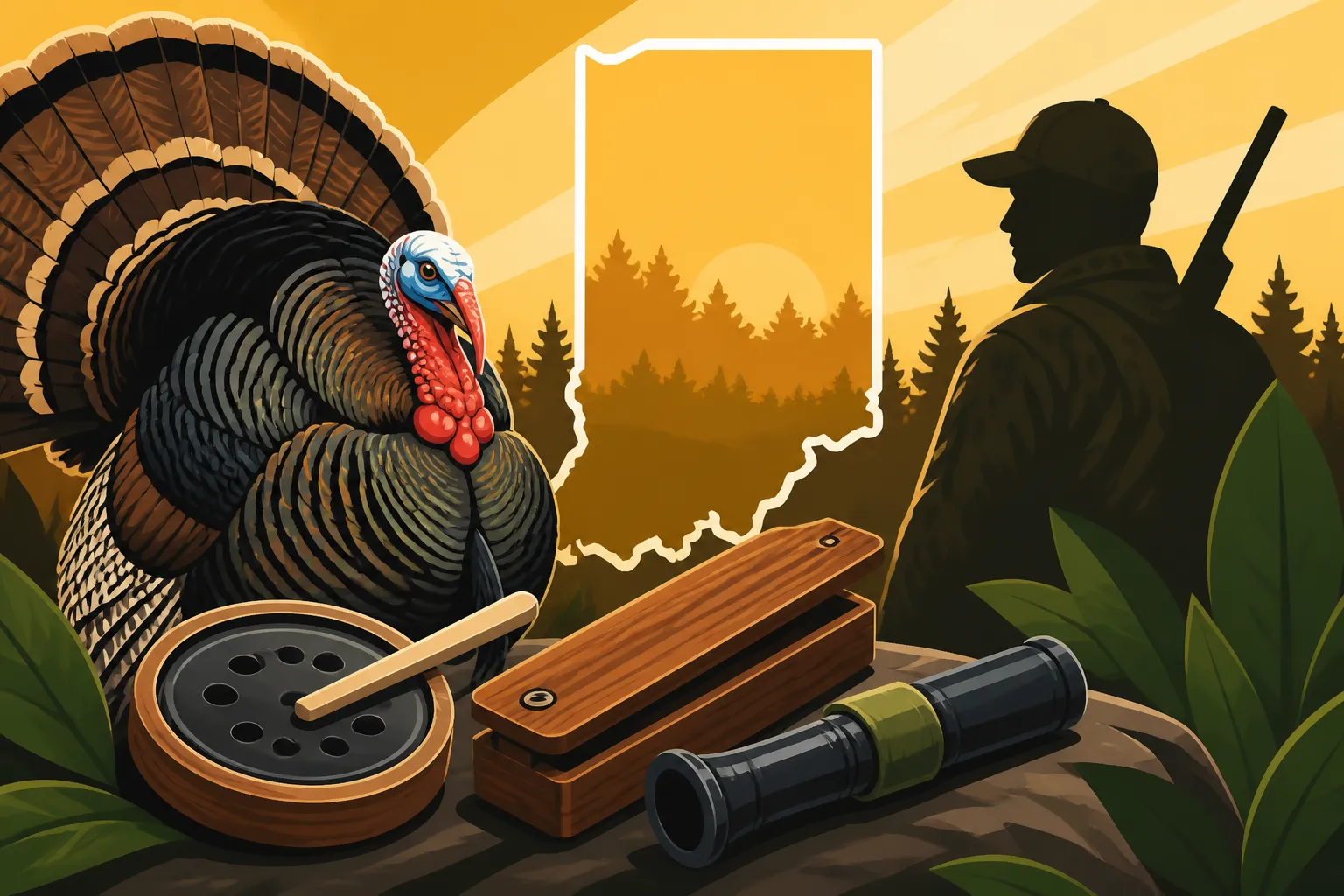
There are three primary categories of turkey calls that every Indiana hunter should be familiar with: mouth calls (diaphragm calls), box calls, and slate (or pot) calls. Each offers distinct advantages in terms of sound, volume, and hands-free operation, making them indispensable for different scenarios you'll encounter during Spring Turkey Hunting in Indiana.
A mouth call, or diaphragm call, is perhaps the most versatile. It's a small piece of latex stretched over a frame that fits into the roof of your mouth. By forcing air across it, you create vibrations that mimic a wide range of turkey sounds, from soft purrs to aggressive cutts. Box calls are often considered the easiest for beginners, producing loud, resonant yelps and cutts that can carry a long distance. Finally, slate or pot calls use a striker rubbed across a sounding surface (slate, glass, or aluminum) to create realistic hen vocalizations, excelling at soft, seductive calls.
When to Use Each Core Call in Indiana
The beauty of these three core call types lies in their adaptability. Imagine you're trying to locate a bird on the roost before first light. A loud box call yelp or a sharp cutting series from a mouth call can often shock a gobbler into revealing his position. As the morning progresses and that bird pitches down, you might need to switch to softer, more subtle sounds. A slate call can produce those sweet, seductive clucks and purrs that convince a cautious tom to close the distance.
Let's say you're doing some "run-and-gun" hunting, covering a lot of ground on public land. A mouth call becomes invaluable because it's hands-free, allowing you to keep your shotgun up and ready as you move and call simultaneously. If you're set up in a ground blind near a field edge, a box call can give you the volume needed to reach birds further out in the open, while a slate call allows for those intimate finishing sounds once they get closer. Understanding these nuances is crucial for success, as Indiana's turkeys are often pressured and won't tolerate a poorly executed call.
Mastering the Mouth Call: Versatility and Hands-Free Calling
The mouth call is often seen as the most challenging to master, but its versatility and hands-free operation make it an absolute game-changer for serious turkey hunters. Once you get the hang of it, you'll wonder how you ever hunted without one.
Diaphragm Call Selection and Initial Practice
Choosing a mouth call can feel overwhelming with the sheer number of options: single reed, double reed, triple reed, bat cut, V-cut, ghost cut… the list goes on. For a beginner in Indiana, I usually recommend starting with a two-reed or a three-reed call with a "ghost cut" or "V-cut." These designs tend to be a little easier to blow and produce a good range of sounds, from a clear front-end yelp to a raspy back-end. Don't get discouraged if it sounds like a dying cat at first; everyone starts there! The key is consistent practice. Try to make short, sharp "yip" sounds by forcing air from your diaphragm (not just your lungs) over the reeds. Focus on controlling the air pressure and finding that sweet spot where the latex vibrates correctly.
A common frustration among new mouth call users is developing a sore palate or gagging. This is normal. Start with short practice sessions and experiment with where the call sits in your mouth. You want it firmly against the roof of your mouth, just behind your front teeth, but not so far back that it triggers your gag reflex. Many experienced hunters find that a simple mirror helps tremendously during practice. You can see how your tongue is positioning and how your cheeks are moving, allowing you to adjust for clearer, more realistic sounds. It's a skill that builds muscle memory, so keep at it, and soon you'll be clucking and yelping with the best of them.
Mouth Call Techniques for Close Encounters
Once you have the basics down, the mouth call truly shines in situations where you need to be silent and still, especially when a gobbler is in close range. Picture this: you've got a tom strutting 60 yards out, heading your way, but he's hung up behind a rise. Any movement to reach for a pot call or a box call could blow your opportunity. This is where the hands-free advantage is critical. You can produce soft clucks, purrs, and even light yelps simply by manipulating your tongue and breath, all while your shotgun is mounted and ready.
To make those soft, seductive sounds, focus on lighter air pressure and less tongue movement. A soft cluck is a short, sharp burst of air. A purr involves a continuous, gentle stream of air with a subtle vibration of the tongue. For a full yelp, it's typically a two-note sound: a higher "kee" sound followed by a lower "yawk." Practice making your yelps sound natural, not too fast or too slow. Remember, every hen has a slightly different voice, so don't be afraid to experiment with rhythm and pitch. This call's ability to create realistic hen sounds at critical moments makes it indispensable for Hunting the Indiana Rut in Early November or really any time you're trying to pull a gobbler the last few yards.
The Classic: Box Calls for Roost and Locator Sounds
There's something undeniably satisfying about the deep, resonant sound of a well-played box call. It's a classic for a reason, and in Indiana's timber, it can reach out and grab a gobbler's attention like few other calls.
Anatomy and Basic Operation of a Box Call
A box call is deceptively simple: it consists of a wooden box with a lid, or "paddle," hinged to one side. By rubbing the paddle across the lips of the box, you create friction that produces sound. The magic lies in the material and craftsmanship. Different woods, like mahogany, walnut, or cedar, will produce varying tones and pitches. Longer boxes tend to have a deeper, more resonant sound, while shorter ones might be higher-pitched and sharper.
Operating a box call is fairly straightforward. Hold the box in one hand and the paddle in the other. To make a yelp, simply drag the paddle across the lip of the box in a controlled stroke, usually making an arc. The speed and pressure of your stroke will change the pitch and volume. For a cluck, you make a short, sharp tap and lift. Practice varying your strokes to create different hen sounds, from a contented cluck to an excited series of yelps and cutts. The beauty of the box call is its user-friendliness; most hunters can make a decent turkey sound with minimal practice. It's a great choice for new hunters to gain confidence in calling.
Maximizing Volume and Realism with Your Box Call
The box call truly excels when you need to project sound, whether it's trying to locate a gobbler on the roost or calling across a wide field. Its inherent design allows for significant volume, which can be critical on windy days or when you're trying to reach birds a long distance away. When you're Calling an Indiana Gobbler Off the Roost, a series of loud, enthusiastic yelps from a box call can often do the trick.
To maximize volume, hold the box firmly and apply consistent pressure with the paddle. You can also experiment with different sides of the paddle and different lips of the box to find the sweetest spot. For added realism, try to vary your cadence and tone. Don't just make a uniform series of yelps; throw in some excited cuts, then a few softer clucks. Remember that turkeys are intelligent and can pick up on repetitive, unnatural calling.
One thing to keep in mind is keeping your box call dry. Moisture can severely impact its sound quality. Many hunters carry a small piece of chalk or a conditioning block to rough up the lid and lips if they get slick from moisture or oil from your hands. This maintenance is key to ensuring your box call performs consistently throughout the season, especially during those damp spring mornings in Indiana.
Slate and Pot Calls: Finesse and Realistic Hen Sounds
When it comes to subtle, realistic hen vocalizations, especially those soft, seductive sounds that close the deal, a good slate or pot call is hard to beat. These calls offer incredible control over tone and volume, making them perfect for finessing a wary gobbler the last few yards.
Understanding Pot Call Surfaces and Strikers
A pot call consists of a round "pot" (often made of wood, sometimes synthetic) with a sounding surface on top. This surface can be made of various materials, each offering a unique sound profile:
- Slate: The classic choice, slate produces soft, mellow, and very realistic hen sounds, excellent for purrs and clucks. It's forgiving and great for beginners learning to control the striker.
- Glass/Crystal: These surfaces are typically louder and sharper than slate, excelling at clear, crisp yelps and excited cutts. They're fantastic for breaking through wind or reaching distant birds.
- Aluminum: Often the loudest and raspiest of the three, aluminum is great for aggressive calling and getting a response from stubborn toms. It offers good volume for locator-style calling as well.
The striker you use is just as important as the pot itself. Strikers are typically made of wood (like hickory, cedar, or dogwood), carbon, or a combination of materials. A heavier, harder striker (like a carbon or persimmon wood) will generally produce louder, sharper sounds, while a lighter, softer wood (like cedar or a pencil-style striker) will create softer, more subtle tones. Experimenting with different striker and pot combinations is half the fun and allows you to custom-tune your "hen's voice." When you're set up against a big oak, waiting for a gobbler, having the right combination can make all the difference.
Crafting Soft Calls and Excited Vocalizations
The primary strength of a pot call lies in its ability to create incredibly realistic and nuanced hen sounds. For those soft, contented clucks and purrs that tell a gobbler everything is safe, a slate call with a cedar or dogwood striker is often the ideal choice. To purr, hold the striker at a shallow angle and lightly drag it in a small, tight circle. For a cluck, make a short, sharp peck with the striker. The key is light pressure and consistent motion.
When you need to ramp up the excitement, perhaps mimicking an excited hen that's ready to breed, switch to a glass or aluminum pot with a harder striker. Apply more pressure and move the striker in faster, more aggressive circles or J-hooks to create a series of sharp yelps and cuts. The beauty of these calls is their control; you can instantly transition from soft purrs to loud cutts simply by changing pressure and stroke. This versatility makes them invaluable whether you're working a bird through thick cover or trying to get a response from a distant gobbler on a windy day. Just like with box calls, keeping the surface of your pot call conditioned is vital. Many come with a conditioning pad or sandpaper to scuff the surface, ensuring proper friction for consistent sound production. This is especially important for Slate and Glass Calls in Wet Weather, as moisture can quiet them down significantly.
Locator Calls: Getting that Gobbler to Shock Gobble
Sometimes, turkeys are just plain quiet. They're on the roost, or they've pitched down and are just milling about silently. This is where locator calls come into play. These aren't designed to mimic a hen; their purpose is to make a loud, distinct sound that startles a gobbler into making a "shock gobble," revealing his location without him thinking you're a hen.
Types of Locator Calls and Their Uses
The most common types of locator calls mimic other wild animals. Here are a few that work well in Indiana:
- Owl Hooters: These are fantastic for pre-dawn and post-dusk calling, as owls are naturally active at these times. A realistic barred owl hoot ("Who cooks for you? Who cooks for you all?") can often trigger a roosted gobbler. Try varying your sequence and volume to sound like a real owl.
- Crow Calls: Crows are noisy, social birds, and a good crow call can elicit a gobble at any time of day. They are particularly effective when working a ridge line or calling across open fields. Make sharp, distinct caws, often in a series, to get a reaction.
- Coyote Howlers: While less common, a coyote howl can be incredibly effective, especially on pressured birds that have heard all the turkey sounds. A sharp, piercing howl can sometimes spook a gobbler into gobbling. Just be mindful of other hunters who might mistake your call for the real thing!
When using a locator call, pay close attention to the wind and topography. Sound travels differently in hilly terrain versus flat farmland. For detailed mapping and understanding terrain, many hunters utilize tools like those found on platforms such as GoHunt, which can help pinpoint where sound might carry best.
Reading a Gobbler's Response to Locators
The goal with a locator call is to get a shock gobble, not to call the bird in. Once he gobbles, you've pinpointed his general location. Now you know where to set up or where to focus your true turkey calling efforts. It's crucial not to overdo it with locator calls. If you hit a gobbler with an owl hoot, he gobbles, and then you immediately hit him with a crow call, you might alert him to your presence. One good gobble is usually enough to get you started.
After he gobbles, it's time to transition to your hen calls. If he's on the roost, you might offer some soft tree yelps from a mouth call. If he's already on the ground, a more confident series of yelps from a slate or box call might be in order, followed by some subtle clucks and purrs to entice him. The art of turkey hunting is largely about timing and knowing when to switch gears, and locator calls are your initial scouting tool to kickstart that process. They are particularly useful for Hunting Northern Indiana Farmland Deer where you might be walking field edges hoping to locate a bird in a small woodlot.
Situational and Specialty Calls: When to Break Out the Extras
While the core calls will cover most of your bases, there are a few specialty calls that can be incredibly useful in specific situations or for adding an extra layer of realism to your calling sequence. These are not always necessary, but they can sometimes be the perfect tool to seal the deal.
Push-Button, Tube, and Kee-Kee Calls
- Push-Button Calls: These calls are extremely easy to use, making them a fantastic choice for beginners or as a reliable backup. With a simple push and release motion, they produce realistic yelps, clucks, and purrs. They're very consistent and require almost no skill, making them a great "confidence call" if you're struggling with others. They don't offer the same range or volume as a well-played box or pot call, but for close-in work or for hunters who want simplicity, they're a solid option.
- Tube Calls: Often overlooked, tube calls (also known as gobble tubes or diaphragmatic trumpets) are incredibly versatile. They can produce very realistic gobbler sounds, as well as a wide range of hen vocalizations, from soft clucks to aggressive cutts and even fly-down cackles. They require a bit of practice, using a diaphragm and your voice, but once mastered, they offer unmatched realism. They're particularly good for Hunting the Fall Archery Turkey Window when you might want to mimic a full flock.
- Kee-Kee Calls: The kee-kee run is the whistle-like vocalization of a young, lost turkey. This sound is particularly effective in the fall when flocks are breaking up, but it can also be used in the spring to sound like a young hen. Some mouth calls are specifically designed to make this sound, or you can achieve it with a regular mouth call by making a high-pitched, drawn-out whistle followed by a yelp. It's a great sound to add variety, especially if gobblers are ignoring standard yelps.
These calls add layers to your overall calling strategy, helping you mimic more of a turkey's natural communication. When thinking about what to bring, consider the specific hunting pressure and environment. Many experienced Indiana hunters, often drawing on insights from scouting tools like GoHunt, will tailor their call selection to the specific area they're hunting, knowing that birds in a high-pressure zone might react differently than those in a more remote location.
Decoying and Calling Strategies with Multiple Calls
Bringing multiple types of calls to the woods isn't just about having backups; it's about being able to paint a more complete auditory picture for a gobbler. Imagine setting up your Turkey Decoys That Work on Pressured Birds in a field edge. You might start with loud yelps from a box call to get his attention from a distance. As he closes the gap, you switch to a softer slate call to mimic a contented hen, then perhaps throw in some soft purrs and clucks with a mouth call when he's looking for the source of the sound among your decoys. This layering of sounds, and the ability to switch calls seamlessly, adds immense realism and keeps the gobbler engaged.
Another strategy is to mimic multiple hens. You could use a mouth call for one "hen's" voice and a pot call for another, creating the illusion of a small flock. This can be very attractive to a lonesome gobbler. Furthermore, incorporating the fly-down cackle (which can be done with a mouth call or a tube call) right after the birds pitch down from the roost can be a powerful confidence builder, making the gobbler think there's a hen right there, hitting the ground. The key is to avoid overcalling and to listen carefully to the turkey's reactions. Sometimes less is more, but having the options available means you can adapt to whatever the Indiana gobblers throw at you.
| Call Type | Pros | Cons | Best Use Cases | Difficulty |
|---|---|---|---|---|
| Mouth Call | Hands-free, wide range of sounds, portable | Steep learning curve, can be inconsistent for beginners | Close-in work, run-and-gun, finessing wary birds | High |
| Box Call | Loud volume, easy to learn, resonant sounds | Less portable, can be affected by moisture, two-handed | Locating birds, calling across open areas, loud yelps and cutts | Low |
| Slate Call | Realistic soft sounds, versatile, good control | Requires two hands, can be affected by moisture | Close-in calling, purrs, clucks, seductive yelps | Medium |
| Locator | Triggers shock gobble, pinpoints location | Doesn't call birds in, can alert other hunters | Pre-dawn roost location, mid-day scouting | Low-Medium |
| Push-Button | Extremely easy, consistent, good for beginners | Limited range, less versatile, generally softer | Close-in work, backup call, confidence call | Very Low |
| Tube Call | Realistic gobbler & hen sounds, good volume | Requires practice, two-handed | Gobbler yelps, fly-down cackles, aggressive hen sounds | Medium-High |
Disclaimer
This article is for general informational purposes only and does not constitute professional advice. Laws, prices and regulations vary by location and change over time. Consult a qualified professional for guidance on your specific situation.