Working a Fencerow for Late-Season Deer
The late season in Indiana can feel like a completely different hunting experience than the excitement of early archery or the chaos of the rut. Deer are often weary, pressured, and scattered, with natural food sources dwindling and temperatures plummeting. It's a time when many hunters pack it in, but for those willing to adapt, overlooked spots can become late-season goldmines. One of these often-underestimated areas is the humble fencerow, which can be an absolute lifeline for deer in the colder months. This guide will walk you through how to effectively work these linear strips of cover for success when other spots go cold.
Understanding the Late-Season Fencerow Appeal
When the leaves are off the trees and snow blankets the ground, the landscape changes dramatically, and with it, deer behavior shifts. Fencerows, often dismissed as mere boundaries, suddenly become critical features in the deer's world.
Why Fencerows Become Crucial in Winter
Imagine a vast, open agricultural field in central Indiana, stripped bare after the harvest. The wind howls, and there’s nowhere for a deer to hide or escape the elements. Now, picture a narrow line of thorny locusts, multiflora rose, and perhaps a few small oaks or cedars cutting across that field or separating it from a woodlot. This is a fencerow, and in the late season, it's far more than just a line on a map; it's a sanctuary.
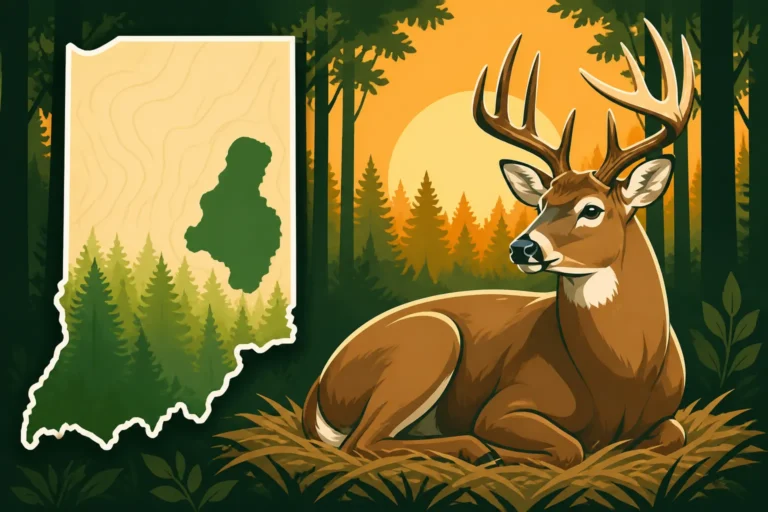
These linear strips of vegetation provide invaluable thermal cover, blocking bitter winds and offering a measure of concealment from predators, including hunters. Deer, seeking to conserve energy in the cold, will often bed down right in these fencerows or utilize them as windbreaks when traveling between remaining food sources and heavier cover. They become natural travel corridors, funneling deer movement across open country. If you've ever spent time in a treestand during a brutal January cold front, you understand the critical need for shelter, and deer are no different. They'll gravitate to any cover that offers protection from the elements, and fencerows, especially those with dense undergrowth or mature evergreens, fit the bill perfectly. They're often overlooked by hunters who focus on larger woodlots or deep timber, making them relatively safer havens for deer.
Types of Fencerows and Their Value
Not all fencerows are created equal, and understanding the different types can help you identify the most promising spots.
- Brushy, Overgrown Fencerows: These are perhaps the most valuable. Think tangles of honeysuckle, wild rose, cedar, and small hardwoods. This type of fencerow offers fantastic visual and thermal cover, making it a prime candidate for deer to bed down directly within it. You'll often find these connecting larger blocks of timber, running along creek bottoms, or bisecting large farm fields. Deer will use these for bedding, travel, and even as a source of browse if any succulent vegetation remains.
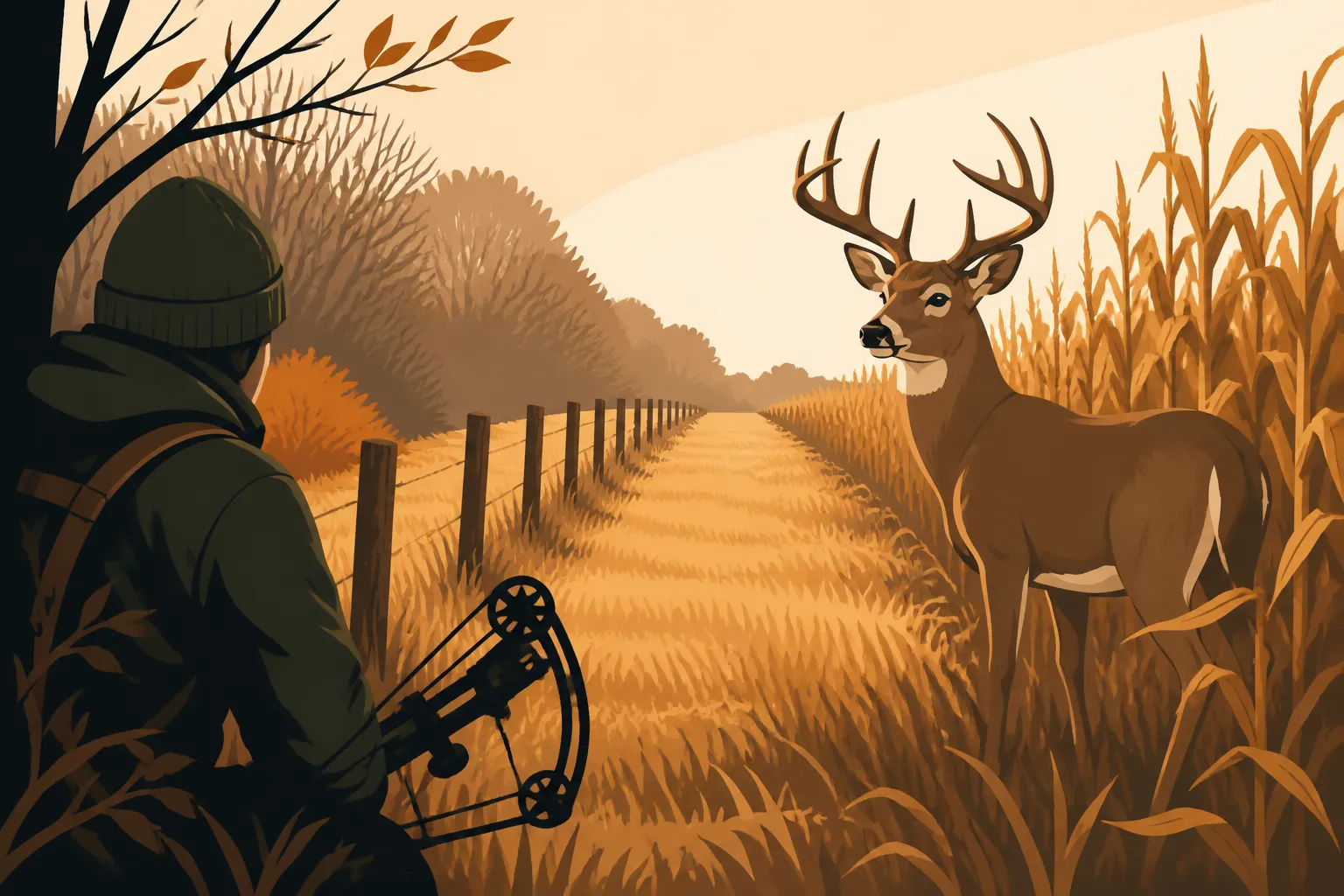
- Timber-Lined Fencerows: These are typically found where a woodlot meets a field, or where a farmer has allowed a line of mature trees to grow along a boundary. While they may lack the dense undergrowth of a truly brushy fencerow, the mature trees provide excellent visual cover and, often, a canopy that can reduce wind chill. They serve as great travel routes and staging areas, especially if there's an active food source on the adjacent field. You might find a buck slipping along one of these before stepping out into a cut cornfield at dusk.
- Fencerows Bordering Active Food Sources: This is where the magic really happens in the late season. If a fencerow runs alongside a standing soybean field, a patch of winter wheat, or a recently harvested cornfield with residual grain, it creates an irresistible draw for deer. They can hold up in the fencerow, staying concealed, and then simply step out into the field to feed. These are classic ambush points, especially during the last hour of daylight.
- Fencerows Separating Woodlots: Sometimes a fencerow isn't just in a field but acts as a narrow connector between two larger patches of timber. These become critical funnels, forcing deer movement into a predictable pathway. Bucks, especially, will use these to travel between bedding areas without exposing themselves to open fields. These can be incredible spots to catch a cruising buck during the post-rut period.
Each type offers unique opportunities, and by combining them with a keen understanding of deer movement and local pressure, you can turn a seemingly sparse late-season landscape into a productive hunting ground.
Scouting and Reading a Fencerow for Deer Sign
You can't just stumble upon a fencerow and expect success. Effective late-season fencerow hunting starts long before you ever set foot with your weapon, requiring diligent scouting and a sharp eye for subtle clues.
Pre-Season and Post-Harvest Scouting
Even though we're talking late season, the groundwork for success can be laid months in advance. Aerial photos and satellite imagery are your best friends here. Tools like GoHunt allow you to zoom in and identify promising fencerows, especially those connecting cover to known food sources, or those that create natural pinch points. Look for fencerows that are thicker, curvier, or that intersect other lines of cover or terrain features.
During the summer and early fall, even if you're focusing on other areas, make a mental note or drop a pin on these fencerows. Pay attention to how the agricultural fields are planted. A standing soybean field in September might be completely different in December once harvested. Once crops are out, the true value of a fencerow becomes much clearer. The removal of standing corn or soybeans exposes these linear features, making them stand out as critical travel lanes and cover. Walk these fencerows in the off-season. Look for old rubs from previous seasons, established trails worn deep into the earth, and even old scrape lines along a logging road if the fencerow parallels one. Understanding these historical patterns can tell you where deer like to move, even if fresh sign isn't abundant yet. This early intelligence gathering is paramount.
Interpreting Fresh Sign in the Cold
When the late season arrives, especially after a fresh snowfall, scouting takes on a whole new dimension. Snow acts like a fresh canvas, making every deer's movement abundantly clear.
Look for fresh tracks entering and exiting the fencerow. Are they large, solitary tracks suggesting a mature buck, or smaller, numerous tracks indicating a group of does and fawns? Pay attention to the direction of travel. Are deer using the fencerow to move from a bedding area to a food source, or are they simply cruising through? Fresh droppings, still soft and dark, will tell you that deer have recently been active in that spot. Also, look for browse marks on low-hanging branches or brush within the fencerow itself. In a lean late season, deer will eat almost anything that offers nutrition, and a heavily browsed fencerow indicates a frequent presence.
It’s crucial to distinguish between a fencerow used purely for travel and one that offers bedding. If you find multiple beds matted down in the snow within the fencerow, especially where it's thickest and offers the most protection, you've likely found a bedding area. In this scenario, your approach needs to be incredibly stealthy to avoid blowing deer out. Often, deer will stage in the fencerow itself before making their final move into a field at dusk to feed. This makes the intersection of the fencerow and the field edge a prime ambush spot. Always be mindful of the wind direction; approaching from downwind is non-negotiable, especially when trying to pinpoint fresh sign without alerting any deer that might be hunkered down nearby. When scouting, having a reliable app like GoHunt on your phone can really help you track your path and mark sign without leaving a permanent scent trail.
Effective Hunting Tactics for Indiana Fencerows
Successfully hunting fencerows in the late season requires patience, stealth, and a willingness to adapt your strategy to the conditions and the specific fencerow you're targeting.
Stand Placement for Fencerow Ambush
When you've identified a promising fencerow, strategic stand placement is paramount. Look for natural choke points or areas where the fencerow makes a significant bend or intersects with another line of cover. These are natural funnels where deer movement becomes concentrated and predictable.
If the fencerow borders a field, position your stand or blind where you have a clear view of where deer are likely to enter the field, but remain far enough back in the cover of the fencerow or adjacent woodlot to stay concealed. Often, a fencerow provides the only available trees for an elevated treestand in open farmland. Consider your entry and exit routes carefully to minimize disturbance. You don't want to walk through the exact path deer will use to get to your stand. Wind direction is, as always, the absolute king. A perfect fencerow with a swirling wind will almost guarantee you get busted. You must play the wind, even if it means choosing a less-than-ideal setup. For more insights on this, read up on Setting Up on a Northern Indiana Field Edge.
For some fencerows, especially those that are very narrow or don't offer suitable trees for a stand, a well-brushed-in ground blind can be incredibly effective. A ground blind allows you to hunt directly within the fencerow's thick cover, breaking up your silhouette and providing a warm hideout during the coldest days. Learn more about Using a Ground Blind on Indiana Public Land to adapt these tactics.
Still-Hunting and Drives Along Fencerows
Sometimes, the most effective way to hunt a fencerow, especially a long, winding one, is not from a stationary stand but by slowly and methodically still-hunting it.
Still-Hunting: This tactic involves moving at a snail's pace, taking a few steps, and then stopping for several minutes to scan for movement. Use the fencerow itself as your cover, always staying on the downwind side or just inside the thickest brush. This works best on calm days, perhaps with a light snow falling, which both quiets your footsteps and reveals fresh sign. The goal isn't to walk briskly, but to ease along, using your eyes and ears to detect deer before they detect you. Focus on areas where the fencerow widens, thickens, or connects to other cover, as these are prime bedding or staging zones. You might be surprised how close you can get to bedded deer that are relying on the fencerow for concealment. This active approach can be especially fruitful during the Hunting the Late-Season January Lull when deer movement might be subtle.
Small Drives: For shorter, dense fencerows, especially those that connect two larger woodlots or run between an isolated patch of timber and a major bedding area, a small, organized drive can be highly effective. This usually involves 2-3 hunters. One or two hunters act as "pushers," walking slowly and deliberately through the fencerow, making just enough noise to encourage deer to move. The other hunter(s) are "posters," positioned at strategic escape routes, often where the fencerow meets a field or another block of cover, with the wind in their favor. Communication is key, and everyone involved must know exactly where other hunters are located and what their shooting lanes are. Always, always verify property lines with an app like GoHunt before attempting a drive, especially if the fencerow forms a boundary.
Adapting to Pressure and Weather
Late-season deer in Indiana are savvy. They’ve run the gauntlet of archery, firearms, and muzzleloader seasons. They've learned to avoid open areas and human activity. This is where fencerows truly shine as escape routes and refuges.
When hunting pressure is high in surrounding woodlots, deer will often bail out and seek refuge in the dense cover of a fencerow. They might even bed down in it during daylight hours, knowing that many hunters won't bother to penetrate such seemingly insignificant cover. This makes hunting pressure a key factor in fencerow success. Monitor reports, observe parking areas, and listen for distant shots; if nearby public land is getting pounded, those fencerows on the edge of private ground become even more appealing to deer. For more information on this, check out Hunting Northern Indiana Farmland Deer.
Weather also plays a massive role. A fresh cold front, especially one accompanied by snow, can trigger significant deer movement as they seek food to fuel their metabolism. In these conditions, deer will often travel further and feed more aggressively. Fencerows become high-traffic highways. A snow-covered fencerow not only makes tracks visible but can also provide crucial thermal cover that draws deer in. Conversely, during mild, calm periods, deer might be less active, and you may need to focus more on bedding areas within or adjacent to the fencerow. For days when you expect to be out in the bitter cold, mastering a good Cold-Weather Sitting Strategy in Indiana is essential.
Gear and Considerations for Fencerow Success
Being prepared with the right gear can make all the difference when tackling the often-harsh conditions of late-season fencerow hunting.
Clothing for Cold, Exposed Hunting
Hunting fencerows often means dealing with significant wind chill, especially if you're positioned on the edge of an open field. Layering is not just a suggestion; it's a necessity. Start with a moisture-wicking base layer, add insulating mid-layers like fleece or wool, and top it off with a windproof and water-resistant outer shell. Brands like Sitka Gear or First Lite offer excellent layering systems designed for this type of cold, active hunting, but even budget-friendly options can work if you focus on the principles of layering.
Don't forget the extremities. A warm hat, insulated gloves or mittens, and most importantly, truly insulated, waterproof boots are critical. Your feet will be exposed to cold, potentially wet ground, and keeping them warm can extend your sit by hours. For specifics on suitable footwear, you might want to read about Insulated Boots for All-Day Sits. Remember Indiana's blaze orange requirements during firearms and muzzleloader seasons, and even during archery season if you're out during a youth hunt or on certain public lands. A blaze orange jacket or vest is often required; check out Blaze Orange Jackets Versus Vests for more detail.
Optics and Shot Selection for Close Shots
While fencerows can offer longer shots across fields, many of your encounters will be at close to moderate ranges within the dense cover.
- Binoculars and Rangefinders: A good pair of 8×42 or 10×42 binoculars are invaluable for picking apart the thick cover of a fencerow, spotting a flick of an ear or the horizontal line of a deer's back that might otherwise go unnoticed. A rangefinder is also essential. Even at seemingly close distances, accurately knowing your yardage is critical for a clean shot, especially if you're shooting through small lanes in the brush. You don't want to wound a deer because you misjudged 35 yards as 25.
- Weapon Choice and Ammunition: If you're using a rifle, a common caliber like a .308, 6.5 Creedmoor, or even a .30-30 can be perfectly suitable for the ranges typically encountered in fencerow hunting. For a deeper dive, consider Rifle Setups for Indiana Deer Hunting. If you prefer a shotgun with slugs, ensure it's sighted in for the expected range. For archery hunters, a compound bow or crossbow is ideal. Crossbows, in particular, can be excellent for the tight shooting lanes you might find in a dense fencerow, offering stability and less movement than drawing a compound bow. Be sure to understand Crossbow Rules During Indiana Archery Season. Choose durable, reliable broadheads that can punch through a shoulder if needed.
Respecting Boundaries and Landowner Relations
This is perhaps the most critical consideration when hunting fencerows, especially in Indiana's agricultural landscape where private property dominates. Many fencerows serve as property lines.
- Permission is Not Optional: If you are hunting on private land, you must have explicit permission from the landowner. Trespassing is not only illegal but can ruin hunting opportunities for everyone. If a fencerow forms a boundary between your hunting spot and an adjacent property, you need to know exactly where that line is. Tools like GoHunt provide parcel data, showing you property lines right on your phone, even without cell service if you've downloaded the maps. This is indispensable for avoiding accidental trespass, especially when Finding Indiana Property Lines.
- Retrieval Protocols: What happens if you shoot a deer and it crosses onto a neighboring property where you don't have permission? This is a common scenario. Ideally, you'd have permission from both landowners, or at least have established a relationship that allows for game retrieval. If not, it can quickly turn into a sticky situation. Always attempt to make a clean, ethical shot that anchors the deer on your side of the fence. If it does cross, immediately contact the landowner (if you have their information) and politely request permission to retrieve your animal. Never, under any circumstances, cross a posted property line without explicit permission, even for retrieval. Building good relationships with landowners is crucial for sustained hunting access, and sometimes, Getting Private Land Permission in Indiana is as simple as asking respectfully.
By understanding the unique appeal of fencerows, diligently scouting their secrets, employing adaptable tactics, and showing respect for the land and its owners, you can unlock some fantastic late-season deer hunting opportunities in Indiana.
Disclaimer
Hunting is an inherently dangerous activity. Always prioritize safety, follow all local and state regulations, and obtain proper licenses and permits. This guide is for informational purposes only and does not substitute for thorough research, hunter education, or professional guidance. Always respect wildlife and the land.