Indiana Deer Herd Size
It's a common feeling, isn't it? You spend countless hours scouting the woods, checking trail cameras, or simply glassing a field edge, and sometimes you just don't see the deer numbers you expect. This can lead to a lot of head-scratching about the health and overall size of Indiana's deer herd. We all want to know if our efforts will pay off, and understanding the big picture of deer population trends can be incredibly helpful. This guide is going to break down how Indiana's deer herd is managed, what the numbers actually mean, and how you can use this knowledge to become a more informed and successful hunter.
Understanding Indiana's Deer Population Management
When we talk about the "deer herd," it's easy to picture one giant, homogenous group of whitetails across the state. But the reality is far more nuanced. Indiana's deer population is a dynamic, living system, and its management is a delicate balancing act performed by our state wildlife agencies. Their goal isn't just to make sure there are deer for us to hunt, but to maintain a healthy ecosystem for all wildlife and minimize conflicts with humans, particularly farmers.
How the DNR Estimates Deer Numbers
You might wonder how anyone can truly count all the deer in Indiana. The truth is, they don't count every single deer. Instead, the Indiana Department of Natural Resources (DNR) relies on a combination of scientific methods to estimate the population. This isn't just guesswork; it's a sophisticated approach that gives them a really good understanding of trends and densities. One of the primary tools is harvest data. Every deer reported by hunters, whether online or through the mobile app, contributes to this massive dataset. This information, combined with biological samples collected at check stations, provides insights into age structure, buck-to-doe ratios, and overall herd health. Beyond hunter reports, the DNR also conducts roadside surveys, aerial counts in specific areas, and even relies on reports from citizens and landowners to build a comprehensive picture. It’s a bit like putting together a giant jigsaw puzzle, where each piece of data helps to reveal the overall image of the herd.
The Goals of Deer Management
The DNR's deer management goals extend far beyond just providing hunting opportunities, although that's certainly a vital component. At its core, the aim is to maintain a deer population that is in balance with its habitat. Too many deer can lead to overbrowsing, damaging forests and agricultural crops, while too few can impact hunter satisfaction and the ecological role deer play. Our wildlife managers strive to balance various interests: ensuring a sustainable resource for hunters, minimizing crop damage for farmers, reducing deer-vehicle collisions on our roads, and maintaining forest regeneration. This can be a tough tightrope walk, as what feels like "too many" deer in one area might be "just right" or even "too few" in another, leading to different management strategies across the state, including specific rules for Hunting a Deer Reduction Zone. It’s a continuous process of monitoring, adjusting, and adapting to ensure a healthy future for Indiana's whitetails.
Reading an Indiana Harvest Report
For those of us who like to dive into the data, the annual Indiana Deer Harvest Report is a goldmine of information. It's more than just a tally of how many deer were taken; it provides crucial insights into the health and dynamics of the herd. When you look at these reports, you'll see things like the total harvest numbers, broken down by county and weapon type, as well as antlered versus antlerless deer. Pay close attention to the buck-to-doe ratio and the age structure of harvested bucks. A healthy buck-to-doe ratio, along with a good percentage of older bucks in the harvest, often indicates a well-managed, mature herd. These reports can show you which counties consistently produce high numbers of deer, and which might be seeing a decline or increase. Using tools like the GoHunt app can sometimes provide access to simplified versions of this data, allowing you to quickly look up Indiana Deer Harvest Records for your favorite hunting spots. Understanding these metrics helps you move beyond anecdotal observations to a more data-driven understanding of the Indiana Deer Population Estimate and what you might expect in different parts of the state.
Current Trends in Indiana's Deer Herd Size
Indiana's deer herd has a fascinating history, rebounding significantly from historical lows to become the robust population we know today. However, the herd size isn't static; it's constantly ebbing and flowing, influenced by a myriad of environmental, social, and biological factors. Understanding these trends is key to being a successful hunter in the long run.
Statewide Trends and Regional Differences
While the overall trend for Indiana's deer population has been one of general stability or slight increase in recent decades, it's absolutely crucial to remember that "statewide" is a big word. Your local woodlot, or even your county, can experience very different dynamics than the state average. For instance, the deer density in Hunting Northern Indiana Farmland Deer often differs significantly from what you'd find in Hunting Southern Indiana Hill Country. Northern regions, with their intensive agriculture, tend to support high densities of deer that can thrive on abundant food sources, but they also face different hunting pressures and habitat challenges. Down south, in the vast timbered hills, deer might be more spread out, and their movement patterns are heavily influenced by mast crops and topography. It's frustrating to hear about high deer numbers statewide when you're seeing fewer deer than ever in your specific hunting area, but these regional variations are a normal part of how deer populations function.
Factors Influencing Herd Size
Many elements play a role in shaping how many deer call Indiana home. It's a complex web of interactions that constantly keeps biologists on their toes.
Habitat and Food Availability
Perhaps the most fundamental factor influencing deer numbers is habitat. Deer need food, water, and cover, and the quality and availability of these resources directly impact their health and reproductive success. Agricultural practices, such as the rotation of corn and soybeans, create abundant food sources in many areas, leading to healthier deer and higher fawn survival rates. Conversely, urban expansion and development can fragment prime deer habitat, pushing deer into smaller, more confined areas or forcing them to adapt to suburban environments. Timber management practices, including logging and replanting, also create a mosaic of habitat types that can either benefit or hinder deer populations depending on their intensity and location. Think about a recent timber cut, for example; it might temporarily displace deer, but the subsequent regrowth often creates fantastic browse and cover a few years down the line.
Disease Impacts CWD and EHD
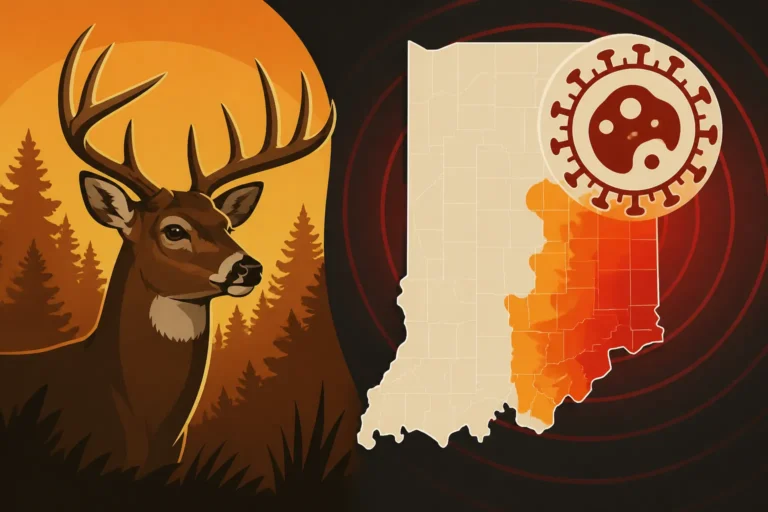
Unfortunately, diseases are a natural, albeit sometimes devastating, part of wildlife populations. Epizootic Hemorrhagic Disease, or EHD, is a particularly nasty one that we see periodically in Indiana. While not always fatal, severe outbreaks of EHD Die-Offs in Indiana Deer can cause significant local mortality, sometimes making it feel like the deer have vanished overnight. These outbreaks are often weather-dependent, with dry summers leading to conditions favorable for the biting midges that transmit the virus. A more insidious and long-term threat is Chronic Wasting Disease (CWD). This neurological disease is always fatal and has no cure. While the prevalence in Indiana is still relatively low, the discovery of CWD has led to the establishment of Indiana's Chronic Wasting Disease Positive Area in certain counties. The presence of CWD influences management decisions significantly, impacting everything from carcass movement restrictions to localized testing efforts, all aimed at containing its spread and protecting the long-term health of our deer herd.
Predation and Other Mortality Factors
Beyond hunting and disease, other factors contribute to deer mortality. While often sensationalized, predator populations, especially coyotes, do exert some pressure on deer, primarily fawns. While coyotes rarely significantly impact a healthy, robust deer population, they can certainly play a role in local fawn survival rates, particularly in areas with poor fawning cover. Deer-vehicle collisions are another major source of mortality, especially along busy roadways. It's a visible reminder of how deer and human populations often intersect, and it's a factor that influences herd numbers, especially in areas bordering urban or suburban developments.
The Role of Antlerless Harvest
One of the most powerful tools wildlife managers have for controlling deer herd size is encouraging antlerless harvest. When a deer population is growing rapidly, or when it's exceeding the carrying capacity of its habitat, increasing the antlerless take is the most effective way to manage those numbers. This is why you see various antlerless tags available throughout the Indiana Deer Season Structure Explained, and why some areas are designated as "Deer Reduction Zones." In these zones, often areas with high deer densities or significant agricultural damage, hunters are given additional opportunities to harvest antlerless deer to help bring the population back into balance. It's a critical component of healthy herd management, ensuring that the population remains sustainable for future generations of hunters and for the overall well-being of the ecosystem.
What Deer Herd Size Means for Hunters
Okay, so we've talked about how the state estimates deer numbers and what factors influence them. But what does all this really mean for you, the hunter, standing in the woods on a crisp fall morning? It means knowledge is power, and understanding these dynamics can absolutely make you a more adaptable and successful hunter.
Managing Expectations Based on Data
It’s easy to get discouraged when you’re not seeing deer, or when you hear reports of banner seasons elsewhere but your spot seems quiet. But by looking at objective data, such as DNR harvest reports or regional population estimates, you can set more realistic expectations. If your county's harvest numbers are consistently low, it might be a sign that deer densities aren't as high as you hope. Conversely, a county with consistently high antlerless harvest could indicate a robust population, even if your personal observations are limited. Utilize resources like the GoHunt app or the Indiana DNR website to review specific county data. This information, while not guaranteeing a deer in front of your stand, provides a valuable framework for understanding the larger picture. It helps you recognize that occasional slow days are part of the ebb and flow, rather than an indication of a statewide collapse.
Local Observations vs. Statewide Averages
This is where the rubber meets the road for most hunters. You might read that the statewide deer herd is stable, but if you've been Finding Sign in Big Hoosier Forest Timber for weeks without seeing a deer, that statewide average can feel meaningless. And you're not wrong to feel that way! Local conditions often deviate significantly from broader trends. A localized EHD outbreak can decimate deer in a specific creek bottom, or a particular hunting club might be putting intense pressure on a small block of timber, pushing deer elsewhere. Even factors like acorn crop failures in a specific area can temporarily redistribute deer, making them seem "gone" when they've merely moved to alternative food sources. This doesn't mean the statewide data is incorrect; it simply highlights the importance of combining big-picture knowledge with diligent, boots-on-the-ground scouting of your specific hunting area.
Adapting Hunting Strategies
Knowing the general health and density of the herd, both statewide and in your specific hunting area, allows you to adapt your strategies. If you're in a high-density area, perhaps near urban fringes or rich agricultural land, you might focus on targeting bedding areas or pinch points where deer funnel through, as there will likely be more deer moving overall. If you're hunting lower-density areas, like vast tracts of Indiana State Forest Hunting, your tactics might shift to covering more ground through still-hunting, focusing on subtle changes in terrain, or spending more time scouting for fresh sign. For example, knowing that deer densities are higher in certain regions might influence your decision to explore new public land opportunities. Tools that help you with Scouting Indiana Public Land Before Season become even more critical when deer numbers are elusive. Pay attention to local food sources, recent timber harvests, and subtle changes in terrain, always remembering that even in areas with fewer deer, a smart hunter who understands deer behavior and their local environment can still be successful. Learning to interpret subtle clues, like Reading Indiana Mud for Fresh Deer Movement, can give you an edge regardless of the overall herd size.
Disclaimer
This article is for general informational purposes only and does not constitute professional advice. Laws, prices and regulations vary by location and change over time. Consult a qualified professional for guidance on your specific situation.